Brain Tumours and Casualty
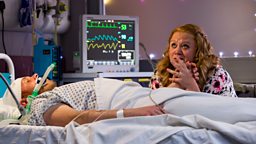
Casualty has never been afraid to feature difficult stories that affect people in real life, and the latest storyline featuring Robyn’s boyfriend Glen and an unwanted passenger that Glen just can’t get out of his head, a tumour he nicknames Kylie, was one such example. It had to be right.
Glen has become one of the 10,600 people who are diagnosed each year with a brain tumour, one of the biggest cancer killers of people under 40, with the revelation that he’s been living with an incurable glioblastoma. To make sure that the facts behind the fiction are as accurate as possible, the Casualty research team turned to some experts – The Brain Tumour Charity.
We asked Sarah Lindsell, the charity’s Chief Executive, how many people are diagnosed with a brain tumour each year? “Like Glen, more than 10,600 people a year are diagnosed with a primary brain tumour in the UK – that’s 29 people a day," she revealed. Brain tumours are the biggest cancer killer of children and adults under 40, taking over 5,000 lives a year”.
Since Glen’s diagnosis, he has endured surgery and months of gruelling treatment. Sarah tells us that in the charity’s experience, “being diagnosed with a glioblastoma turns a person’s world upside down. It has a devastating impact on them and their loved ones; especially having to come to terms with a poor prognosis, 12-18 months on average. Some people don’t want to know their prognosis; some need to come to terms with their diagnosis before asking how long they may have to live, while others choose to face it head-on so they can plan end-of-life care. There is no right or wrong reaction”.
Here at Casualty, we know how much our actors relish playing difficult roles and Owain Arthur, who plays Glen, embraced the challenge: “Playing the role of someone who’s suffering from an illness is always a difficult one, especially if you don’t have first-hand experience of it. Who knows how you would react if you were dealt this hand? I had to put myself in this situation and relate to it somehow and make sure that I stayed sensitive and true to the people who deal with this every day.
“Finding out that you’re terminally ill is probably the hardest thing to cope with. Glen didn’t want to talk about it and wanted to avoid any mention of it and I understood his reasoning for that. It was a difficult task but, having Amanda Henderson as a co-star, made it easier”.
A major part of the story focuses around how Robyn copes with Glen’s tumour and supports her boyfriend through the traumatic experience. Even for an experienced nurse, it’s far from an easy situation to handle.
Amanda Henderson (Robyn) told us about how Robyn copes with Glen’s illness. “On the surface, she appears to be fussing over him, being slightly overbearing and making sure that everything is about him. She wants Glen to be happy but wants him to do everything he can to postpone the inevitable.
“Deep down, Robyn is struggling, struggling to deal with the facts, pushing them to one side in her mind so she can try to be as happy with Glen for as long as possible but she knows all along that they don’t have much time and that hurts her so much”.
How are families of brain tumour sufferers affected? “As Robyn found, people can try to push their loved ones away," Sarah Lindsell told us. "They can also experience anger, loss of identity and depression, all of which have a toll on their families who need support too. The word we hear over and over again from people diagnosed with a brain tumour and their families, is that they feel 'alone'”.
What treatment is currently available and how effective is it?
Professor Susan Short (Professor of Clinical Oncology & Neuro-oncology at Leeds University, helped us with that answer. “The only current treatment for glioblastoma is surgery to remove or 'de-bulk' as much of the tumour as possible, followed by chemotherapy and radiotherapy. Unfortunately, as glioblastoma have thread-like tendrils which wrap themselves around different parts of the brain, it is almost impossible to remove the entire tumour. At some stage, it will inevitably start growing again”.
Our research enabled Owain and Amanda to portray their characters in a believable way and helped them to understand the complicated range of emotions that people affected by this diagnosis would go through.
We hope that we managed to do justice to this difficult storyline and that our audience will learn a little about what it’s really like to live with a brain tumour.
For more information, please visit www.thebraintumourcharity.org/glioblastoma
More top stories
![]()
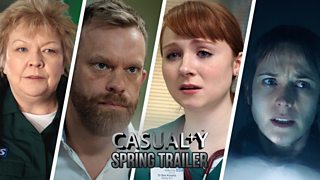
Spring Trailer 2018
Coming up on Casualty...
![]()
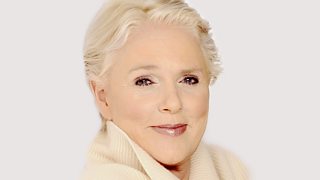
Sharon Gless Joins Casualty!
'Cagney & Lacey' star joins the cast in a special flashback episode...
![]()
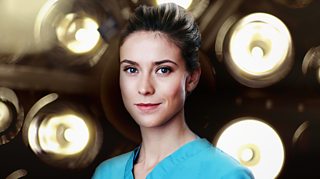
Sam is Back!
Actor Charlotte Salt returns to Casualty later this year...