James Rebanks: One shepherd and his beloved Herdwick sheep
I am basically a nobody, just a sheep farmer (or a 'shepherd' if you prefer).
I am the latest in a long line of sheep farmers, that stretches back over 600 years in the North of England, in the English Lake District and the Eden Valley.
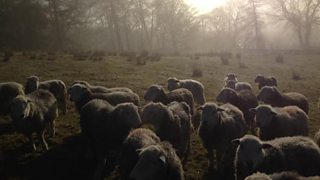
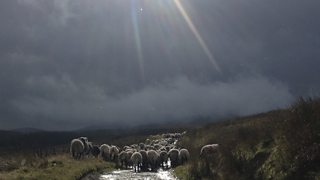
We farm about 500 sheep on a fell farm. This means our sheep go to the fells or mountains to graze on the common land with our neighbours who also graze those mountains. It is an ancient way of farming that has disappeared almost everywhere else but survives here.
I have written about our way of life for many years, poetry and little sketches, but never thought anyone would be interested in them. Then three years ago I started to use Twitter on my phone and quickly attracted a huge following - simply by posting daily updates on the work we do with the sheep, the land and my sheepdogs. I now have nearly 60,000 Twitter followers.
Becoming an author
In late 2013, I was asked to write an article for Atlantic Monthly in America, and that led to me being signed up by Penguin/Allen Lane to write a book about what we do and how I see the world.
I wanted to write the book because I love books, and because I think they shape how people see the world and whether they value things.
The Social Media Shepherd
I think what we do is of global significance. It’s a rare example of a different relationship with a landscape compared with how modern people experience the environment.
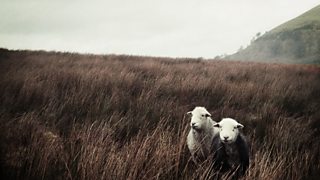
The Twitter feed is popular, I think, because it offers a glimpse behind the scenes of a way of life that most people will never experience. I tweet pictures of lambs being born, or sheepdogs being trained, or our work in the fells. And I try and answer the questions people ask me. I feel sad that people are so disconnected from the natural world and landscape like ours, and I like sharing my life with other people.
The thing that I love about that medium is that there is no middleman. I tell my own stories, take my own pictures, and do it in my own voice so it hopefully feels very real and direct.
Working on a family farm
People seem surprised that this patchwork of traditional family farms doing very old things still exists. They are delighted to get to know a farmer, and realise that we are basically hard working, decent people doing our best to make a living in a harsh economic climate that seeks to cheapen food and treat farming as just an 'industry'.
I think farming is far too important to treat simply as a business, and food too important to treat as a commodity.
If we lose traditional family farms and old ways of doing things then we become even more disconnected from the land and where our food comes from.
The Lake District is more than William Wordsworth
I am fascinated by how people think about landscapes like ours, and where their ways of seeing come from. Ours is one of the most literary and artistic landscapes on earth - known to almost everyone through the poetry of William Wordsworth or the walking guides of Alfred Wainwright, or second hand through countless films and television programmes.
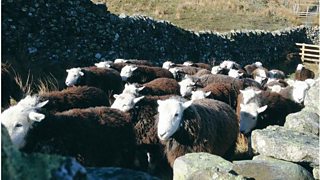
Every wall, every field, every hillside, every hedge, and every sheep means something to us. They represent work done, and things owned, and lives lived to make those things what they are.
I think most people see it through romantic spectacles - as classic mountainous and lake 'scenery'. Prior to 1750 or so nobody thought about landscapes like that, and I think we have an older way of seeing this landscape. Our way of seeing is, I believe, based on the work and the people in that landscape.
The great American landscape writer Barry Lopez has written about other traditional communities’ ways of seeing and thinking about landscape. I think there are echoes here of something like that here with us.
Every wall, every field, every hillside, every hedge, and every sheep means something to us. They represent work done, and things owned, and lives lived to make those things what they are.
From our perspective to reduce this to just scenery is to deny its true meaning and its interest and depth. But I do understand the attraction of that romantic worldview for people who have had a different history to us, who have less connection to the land, and who need escape and a sense of freedom. Anyway, that’s what I think and feel, and I wanted to try and explain it in my book.
Sometimes people are so obsessed with wilding and biodiversity they become blind to other things of value like the cultural landscape we have created that attracts 16 million people a year who spend £1.1 billion. Sometimes 'man-made' is beautiful and worth cherishing.
A family inheritance
I can't remember ever not loving our way of life. My earliest memories of working with my father and grandfather with the sheep, it just felt right. These were people that seemed to belong in their place in the world, that did things that I thought were meaningful and dignified.
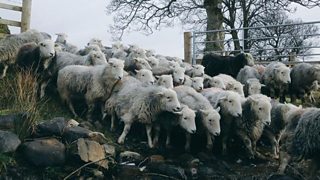
People think travel broadens the mind, I'm not so sure. I think a focus on, and love of, one place can make people rather sensible, decent, and wise.
But as I got older I realised that the world around us, the world of the non-farm kids I knew, the world of the local town, and the world of mainstream popular culture was quite different, and driven by other values from those of my father and grandfather. I grew up in the 1980s and that time was all about greed and making money, and being an individual, and frankly my family didn't seem to give a damn about money, fame or standing out.
When I went to secondary school I was surrounded by town kids or peoples from other backgrounds and realised that the values of the school and of the wider world were quite alien to me. School seemed to think that we should all get an education and leave to do something else, something more important. I was baffled why anyone would want to leave, and annoyed that they didn't seem to respect the things I loved so I downed tools and refused to have anything to do with it.
I was also a tyke and enjoyed misbehaving. Some people think that becoming involved in a family farm is some kind of drudgery or slavery, that it lacks intellectual interest, and they assume we must all really want to leave and go somewhere else to do 'something’.
But that’s not how I see it. I find the work we do fascinating and challenging, like an endless puzzle. I love the sense of belonging I have, and see how envious most people are of that. I also think there is no more sensible use of a person's life than to look after a farm and be a steward of it – not only its farm assets but also the character of its landscape and wildlife.
To be embedded in a place like this lets you see a depth of things there that a tourist or visitor would miss.
Today I was lambing a ewe, and a vole ran past my boots on a little run they use. And the stonechats returned from Africa and one bobbed on the wall as I got the lamb out alive.
Rousseau said that a wise man could spend his whole life in the smallest village and never run out of things to be interested in, and I think he was right.
People think travel broadens the mind, I'm not so sure. I think a focus on, and love of, one place can make people rather sensible, decent, and wise.
Perhaps the fact that I have some rather good Herdwick sheep means I can get away with being a bit of a wierdo who does odd things on his phone, and has written a book.
Anyway, the farm and its work goes on, all this fuss will blow over. Maybe people will value my book in years to come and wonder about the strange man that loved sheep and wrote a bestselling book about them, but I'm not too worried about that.
For me the hope is that someone stands on my fell with a flock of Herdwick sheep, and feels the love I feel for this place. There are some things bigger than a man's life.

