Banging the drum for music
According to Bono, ‘Music can change the world because it can change people.’ And if you’ve never heard an orchestra play, picked up an instrument or belted out a song surrounded by people doing the same, maybe now’s the time to find that out.
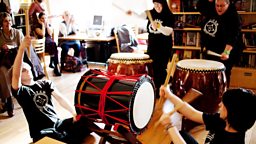
Many of us have music in our lives a lot of the time – whether that’s the radio or CDs at home, in our cars, on MP3 players as we go about our business. However making time to really appreciate music or get involved with it connects you to music in a totally different way. Sites such as BBC Sounds will let you listen to a range of genres to find out what you might like to hear more of. Tune into all the musical opportunities around you, you won’t regret it!
| Why get into music? | Can it be inexpensive? | Is there a family option? |
|---|---|---|
| Music makes us feel good – it’s a fact. Scieintists have proved that listening to moving music causes the brain to release dopamine, a feel-good chemical. Singing gives us a high, and mastering a new skill puts a smile on our faces too. What more do you need to hear? | Yes. You have an instrument right inside you and it's called your voice. If you know where to look you can catch free music performances all over the place. And the cost of something like joining a choir is minimal compared to what you’ll get out of it | Definitely. Music festivals have become increasingly family friendly and national institutions like The BBC Proms have introduced new events like Proms Plus Family workshops where you can bring your own instrument and join in! |
What would you like to try?
Give us a song

Music can change the world because it can change peopleBono
We are a nation off singers, from Welsh male choirs to barber shop and church choirs, tens of thousand of us are involved in singing every week and in the last few years the whole concept of choral singing has seen a resurgence in popularity, thanks in no small part to the work of choirmaster and broadcaster Gareth Malone OBE. There are numerous choirs around the country, from Gospel to rock, there are choirs to suit almost any musical taste. For many there are no auditions and you don’t need to be able to read music to take part. Just bring your voice – and your enthusiasm!
Learn an instrument
Whether you want to have another go at an instrument learned but now forgotten, or try something totally new, mastering a musical instrument is a great challenge, and immensely satisfying as you make progress. But which one to go for? Think about factors such as the kind of music you enjoy. If acoustic folk is your thing, drums might not be the right choice. What kind of budget have you got to spend? Maybe see how you get on with a recorder before splashing out on a saxophone. Portability and the size of your home might be an issue too. A double bass might look cool, but a flute takes up less space and is much easier to carry around! To avoid frustration it’s also worth considering how hard your chosen instrument is to master. You won’t become a virtuoso on any instrument overnight, but feeling like you are getting somewhere will help you stick with it. Reaching the point at which you can strum a simple set of chords on a ukulele – an instrument that has been making a comeback - will take less time than playing a simple melody on the violin. Find adverts for teachers on college websites, music shops or local stores.
I'm with the band
If you have playing skills that have been dormant and want the chance to share them with others, why not join a band? Making music solo suits some, but bouncing ideas off bandmates and working together on music and lyrics can really enrich the experience. Ask around and you may find your friends want to sing or play too. And if you don’t have like-minded pals, you’ll find ads for groups to join in the music press and at local music venues. Getting to the next level might not be as hard as you think. Plenty of pubs and clubs have music ‘open mic’ nights where you can try out material.
Orchestral manoeuvres
If rock, pop or jazz don’t appeal, maybe you play an instrument that suits an orchestral setting? You’ll find information on groups near you at websites such as Making Music, The National Federation Of Music Societies.
If you are a younger player, look at the National Association Of Youth Orchestras. Hunt around and you’ll discover associations for everything from symphonic bands and wind ensembles to the British Banjo, Mandolin and Guitar Federation. To get in on the act you just need to start by finding the group for you, in a feasible location. Should you wish to put aside a concentrated chunk of time for music or combine it with a holiday, there are summer schools and residential workshops to consider as well.
The story behind the music
Passionate about music but don’t want to play? You can still get involved, even if that just means making the effort to go to concerts, in either a type of music you already enjoy or a genre that’s new to you. Or if you have an urge to take a more studious approach, why not sign up for a music-related college course? There are ones about eras and genres of music, specific composers or music from a particular country.
Get to a festival
There’s nothing like hearing music at a festival, with its sights, scents, sea of people and quite possibly, sludge underfoot. There are festivals happening all over the UK, some centred on a genre like folk, reggae or heavy rock, others catering to a variety of tastes such as the epic and legendary Glastonbury Festival which has been running since 1970.
And while festival going is seen as something of a rite of passage for teens, you are never too old to catch the bug as a first-timer. That goes for performers as well as the audience. Sir Bruce Forsyth has been on the Glastonbury bill in recent years, as has Dame Shirley Bassey, resplendent in monogrammed wellies! Whether you camp, glamp or just do a day trip, a festival is an unforgettable way to hear your band of choice, and discover new favourites.
Sing while you work

Polishing Your Voice
Polishing your voice enables you to give a better performance.
Chilly Gonzalez on Front Row

Grammy-winning pianist and composer Chilly Gonzales on the influence of classical music on pop, and how he solved a tricky musical issue for Daft Punk
Banking meets barn dancing
David Wickenden, Surrey: I’ve always been musical, I played cello when I was younger, got into choral singing at church, learned guitar. Years later I went to some barn dances with people I knew and got invited to play in a band for a dance. I got this urge to run my own barn dances and gathered friends and work colleagues. My band, The Haylayers, has been around since the early 90s, and the current line-up’s been in place for five years, though I have a long list of people I can call on if I need someone to play. It’s created its own little world in a way, like a subculture, a family.
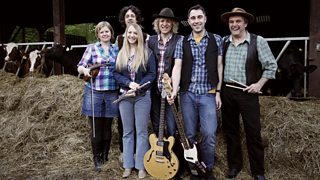
You don’t even need to speak the same language, as long as you play in the right key you can all get along
I work as an IT consultant in banking, and learning how to deal with people in a band, handling a team, has helped in work situations.
Doing our barn dances and ceilidhs is like an alternative reality. It’s a platform that allows you to be extroverted but there is a real family fellowship feel to it too.
There have been times I’ve booked someone to play with us who we don’t know, and it’s like music is its own language. Especially with folk music…people can be on very different levels but you can all play together and communicate musically, even if you are with someone you don’t know at all. You can appear like a band that has played together for a long time, and I find that mindblowing in a way. You don’t even need to speak the same language, as long as you play in the right key you can all get along.
The power of singing

Welsh rugby legends Get Creative with the Forget-me-not Chorus
JPR Williams and JJ Williams sing with choir for people with dementia.