The making of The Met: Policing London
Monday June 8th sees the start of the BBC ONE’s new five-part, primetime documentary on the Metropolitain Police. After more than a year of filming, The Met: Policing London promises to shed an unprecedented light on Britain’s largest police service. Abigail Priddle, one of the programme’s makers, tells us what it was like to earn the trust of officers and how editing footage is a little like a police investigation.
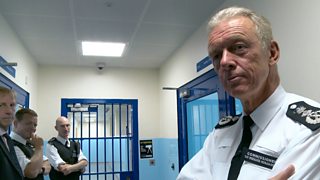
Why did the BBC commission the programme? The Met is Britain’s biggest, busiest police force, an iconic brand and famous around the world. It divides opinion, but it’s a vital part of keeping London safe. That makes it a great subject matter for a documentary.
Can you tell us how the series was made? There were four of us self-shooting directors, each with an assistant producer. The Met’s a huge beast so we were allocated a borough each and one or two pan-London units. We filmed pretty intensely, five or six days a week and we pulled in about 2,000 hours of footage. In total I’ve worked on this project for about 16 months, that includes research, shooting and editing for about five or six months.
How do you decide what footage to use? We all had standout incidents that we knew were interesting or relevant, so they’re your starting points. Then there’s a natural culling process of footage you can’t use. Then it’s a case of balancing out the stories across the series so you get a sense of breadth and depth of the Met. Plus you’re looking for some underlying story that ties those stories together. It looks really easy when it’s finished but it’s a hard process at the start when you can’t see the wood for the trees. It’s probably similar to a police investigation in that you start off with all this material and then you have to hone it down until you get a clear picture.
What kind of access did you have? Once the Met decided to let us in, it could have been easy for them to restrict who we spoke to. But they were very facilitating. Obviously there were some units and departments where cameras weren’t welcome, and that was a bit frustrating. For example, we couldn’t film counterterrorism for operational and security reasons.
Did the officers worry about how they would come across in the final edit? That’s a concern everyone has with any documentary, but it’s about building relationships. A couple of the officers I worked with weren’t that keen on being filmed to begin with, so we spent quite lot of time just being around and reassuring them about what we were trying to achieve.
How have your views of the Met changed? I genuinely didn’t come in with any preconceived ideas. But I’ve come away with a much greater understanding of what officers have to deal with day to day. I don’t think the average Londoner really grasps what it is they actually do.
What were some of the memorable moments during filming? I’m from London and I always felt like I really knew it, but for the first time I saw the city with fresh eyes, and that was quite an extraordinary thing for me. There were things I saw that I’ll never forget. For example, we were first on scene with two officers at a fatal stabbing. That was very emotional and difficult. We followed one case with a CID officer who was tracking a suspect for a long time and we were there when she finally got him into custody. That was a privilege to a share in that experience. On a lighter note, the humour of the cops I met was nice to see. They’re faced with a lot of grimness, but they can have a laugh and they’ve got a great camaraderie.
What were some of the biggest surprises? I didn’t realise that so much of what officers deal with on response wasn’t crime per se, but arguments and disputes. Officers are often called just to be arbitrators. The biggest surprise was the amount of domestic violence. I’d no idea it was so prolific, but it was reassuring to see how seriously officers treated it, I was really impressed with that.
What do you hope people take away from the series? Documentaries are there to provoke thought and discussion and I really hope it does that. Often cops would ask me if the programme was going to be positive or negative, and I’d just say to them it’s going to be fair, honest and true. You might love it or hate it, but what I hope is that you believe it’s the closest anyone’s ever got to picturing what it is to be a Met police officer. And I hope the public gets a better understanding of what it is to be an officer in London.
The Met: Policing London begins on Monday June 8th on BBC One at 9pm.