Five things I didn't know about Russia
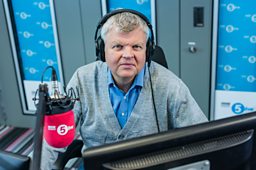
By BBC Radio 5 live presenter Adrian Chiles

Ahead of the World Cup I've been podcasting my way through the often baffling, frequently disquieting, but always fascinating world of Russian history and culture - all the way from A to Tsar.
I’ve done this with the help of a Russian teacher who moved from Dimitrovgrad to Moscow to Bury, and is now based in Altrincham in Greater Manchester - not a well-worn path.
Olga Makarenko won my heart when she told me Russian for pudding is puddink. Loved that.
I also loved the comedian who joins us from St Petersburg, Igor Meerson. He’s clever, funny, well-connected and laughs like a hyena.
They’ve been my guides in all 20 episodes which are now available to download.
From Aeroflot to Tsar Nicholas, these are the five top things I never knew I wanted to know about the Great Bear and its 147 million souls...
The place to be in Moscow

Every city has a street or square where football fans gather to drape their flags, drink deeply, and make a lot of noise.
In Moscow that street may well be Arbat, which is packed with sports bars and tourist shops.
Olga told me: "If you ignore the kiosks dotted everywhere, you’ll see a beautiful, old historic place."
It was a most desirable address for high-up Communist officials in the Soviet era, but Arbat was also something of a beacon for free speech.
"In the 1960s it was something like Hyde Park’s Speakers’ Corner," said Igor. "A place where anyone could say anything they wanted so it was a place for cultural opposition."
That said, my advice would be to stick to football chants rather than political rhetoric if you find yourself on Arbat with a drink in your hand.
Russian pop music can be really good
In every podcast we take a Russian song and translate it into English, with one of our 5 live production team getting their five minutes of fame voicing it up.
This started out as a bit of disrespectful mickey-taking of Russian popular culture.
And I’ve got what I deserved: dozens of lovely little Russian earworms running around my head.
I'll give you an example: Super Good by Leningrad. I challenge you to listen to it and not smile. It will be your World Cup soundtrack.
Horseradish is a swear word

Everyday food items can be something of a linguistic minefield in the country that brought us borscht and blinis.
It turns out that if you want to swear in Russian, just scream 'horseradish' or, as the locals say, 'hren'.
"It's a word England fans are likely to hear as they head to the stadium this summer," Igor told me. "It's a very nice euphemism for a stronger swear word."
That stronger swear word, it turns out, is not entirely unconnected to hren's phallic shape.
"We swear a lot with food," Olga explained. "And hren is a nice, short, colourful word."
But food is also used for terms of endearment so Olga had this tip: if someone tells you you’re a food that is sweet, then they like you. If they call you something bitter or sour, then don’t expect any favours.
Goalkeepers are heroes
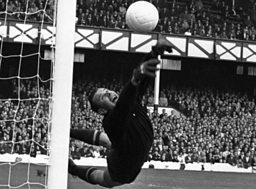
Ruud Gullit once brilliantly voiced what we all suspected deep-down: "That goalkeepers are goalkeepers because they can’t play football."
But in Russia, the goalie is the main man. And not just because their greatest player was the Soviet-era goalie, Lev Yashin. Or that he was one of the best goalkeepers ever.
"In the Communist system where individuality was difficult, goalkeepers stood out as individuals who did their own thing," explained football writer, Jonathan Wilson.
He told me keepers were seen as heroic figures in Russia, even before the revolution. "The novelist Vladimir Nabokov compared it to being a matador or a fighter pilot," said Jonathan.
With a huge, sprawling, vulnerable nation bordering 14 other countries, Igor agreed there’s something deep in Russia’s soul that reveres defence over attack.
"Mentally, historically, we are always ready to defend. Even in sport, defence is seen as more Russian, more respected."
Russia's comedy talent show is as big as the X Factor

Never mind football hooligans, beware comedy fans. Because it turns out comedy is a big televised competitive sport inspiring fiery passions.
"KVN is a huge comedy competition run by Russian TV," comedian Igor Meerson (pictured above) told me. He’s clever, funny, well-connected and laughs like a hyena. Igor told me. "Every city has its team, every university has its team, we have leagues.”
"We have different rounds, each marked by a panel of judges, which is why we have so many angry fans that disagree with the result.”
Igor himself started as the captain of his local team before being headhunted by a Moscow outfit where he clinched the national title.
So who were the scariest competitors?
“That’s easy,” said Igor. "Every (military) academy had its own team. It wasn't safe to perform well against them because they had really tough fans."
And finally…
A vital thing to bear in mind at all times.
Olga, Igor and many of our other contributors were at pains to emphasis a key point: "Russians are different. Because we look like you, you think we are like you. But we’re not. We have a different mentality altogether."
Well worth remembering, before during and after this World Cup.
![]()
Listen to the A to Tsar podcast
From Aeroflot to Tsar Nicholas, Adrian Chiles explores the life, culture and history of Russia, host of the 2018 World Cup, alongside Olga Makarenko and comedian Igor Meerson.

Listen to the episodes now
More on the World Cup from BBC Radio 5 live
![]()
World Cup Daily
Mark Chapman and Kelly Cates with the latest from the World Cup in Russia.
![]()
Robbie Savage's World Cup Breakfast
Robbie Savage – in Salford – and Kelly Cates – in Russia – serve up the latest from the 2018 FIFA World Cup.
![]()
Five World Cup stars to watch out for
The experts from 5 live's World Football Phone-in give their top picks.