Passion and pain: The eternal appeal of Edith Piaf at 100
26 January 2016
As Glasgow's Celtic Connections festival marks the centenary of the birth of Edith Piaf by hosting the acclaimed Piaf! The Show, starring Anne Carrère in the title role, BRIAN MORTON reflects on the extraordinary life of French music’s ultimate grande dame, and discusses her enduring appeal.
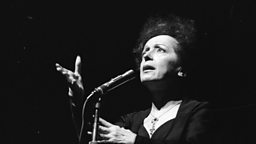
The second week of October 1963 was a crowded one. It saw John F Kennedy mark 1,000 days in office, at the very moment that obscure forces contemplated where and when to end his life.
It witnessed a violent revolt against British rule in Aden and, at home, a more polite coup d’état that replaced Prime Minister Harold Macmillan with Alec Douglas-Home, a hapless, war-wounded fop whose administration was to last less than a year.
A different British spirit was celebrated in the release of From Russia With Love, cementing a franchise that still prevails half a century later. In the Caribbean, just a week after a Partial Test Ban Treaty attempted to keep mankind from a course of self-destruction, the most violent storm in recent history, Hurricane Flora, killed 7,000 people.
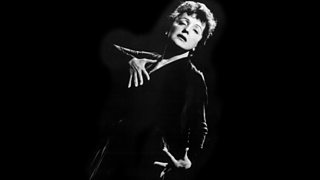
Piaf’s essence lay in the gap between her own physical fragility and the toughness of the songs she sang
Meanwhile, another force of nature was suddenly becalmed. Edith Piaf died on 10 October, aged just 48.
December 2015 marked the centenary of Piaf’s birth, not her premature passing, but because the exact date of that birth was lost to the Paris streets and because Piaf seemed surrounded by death all her life, the end-date always dominates.
Piaf’s essence lay in the gap between her own physical fragility and the toughness of the songs she sang. And the street urchin was also an angel of death. The man who first employed her and named her “la môme Piaf” (the waif-sparrow) was murdered by gangsters. Her most public love affair, with world middleweight boxing champion Maurice Cerdan, ended when he died in a plane crash.
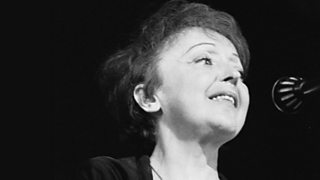
She sang through this, and through visible illness and distress, with a voice that was full of uncoached emotion, raw, never quite on the note or on the beat but with a force that seemed to bind her to the audience, even if she wasn’t quite with the band.
And that audience extended to the British, generally resistant to French chanson and French singers. So deeply embedded is Piaf in our musical unconscious that Hans Zimmer was able to sample and process “Je ne regrette rien” for the soundtrack to Christopher Nolan’s sci-fi caper Inception.
Out of all the crooners, yé-yé girls, Gallic rockers, it is only Piaf who still fascinates us. For the rest, a blanket indifference; documentary makers don’t use Johnny Halliday songs or even English-born Gillian Hills singing “Ma première cigarette” to suggest the Paris cityscape; they still rely on accordion music, or better still Piaf singing to an accordion accompaniment.
Piaf! The Show trailer
Warning: Third party content may contain adverts.
Related Links
More on Celtic Connections
![]()
Celtic Connections 2016
All the BBC's coverage from this year's festival, on radio, television and online
![]()
Reimagining Graceland
Edinburgh quartet Bwani Junction on performing Paul Simon's 1986 album in full
![]()
Six of the best
Jim Gilchrist casts an eye over this year's line-up and picks out his six must-see shows


Her life was made for the movies and the movies did it approximate justice, with Brigitte Ariel and Betty Mars sharing acting and singing duties in the 1974 Piaf and Marion Cotillard bringing a brittle glamour to the role in the more recent La Vie en Rose. But it is Anne Carrère, in a show partly inspired by that 2007 film, who gets closest to Edith Giovanna Gassion’s turbulent presence.
Piaf’s lasting appeal, as Carrère and her team understand, is not just a matter of vocal projection and can’t just be harnessed by musical ventriloquism. She was an artist who seemed, almost uniquely, to convey a place and a moment in time.
She was named after a British nurse, Edith Cavell, who was shot for espionage in the First World War and her reputation was shaped by France’s experience in the Second.
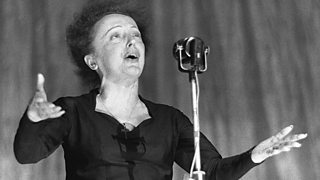
She was an artist who seemed, almost uniquely, to convey a place and a moment in time
To British audiences whose natural subject matter was the shrinking-Empire heroism of a James Bond, Piaf was the expression of the damaged Paris streets into which she was born – not quite on the trottoir, as legend has it, but in an obscure hospital – and of a country that, unlike the UK, had known the pain of occupation and collaboration, Résistance and disproportionate reprisal.
Piaf stood for a country that did not give out free orange juice or insist on elementary schooling. Her English cult was at least in part the product of survivors’ guilt. At another level, she was the living embodiment of the most modish philosophy of the time. While English dons tried to show that all philosophical problems boiled down to matters of language and to carelessness in the way we phrase the big questions, Piaf seemed to confirm the Existentialists’ insistence that philosophy was really about violence, sex, survival.
Piaf is often spoken of in the same breath as the younger Jacques Brel, as twin bards of life’s seamy side. And yet the bulk of Brel’s work, so influential on the late David Bowie, Scott Walker, Marc Almond and other Anglos, was concerned with obscure matters of Belgian politics, while Piaf’s songs – all written by others, but picked with unfailing intuition – were all about the big things.
In later years, as with Dietrich before her, many of the songs were Anglicised. Brel sang in English, too, but much less was lost.
Piaf’s voice was a lingua franca, not necessarily the words she sang - though even the English had picked up enough to understand that, despite the poverty, the losses, the ruined city where Depression still lingered, there was light and life; and that she regretted nothing, nothing at all.
Piaf! The Show is at Glasgow's Theatre Royal on 27 and 28 January 2016, as part of Celtic Connections.
More on Edith Piaf
![]()
Witness | BBC World Service
The life of the legendary French singer remembered by her friends and lovers
![]()
Singing Piaf with No Regrets | BBC Radio 4
Caroline Nin listens to those drawn to sing the music of the legendary French performer
![]()
Soul Music | BBC Radio 4
How the powerful song, Non Je Ne Regrette Rien, revived its singer and became her epitaph
![]()
Front Row | BBC Radio 4
Biographer Carolyn Burke and singer Barb Jungr discuss Edith Piaf's enduring appeal
![]()
Kiri's 20 Favourite Voices: Edith Piaf | BBC Radio 3
Soprano Dame Kiri Te Kanawa chooses the singers she loves the most

More from BBC Arts
![]()
Picasso’s ex-factor
Who are the six women who shaped his life and work?
![]()
Quiz: Picasso or pixel?
Can you separate the AI fakes from genuine paintings by Pablo Picasso?
![]()
Frida: Fiery, fierce and passionate
The extraordinary life of Mexican artist Frida Kahlo, in her own words
![]()
Proms 2023: The best bits
From Yuja Wang to Northern Soul, handpicked stand-out moments from this year's Proms