The Path to Fall Down Seven Times, Get Up Eight, by David Mitchell
David Mitchell, award-winning author of Cloud Atlas, translates and introduces Fall Down Seven Times, Get Up Eight. It's the follow up to The Reason I Jump – an extraordinary book by a Japanese teenager with severe autism, Naoki Higashida.
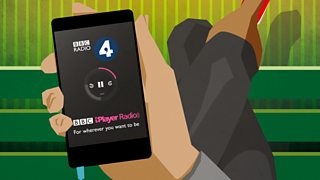
Fall Down Seven Times, Get Up Eight is Radio 4's Book of the Week, and can be heard from Mon 17 July at 9.45am. It’s also available on iPlayer Radio and free to download for a limited time via the iPlayer Radio app.
![]()
Listen to Fall Down Seven Times, Get Up Eight
Listen all week from 17th July on BBC Radio 4 – and available on iPlayer


Naoki Higashida is a young man who lives with his family in a small city outside Tokyo called Chiba. Like my own son, Naoki has non-verbal autism, and has never engaged in a spoken conversation longer than a handful of words in his life. His ID card classifies his autism as “severe” – and with good reason.
Naoki displays many of the classic autistic “tics”: he vocalises looped thoughts in a high-pitched voice; repeatedly drums his fingers against hard surfaces – known as “stimming”; has a hard time concentrating; and occasionally endures meltdowns – loud, agitated, sobbing – caused by fixations that he knows are irrational even as he suffers them; for example, being unable to turn on all the taps in an airport bathroom. It’s full-on, relentless and sometimes dignity-shredding.
This isn’t the high-functioning, Asperger’s end of the spectrum we’re talking here.
Related Links
Listen to a clip from Ep 1

"Spoken language is a blue sea..."
Matthew Beard reads from Episode 1 of Fall Down Seven Times, Get Up Eight
What Naoki can do, however, is texticate (a verb of my own invention, ahem...). A non-verbal texticator types his or her thoughts out on a computer keyboard or on an alphabet grid – a cardboard QWERTY keyboard with “Yes”, “No” and “Finished” tabs added. Naoki builds up sentences in Japanese by spelling words, letter by letter, and voicing what he types as he goes along.
I’ve never seen him give up, and it’s this persistence that allows him to fulfill his early dream of becoming a writer.
He can also type directly onto a keyboard, though the dropdown menus used to convert the Roman alphabet to Japanese characters adds an extra layer of distraction.
The whole process requires Herculean effort, as Naoki’s attention is constantly hijacked by his autism, requiring him to start over, often multiple times in a single sentence. I’ve watched Naoki take 20 minutes to finish one line. I’ve never seen him give up, and it’s this persistence that allows him to fulfill his early dream of becoming a writer.
The first book of Naoki’s I read – The Reason I Jump – was published at the ripe old age of 13. My wife, who is also from Japan, found it online and took a punt on it. It was the most illuminating book either of us had read, in terms of helping us to understand our own son’s autism. When asked, “So how did it help, exactly?” my answers split into two.
First off, Naoki gives simple advice: keep talking, even if you’re getting nothing back; don’t respond to a meltdown with anger or distress, as it pours fuel on the fire; remember that a daily schedule can be a prison as well as a handrail.
David Mitchell on his personal connection to Naoki and autism

"I think that is what my son is thinking"
David Mitchell's personal connection to autism and Fall Down Seven Times, Get Up Eight.
![]()
David Mitchell in The Guardian: what my son's autism has taught me
‘Hurry!’ came the advice following diagnosis. ‘Save your child from autism before it’s too late!’ But how do you save your child from something when you don’t know what that something is?

![]()
David Mitchell's Blog - The Reason I Jump (on BBC Radio 4)
David Mitchell talks about how Naoki Higashida's book helped him make sense of his son's autism.

Much of this was applicable to my son – though not all of it, because one person’s autism will never be exactly the same as another’s. Secondly, and maybe more importantly, Naoki’s writing reformed my attitudes about autism and my son’s potential.
The gap between Naoki’s autistic exterior and his interior eloquence made me suspect that I’d been underestimating – badly – my son’s ability to think, feel emotion, imagine, analyse, aspire and love.
Us neuro-typicals are such suckers for conflating a communicative impairment with an intellectual one.
The gap between Naoki’s autistic exterior and his interior eloquence made me suspect that I’d been underestimating – badly – my son’s ability to think, feel emotion, imagine, analyse, aspire and love.
So I upped my expectations for what my son could do, tried to be more patient and pro-active, and credited him with more agency than I had done previously.
Autism isn’t very measurable, so all evidence tends to be anecdotal: but my wife and I both felt our son bloomed under the new conditions. Meltdowns grew rarer, the self-harming dropped away, and bit by bit our son began to use language. How do I know these improvements wouldn’t have happened anyway? I don’t.
But I do know that actions engender reactions, positive and negative, in relationships as well as physics. I know that I hate being patronised, or treated like an incompetent, or being discussed in my presence like I’m a coat-stand – so why would my son be any different?
And while we still had, have, and always will have challenging days, I know that our household became a less fraught one. I believe that some of these improvements, at least, stem from what Naoki Higashida taught me about autism.
Well. My wife and I translated a not-exactly-legal English edition of The Reason I Jump for our son’s carers and teachers. I mentioned it to my agent and UK editor, who asked for a look. After reading our mug-stained manuscript they thought the book might find a readership beyond the special needs market. I wasn’t sure, but the prospect of being able to send a wholly legal copy of the book to friends and fellow autism-parents was attractive so I said, “Sure, go for it.” So did the book’s author, more importantly.
Nobody expected The Reason I Jump to fly up the bestseller charts, sell into the six figures (to date) on both sides of the Atlantic and be translated into 35 languages, but this is what happened. Allegra McIlroy of the BBC produced a jaw-droppingly good Book of the Week adaptation, which in no small part accounted for the book’s initial UK success – which brings us to why I’m writing this short piece for the BBC website.


My wife and I didn’t want to translate any of Naoki’s follow-up books to The Reason I Jump for the sake of it. Jump was already so articulate and so self-contained a portrait of autism in boyhood that we wanted to let a few years pass until Naoki had fresh perspectives to write from and new experiences to write about. So that’s we did; until Fall Down Seven Times, Get Up Eight came along.
Naoki still sheds light on autism, debunks myths, offers advice, invites readers (and Radio 4 listeners) to consider both autism and their own minds and lives
The book’s many short chapters were drawn from a blog Naoki wrote as an older teenager, supplemented in the English edition by a short story Naoki wrote specially, a tasty interview with the Japanese edition of The Big Issue magazine, a few poems, email correspondence with my wife and I, plus two or three chapters from an earlier book. Sequenced into the final form, Fall Down Seven Times, Get Up Eight offers a portrait of autism in young adulthood – a kind of older brother to The Reason I Jump.
Naoki still sheds light on autism, debunks myths, offers advice, invites readers (and Radio 4 listeners, thanks to Allegra McIlroy who got the old band together again - with actor Matthew Beard reading) to consider both autism and their own minds and lives.
The new book also showcases Naoki’s development. Since Jump, the author has left boyhood, graduated from high school, travelled around Japan, visited New York, read more, written more, thought more and become both a kind of autism advocate – and a tax-payer.
His vocabulary has widened and his curiosity has deepened. Naoki Higashida’s writing and his progress are gifts of hope...
Listen to Fall Down Seven Times, Get Up Eight – Radio 4’s Book of the Week.
More from David Mitchell and Books at the BBC
![]()
David Mitchell at Hay Festival 2017
David Mitchell on the book that changed how he interacted with his autistic son.
![]()
Bookclub on BBC Radio 4: David Mitchell
James Naughtie and an audience of readers talk to David Mitchell about Cloud Atlas, the novel that made him an overnight literary star.
![]()
4 Stories - Great Readings and Drama
Exceptional readings and dramas, available to download to your tablet or smartphone in the iPlayer Radio app.
![]()
More Books from BBC Arts
Books Highlights from BBC Arts