What music do astronauts take into space?
Canadian astronaut Chris Hadfield is one of the world's most respected astronauts, with career highlights ranging from helping to build the Mir Space Station to serving as Commander of the International Space Station during his final five-month mission. And as if that wasn't enough, he's also a bestselling author and an accomplished musician.
In a gripping episode of Private Passions, Hadfield explains how music is vital for the everyday health and happiness of astronauts.
Did you know – the International Space Station has had its own guitar since 2001
It’s played regularly by the many astronauts who double up as amateur musicians. For people like Chris Hadfield, it represents solace, refuge and a touch of home.
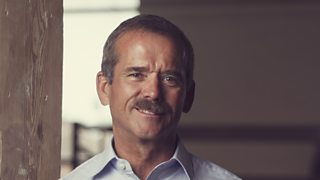
However, like most things in space, playing guitar on the space station isn’t exactly easy. After all, most instruments are designed to be held in a fixed position so that hands are left free to operate the strings, valves or keys – something that’s not easily afforded by the lack of gravity.
“As soon as the guitar is floating free, you no longer have that ability,” says Hadfield. “Imagine floating in a swimming pool, trying to play guitar accurately – or maybe just standing on your head. It's that disorienting and unfamilar.”
David Bowie understood the loneliness of space
Despite the lack of gravity, Hadfield’s extra-terrestrial guitar playing made him a household name back on Earth. In 2013, he recorded himself singing and playing a cover of David Bowie’s Space Odyssey whilst orbiting the planet at 17,000 miles an hour.
Hadfield was struck and moved by the song’s relevance to life on the space station, especially given that it was released before man had even set foot on the moon.
“It was as if it [Space Oddity] had been written for that environment,” he says. “For me it was a real reflection of the prescience and imagination of Bowie that he could get it so right, so early.”
When he’s not in space, Hadfield plays bass in an all-astronaut band on Earth
Max Q was founded in early 1987, partly in response to the previous year’s Challenger disaster, in which seven astronauts died when their shuttle broke apart just seconds after launch.
"Spirits couldn't have been lower,” says Hadfield. “People couldn't have been less optimistic about the future, having just lost a bunch of good friends. So some of the astronauts who had been musicians in small-time bands got together, mostly just to celebrate life.”
For Hadfield, playing music on the International Space Station has the same value and meaning. “It's an intensely busy place: it's a labratory, it's a machine that you live in. It's an intensely dangerous place and the pace of work is relentless. So to be able to have music there is really important, to be able to relax and play.”
Astronauts listened to Hans Zimmer’s music from Gladiator before blasting into space
Gladiator came out in 2000 as Hadfield was preparing to embark on his second space mission. He likens the experience of preparing for space travel to going into battle.
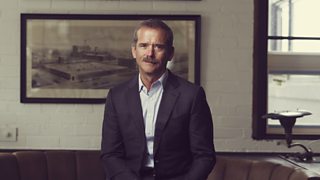
“Girding for battle is how it feels to go onto a spaceship,” he says. “You put on your armour, your spacesuit. You have prepared, trying to become physically and mentally fit. You recognise you're about to face something as risky as anything you've done in your life, of very high consequence.
“The night before we went out to the launch pad, we actually watched this scene from Gladiator, just to get our mental state right. And we said to each other as we went out to the launch pad, with a bit of a wry smile: ‘strength and honour’.”
Folk music can be good mental preparation for a space walk
A proud Canadian, Hadfield sees his journeys into space as a natural extension of Canada’s tradition of great explorers – from the First Nations people who arrived thousands of years ago to the more recent settlers.
It was Hadfield’s wife who asked Mission Control to wake Hadfield with music by the Canadian folk musician Stan Rogers on the morning of his first ever space walk. She chose a song called North West Passage, which tells the story of the early explorers who tried to find a route across Canada to the Pacific Ocean.

“She recognised that this was another historic Canadian exploration,” Hadfield says, “one that's being done at great personal risk. But it's also triumphant and interesting.”
Astronauts have used music from 2001: A Space Odyssey to accompany tricky space manoeuvres in real life
On his first ever space flight in 1995, Hadfield played Johann Strass II’s Blue Danube waltz as the Space Shuttle Atlantis backed away from the Mir space station. “Kubrick had decided that this beautiful, lilting melodic music would show the ballet of a spaceship, but also the peace and rich colours of the world beneath,” he explains.
“When [Strauss] first had the piece performed in Vienna, it didn't go over very well. But at the Paris World Fair in 1867, it was chosen to be played, and suddenly it caught on. It's interesting to think that a human creation isn't initially recognised for what it is, until it's brought to a new place and people can appreciate how magnificent it is.”
Gustav Holst got it right when it came to space
The composer’s suite for orchestra, The Planets, is one of the most famous celebrations of our solar system in music. Hadfield was blown away by the composer’s musical depiction of planets that by modern standards, he could barely have seen.
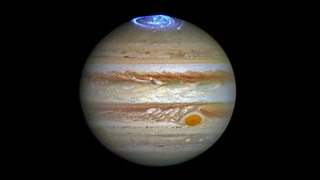
“Holst did his best, just after the turn of the century, to try and capture the current understanding of each [planet]. I think the sequence of music in Jupiter has sort of a jolly feel – and of course it’s the mother of them all, the gigantic planet in our solar system. I think he did a wonderful job of getting the immensity of it.
“It's staggering to see all of the imagery that's pouring in now from the Hubble telescope – not just of Jupiter, but all the infinite variety of its moons. It's like a new tapestry every time we look out there.”
Chris Hadfield talks about his route to the stars, overcoming fear and extreme danger, and the difficulties of playing a guitar in zero gravity on Private Passions. Listen live on Sunday 4 December or online for 30 days.
![]()
Chris Hadfield's Private Passions
Listen to the full interview along with selections of the music that accompanied him to space.
![]()
Private Passions: Paterson Joseph
Why has the the Black British 18th-century composer Ignatius Sancho been so unjustly neglected?
![]()
Grayson Perry: my Private Passions
The Turner Prize-winning artist describes the emotional power of music and memory.
![]()
Meet the New Generation Thinkers
The best and brightest ideas and research from a new generation of academics.