An introduction by Bernard Cornwell, author of The Last Kingdom and The Pale Horseman
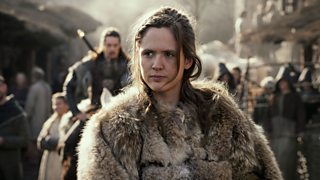
The Last Kingdom is the story of a nation’s making. It is a tale of endless war and at the end of it, in the early years of the 10th Century, a new nation is born; England. It is a story that is curiously ignored, almost as if we assume that England was always there, but the making of England is a tale of vast and savage struggle, and at times that struggle looked hopeless. When Alfred the Great was stranded in the Somerset marshes it seemed that Saxon Britain was doomed, and that Alfred’s Wessex would be the last Saxon kingdom. Instead Wessex expanded until, under Alfred’s grandson, the new nation emerged. England.
The hero of The Last Kingdom is part fictional and part real. There really was a man called Uhtred who was Lord of Bebbanburg, but we know almost nothing about him. I had never even heard of him until, at the age of 58, I met my real father for the first time. He was a Canadian named Oughtred, a name that had gone to Canada with emigrants in the 19th Century, and those emigrants had taken with them the family tree which traced the Oughtreds all the way back to the Saxons called Uhtred. I had ancestors who had taken part in the great struggle against the Vikings, in a war that had swept from Somerset and Surrey in the south to the frontiers of Scotland. I had always wanted to tell the story of that vast conflict, but now I had a name to hang the tale on; Uhtred of Bebbanburg. I had seen his signature on a charter, knew that he was the lord of a great fortress, Bebbanburg, which is now Bamburgh Castle, but beyond that he was hidden by history.
Now he comes to life in a television series. Much of the series, like much of the novels that tell Uhtred’s story, is fictional, yet the background is grimly real. The 9th and 10th centuries were desperate in Britain as adventurers and armies fought for land. The Saxons had taken the land from the British, who still fought back in forays from what is now Wales and Scotland, but in turn the Saxons are under siege from a dreaded enemy, the Northmen. Life is brutal, short and hard. Almost all of what would become northern England is captured by Vikings, East Anglia falls to the invaders, the Midlands go next, and Alfred the Great is forced on the defensive in the last kingdom, Wessex. That there is an England at all, and that we and much of the world speak English, is thanks to what happened next.
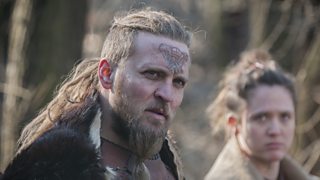
Alfred was a clever, pious and chronically ill man. He depended for his kingdom’s survival on the church, on trade and on warriors. This is an heroic age. The church would be destroyed and trade ruined unless the warriors can defend the land. It is a story of savage men in mail coats armed with big shields, swords, battle-axes and given a brutal ability to kill in close-quarter combat. Anglo Saxon poetry is filled with admiration for such men. Uhtred is one of them, and his story, like the larger story of the nation he helped to make, is full of drama. There were also heroic women, like Æthelflæd, Alfred’s daughter, who led armies against the enemy and reclaimed great swathes of land from an implacable enemy.
It is a tale made for television, a true story that explains the origin of our land, our culture and our language, a story of heroism and horror, of romance and revenge. I have loved writing the books and now look forward with intense enjoyment to seeing the stories come alive on the screen.

