Dyspraxia – it’s not the ‘clumsy disease’
By Zarah Hill // BBC The Social Contributor // 18 August 2022
My mum has dyslexia. She noticed those symptoms in me when I was a small kid and I got diagnosed with dyslexia too, as well as dyscalculia and dyspraxia. For me, these things go hand in hand.
Also – side note - why are they such hard names? That is a cruel joke for people who have dyslexia, dyscalculia and dyspraxia. I can't spell any of them!
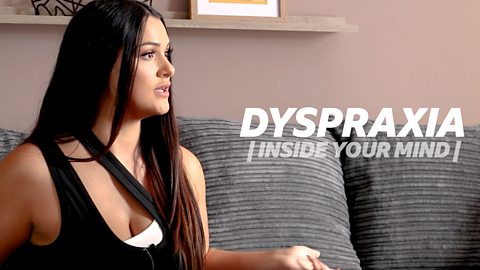
Dyspraxia | Inside Your Mind
Zarah has suffered countless spillages and injuries due to dyspraxia.
Dyspraxia, in my words, is that my brain and my body are not quite synchronised in the same way that other people's are. A lot of people call it the ‘clumsy disease’, but it’s more complex than that. However, I would say that a lot of characteristics that clumsy people have are similar to those who live with dyspraxia, so there is some overlap.
I am very aware that I see the world differently to other people. When I’m moving through the world, I am constantly falling over, crashing into things, spilling or smashing things. I’ve had my fair share of injuries, including when I fell down the stairs and broke my tailbone this January. It was so annoying! I was all ready for my new year’s fitness kick, and I could barely move, let alone get back into exercise.
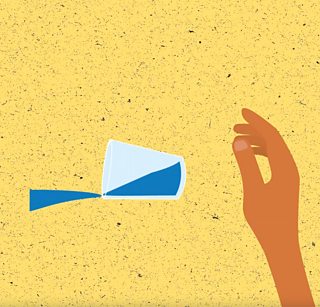
As well as the fact I often fall over, dyspraxia really affects my spatial awareness. It sounds so silly, but sometimes I struggle to pick up my glass to drink. I see the glass, I try to pick it up, but instead I knock it over. When I was younger, I actually used to spend a lot of time practising how to pick stuff up. I remember pouring glasses of water to get good at it. Practise makes perfect.
Dyspraxia can also affect your speech. For some people, it may affect the way that they move their mouth or the way the muscles in their throat move. For me, my verbal struggles are more to do with turning my thoughts into words – sometimes I get stuck.
Doing martial arts has really helped me cope with my Dyspraxia. I have done karate my whole life, an activity you might not automatically associate with someone who has dyspraxia. However, karate training really improves your balance and coordination, which has helped with my movement issues.
I trained from the age of two until the age of 20 and was the youngest black belt in Europe, at age seven. I ran my own karate classes from the age of 16 and trained six times a week.
The reason I know that martial arts really helped with my dyspraxia was that when I stopped, I found that my symptoms were a lot worse. My new form of exercise is pole dancing, and since starting that I have found a marked improvement in my balance and coordination again.
It's clear to me that I see the world differently to other people, and I don't think that's a big issue – it’s just my reality and I don’t worry too much about it.
Maybe dyspraxia has given me thicker skin from all the bruises. It’s just part of who I am.