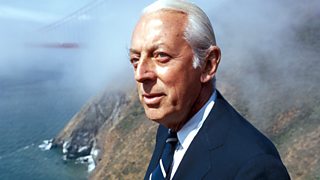
Vietnam veterans' memorial
I go back to the first 11 November, that is, to the first time that the date meant something special, as 5 November or 4 July means something special in the life of one country or another.
The morning papers had the Armistice terms all over the front pages and I went out and bought several sheets of what we called cartridge paper and sat down and copied out – in the closest a ten-year-old could come to copperplate – the long list of the Armistice terms. By then, gluing the sheets together, I produced what, to me at any rate, looked uncommonly like a state document, about three feet long. I rolled it up, tied it with a red, white and blue ribbon, secured it with a gilt safety pin and was ready for the review. What review?
The review of our subjects, the Allied peoples or as many of them as might be at large on the streets of a northern seaside town. My mother thought it only proper that we should go for a walkabout and so we did. Lancashire people were not in the habit of howdy-doing each other in the street but they nodded and smiled and tipped hats, which seemed to me not more, and no less, than an acknowledgement that they were in the presence of an envoy plenipotentiary, marching around and holding in his tight little fist, the terms to which the Germans had been compelled to surrender.
Almost back home, round our corner, was a, what we called a confectioner. For many, many months, he'd confected very little apart from brown bread but as we were passing by, we were riveted by a strange and wonderful sight. Gleaming in the middle of the window was a cut-glass cake stand which, so far as I knew, had never seen a cake, but now it had neatly planted in the middle of it a bun – what Americans call a cupcake – and on the top of the bun was a little circle of glistening snow. It was, of course, not snow. It was icing. I had never seen icing and the sight of it drove from my childish mind all thought of the battle cruisers to be surrendered, the coming occupation of the left bank of the Rhine, the fate of Alsace Lorraine and all the rest of it. To this day, the sight of an iced cupcake is a logo, or symbol, of Armistice Day.
Now from old newsreel clips, you'd gather that it was a joyful day, and so it was. Church bells ringing, flags being hoisted outside public buildings and back gardens, an ocean of happy people heaving and chanting outside Buckingham Palace. What you don't see, though is the proof of remembered grief. Every street in our town and in most towns and cities of Britain, there were, by now, at least half a dozen young women and middle-aged women who wore nothing but black. The end of the enormous slaughter and the ringing bells and the waving flags were a harsh reminder that their own men had failed to survive by a year or a month or a week.
In the following years, Armistice Day was everywhere a solemn commemoration. At eleven in the morning of every subsequent 11 November, the traffic and the business of every place between San Francisco and the Orkney Islands stopped and, for two minutes, there was this eerie silence of people standing bowed in their tracks. No movement, except for the wheeling of pigeons and the wind murmuring through the trees.
I don't know how long this went on, certainly I think into the late 1930s, but the Second War buried the memory and the observance of it till there was a generation of youngish people with hints of grey hair who had to be told why 11 November was a special day. Just as, in this country, only historians and professional Southerners, by now, know that the once-sacred 9 April is the day the American Civil War ended.
In America, the date 11 November is still commemorated but so far as millions of ex-soldiers are concerned, it could be a whimsical or arbitrary choice of a day on which to celebrate what is now called 'Veterans' Day'. It's observed in churches and in some towns by parades and is meant to pay tribute to the men and women who died in all the American wars from the Revolutionary War on, but more and more it is has come to recall and commemorate the last war. So, for some years it was dedicated to the American dead in Korea. Now and on Thursday, it seemed to mean exclusively the memory, the bitter memory,of Vietnam.
President Reagan turned up at the National Cathedral in Washington and sat and listened for a while to a new ceremony, the slow recital, name by name, of all the Americans who died in Vietnam. In another part of the Capitol, hard by the towering white columns of the Lincoln Memorial, they have just finished another memorial – a sombre wall, literally a stone wall of many panels on which the 58,000 names, each less than an inch high, are inscribed in chronological order of death. No muscular statues, no heroic figures planting the flat, no sculptured angels of victory, no wreaths. Just a stony reminder of the one war about which there is no consensus. All day long and through the night, veterans and widows and families straggled by lighting matches, flashing torches, peering to find the name that meant most to them.
Because it is the one, lost war and because there is no agreement about it, there was almost no mention of any previous war. The television networks put on several programmes, none of them merely ceremonial. They mostly stirred up the ashes of an issue that still burns and afflicts something like 200,000 men who were wounded, came back and survived. Some in health, some still ailing, very many deeply resentful of a curious, sad fact which is that, whereas the end of all former wars was elaborately celebrated with roaring crowds and the return of the fighting men with ticker-tape parades and heroic bands and the like, the survivors of Vietnam dribbled home almost furtively, like, as one of them put it, men just released from jail, who had to adjust to a society that looked on them with pity at best, suspicion at worst.
Certainly, they were not made to feel like heroes and they've paid a grievous price in emotional sickness as the onlooking citizens have paid a reluctant price in taxes for their care and rehabilitation. Among the mass of citizens and politicians who still remember the war that ended ingloriously seven years ago, there are two opposing and stubbornly held views.
One was expressed as unapologetically as he might have expressed it ten years ago by President Reagan. 'The names being read,' he said, 'are of men who died for freedom just as surely as any man who ever fought for this country. The tragedy was that they were asked to fight and die for a cause that their country was unwilling to win.' That last phrase is the key to the position of the still unashamed hawk, from Lyndon Johnson to General Westmoreland to Ronald Reagan. We could have won the war and had the opportunity to do so several times over, but the military was not allowed the means or the tactics to do it. Nobody that I've heard says what those means were, short of tactical nuclear weapons or another million or two men and a massive American invasion of the north. Who didn't allow them to win?
In a country which still hews to the system that finds war too important to be left to the generals, the answer has to be the president and his civilian advisers. But Mr Nixon was, and is, as hawkish as anybody and the truth, which was plain as day at the time, but which must now be obscured by assertions of enforced impotence is that the rebellious students, the rejecters of the draft, the huge rallies of protesters, the anarchy that threatened to overtake the life of the cities, these were the forces that compelled first Lyndon Johnson to quit a second run for the presidency and compelled Mr Nixon himself not to promise an impending, triumphant defensive, but to boast that he would get the boys home soon and once for all.
The opposing view still held by legions of doves quotes first old gurus like Walter Lippmann and President Eisenhower who said that it would be a catastrophic decision of policy to send American forces on to the continent of Asia. The same thought, the same plea not to do it, was made to President Johnson by General MacArthur, practically with his dying breath. So this view says what it always said, that the Americans had no business in Vietnam and that the Domino theory was a fiction, the belief that if Vietnam succumbed to Communism, the infection would spread country by country, all the way to India.
There was a third view, a third camp of people who believed that in the beginning, America's motives were honourable and right. These people were what you might call 'hang-over liberals' from John F. Kennedy who, in his inaugural speech, gave the heady promise to 43 nations allied by treaty or other formal agreement that we shall pay any price, bear any burden, meet any hardship, support any friend, oppose any foe, to assure the survival and the success of liberty.
This was fine talk but, after a year or two or more, it became clear to the American people that this was one war which would not be won by rhetoric or even by afore-stated policy. It became plain to the point of eventual despair that America might be right but was she able? And it turned out, to the bewilderment of the other 42 allies, that Americans did not have the means – any means the people would permit – to win that war. They had to invent means, dreadful means of holding the lines, massacre and bomb-free runs over villages housing perhaps the Vietcong but certainly many old women and children.
What fanned the people's bafflement and rage was seeing much of this on television. It was the first war fought without the cloak of front-line censorship. No one in the beginning was more hawkish than the former Secretary of State, Dean Acheson, but a year or two before he died in 1971, he came to make the awful comment, 'It is not only immoral, it's worse. It's a mistake'.
All these regrets and enmities and assertions and recriminations welled up again on Thursday. We can only pray they will soon simmer and sink away.
In the meantime, whatever is to be the verdict of history, we have in Washington by way of a national monument a bleak reminder that out of Vietnam we acquired not an equestrian statue but a stone wall.
This transcript was typed from a recording of the original BBC broadcast (© BBC) and not copied from an original script. Because of the risk of mishearing, the BBC cannot vouch for its complete accuracy.
Letter from America audio recordings of broadcasts ©BBC
Letter from America scripts © Cooke Americas, RLLP. All rights reserved.
![]()
Vietnam veterans' memorial
Listen to the programme