South coast curtain raises on celebrated actor
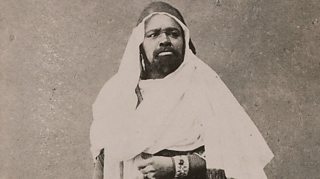
He became one of the highest paid actors in the world and here he was appearing on a stage in Southampton in the role for which he is arguably the most famous.
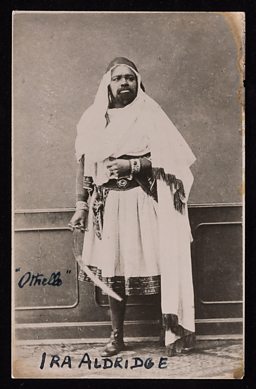
Ira Aldridge, the first black Shakespearean actor, took the lead in Othello in the south coast theatre just two years after first appearing in the role at London's Royalty Theatre in 1826.
![]()
Much ado near me
Hear more Shakespeare stories on BBC Radio Solent
![]()
Shakespeare Festival 2016
The BBC celebrates the genius of the bard
His performances in the provinces or the English regions were very successful and he spent a lot of his time touring the country rather than performing in the capital.
After a performance as Othello in Scarborough he was described as an “actor of genius”
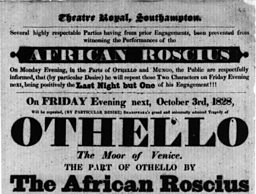
We can see from this playbill, now stored in the British Library, that he also called himself African Roscius after the famous Roman actor of the first century BC.
Interestingly, he had limited experience of acting when he arrived from New York in 1824. As a result he played up his African lineage, claiming to be descended from the Fulani princely line.
After a performance as Othello in Scarborough he was described as an “actor of genius”.
But although he conquered the English provinces, the capital was not as easy. The traditional story is that Aldridge was not accepted by London audiences because of racism and some national newspapers at the time wrote racist reviews of his performances.
“Owing to the shape of his lips it is utterly impossible for him to pronounce English,” said the reviewer in one newspaper in 1825.
However, not all of these critics were negative. The Globe found his voice "distinct and sonorous"
Current research suggests that the story is less clear cut. A flu outbreak was responsible for a low turn-out by audiences in the capital and those who supported slavery may have attempted to bribe some reviewers.
However, not all of these critics were negative. The Globe found his voice "distinct and sonorous".
Either way Aldridge spent most of his professional career touring the cities and towns of England, as well as on the continent where he was extremely successful. In Russia he was paid £60 for every performance, one of the highest paid actors in the world.
At a performance in 1863, French poet and novelist Théophile Gautier described his performance as “Othello himself, as Shakespeare has created him…quiet, reserved, classic and majestic.”
When Aldridge died in Poland, at the age of 59 in 1867, he was given a state funeral. Undoubtedly, Aldridge helped educated audiences to see black people in a new light, as equals in intelligence, artistic endeavour, and sensitivity.
More on Ira Aldridge
![]()
Sir Lenny Henry on Black British Theatre
The actor and comedian explores Othello and 100 years of black British theatre and screen
![]()
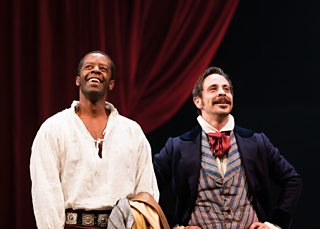
Rediscovering Ira Aldridge with Adrian Lester
Writer of Red Velvet, Lolita Chakrabarti, interviews her husband, actor Adrian Lester, about portraying Ira

The actor who overcame prejudice to win over audiences
By Zoë Wilcox, Curator at British Library
The African American actor Ira Aldridge was born in New York City and came to Britain as a teenager to pursue a career on the stage.

He first performed in Britain in 1825 and quickly became popular with audiences across the country. Almost all of Aldridge’s professional career was spent continuously touring because theatre managers would not employ him for longer periods, meaning that he was probably seen by a wider variety of people than any other Shakespearean actor of the day.
The best known event in Aldridge’s life is his ill-fated appearance as Othello at Covent Garden in 1833, which garnered hostile reactions from sections of the press opposed to a black man performing Shakespeare in such a prestigious venue.
The cancellation of the engagement after only two nights might lead us to believe that audiences in London were less accepting of a black Shakespearean actor than elsewhere, but this is not exactly true.
Audiences for Aldridge’s Covent Garden performances were thin on the ground due to an outbreak of the flu (and the fact that numbers were lower even than other nights during the period of the outbreak might suggest that some people stayed away on principle), but the majority of theatregoers were enthusiastic about his performance. Even the critic from The Times, one of the harshest reviewers, grudgingly admitted that Aldridge was ‘extremely well received’.
Shakespeare on Tour
From the moment they were written through to the present day, Shakespeare’s plays have continued to enthral and inspire audiences. They’ve been performed in venues big and small – including inns, private houses and emerging provincial theatres.

BBC English Regions is building a digital picture which tracks some of the many iconic moments across the country as we follow the ‘explosion’ in the performance of The Bard’s plays, from his own lifetime to recent times.
Drawing on fascinating new research from Records of Early English Drama (REED), plus the British Library's extensive collection of playbills, as well as expertise from De Montfort University and the Arts and Humanities Research Council, Shakespeare on Tour is a unique timeline of iconic moments of those performances, starting with his own troupe of actors, to highlights from more recent times. Listen out for stories on Shakespeare’s legacy on your BBC Local Radio station from Monday 21 March, 2016.
You never know - you might find evidence of Shakespeare’s footsteps close to home…
Craig Henderson, BBC English Regions
Related Links
Shakespeare on Tour: Around the Solent
![]()
Shakespeare's flagship acting company comes to Bridport
However the company were then turned away in 1624
![]()
Portsmouth hosts Hamlet performance
Audience enjoy Hamlet in Naval Portsmouth as war rages over American Independence
![]()
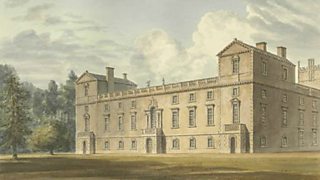
Shakespeare's men perform before the King at Wilton in Salisbury
A royal audience in Salisbury
![]()
Shakespeare and Hampshire - where his footprints are lost in time
Is there any written evidence linking Shakespeare to Southampton?
Shakespeare on Tour: Around the country
![]()
Ira Aldridge
Ira Aldridge - the first black Shakespearean actor
![]()
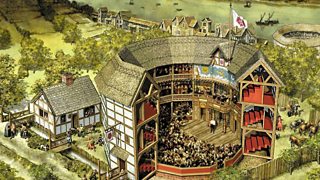
Blossoming at the Rose Theatre
Shakespeare, budding playwright and actor, at the Rose Theatre from the spring of 1592
![]()
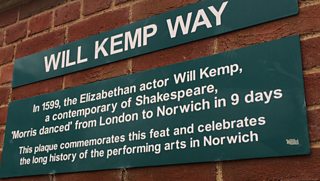
Will Kemp dance finished in Norwich
Why did Will Kemp, Shakespeare's former clown, dance from London to Norwich?
![]()
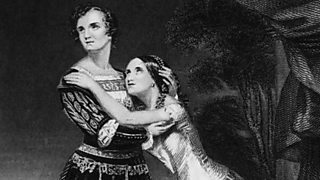
London's Female Romeo
Charlotte Cushman, the American actress who took Victorian London by storm