How to win an Oscar: The inside tricks of the movie trade
28 February 2018
So you've got the critical acclaim, you've got the industry buzz, you might even have a Golden Globe in your downstairs loo. But how do you convert all that into Oscar glory? Variety film critic GUY LODGE has put together a guide to winning an Academy Award. Use at your own risk...
1. Choose your scripts wisely... or cynically

Every actor in the business knows this one.
There are certain roles, in certain genres, that the Academy is perennially powerless to resist: biopics of historical icons (from Daniel Day-Lewis's Abraham Lincoln to Helen Mirren's Queen Elizabeth II), disability survival stories (particularly if combined with the former category — Eddie Redmayne as Stephen Hawking in The Theory of Everything was a perfect storm) and Holocaust dramas.
Kate Winslet's droll sendup of the latter ploy in Ricky Gervais's Extras came back to haunt her a few years later, when Oscar came knocking for The Reader.
As Gary Oldman, currently cruising to a Best Actor win for his blustery Winston Churchill impression in Darkest Hour, can tell you, you can never be too obvious.
2. Time your release just right
There was a long stretch when coming out at Christmastime was the surest way to embed yourself in voters' hearts and (short) memories.
But since the Oscar season was shortened by nearly a month in the mid-2000s, the timing has got trickier: no December release has won Best Picture since Million Dollar Baby in 2004.
Come out too early, like summer hit Dunkirk, and you risk losing your frontrunner buzz to newer, shinier toys; too late, like word-of-mouth phenomenon The Greatest Showman, and voters might not even get around to seeing you in the end-of-year crush.
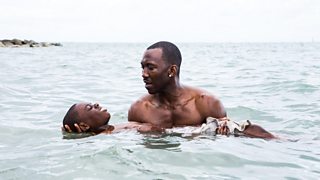
Autumn is now the sweet spot: the last five Best Picture winners, from Argo through to Moonlight, all began their rollout in October.
3. Get into voters' living rooms, and early

Unlike with cinema releases, when it comes to sending “for your consideration” DVDs to voters, the earliest birds tend to get the worm.
Particularly for low-profile indies and outliers that'll later get lost in the shuffle.
Almost nobody had seen the scrappy 2011 immigrant study A Better Life when it snagged a surprise Best Actor nomination for Mexican character actor Demian Bichir — except members of the Academy, for whom the film had been the very first disc in the mail, way back in September.
This year, Fox spotted an opening for hard-edged X-Men spin-off Logan in an unusually sparse Best Adapted Screenplay race, and sent their screeners out first: lo and behold, it's now the first superhero film ever to be nominated for writing.
4. Spend, spend and schmooze

Back in 1967, Fox's wildly over-budget musical turkey Doctor Dolittle was critically derided and bombed at the box office.
So how did they snag a Best Picture nomination for it?
Simple: by laying on lavish champagne dinners for Academy members in the film's honour, taking campaign budgets to a level that Harvey Weinstein further exceeded in his 1990s heyday.
And it was with Shakespeare in Love, which famously outpaced bookies' favourite Saving Private Ryan in the 1999 race, that the roof was blown off: Weinstein's studio Miramax spent a record $15 million on the film's Oscar campaign, nearly eight times the average allocation for studio contenders at the time.
5. Badmouth the competition

Speaking of Weinstein, it should come as no surprise that he wasn't averse to more underhand tactics.
In the 2002 race, the John Nash biopic A Beautiful Mind prevailed in the Best Picture category, but only after enduring an ugly whisper campaign against its historical credibility, with reports accusing it of whitewashing its subject's alleged bisexuality and anti-Semitism.
Weinstein, who was invested in rival nominees The Lord of the Rings and In the Bedroom, was forced to apologise when Miramax was caught passing such reports to journalists.
Such mud-slinging is a recurring feature of the race: in 1999, Denzel Washington's much-fancied Best Actor chances for the Rubin Carter biopic The Hurricane were scuppered by a slew of media reports on the film's factual inaccuracies.
6. Take matters into your own hands
In 1990, Diane Ladd knew that her off-the-wall part in David Lynch's demented Wild at Heart wasn't obvious Oscar fodder.
But she landed the nomination — and the actress's individual handwritten letters to her peers in the Academy's acting branch, signed “In light with love, Diane Ladd”, surely helped.
But the gold standard for personal campaigning will forever be owned by Melissa Leo.
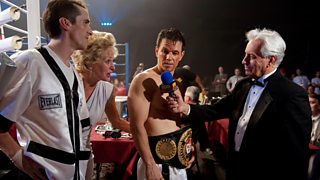
Not trusting Paramount to seal the deal for her juicy supporting turn in boxing biopic The Fighter, the scrappy character actress shelled out for own full-page ads in Hollywood's trade papers, featuring the single word “CONSIDER” over gauzily lit glamour shots of Leo draped in faux fur.
She was immediately ridiculed in the media, but had the last laugh: Leo not only won the Oscar, but became an overnight camp icon.
7. Stay off the phone

If you're going to try some personal canvassing, make sure it can't be traced.
Eyebrows were raised in 2014 when Alone Yet Not Alone, a listless dirge from a wholly unknown Christian drama of the same name, popped up amid the Best Original Song nominees: turns out the song's composer Bruce Broughton, a former head of the Academy's music branch, had lobbied at least 70 of his branch peers by phone for their vote.
The Academy swiftly revoked his nomination, sparing the telecast one very dreary musical number, but the lesson wasn't learned by all: last year, sound mixer Greg P Russell also had his nomination for Benghazi action flick 13 Hours snatched away after it emerged he had made more than a few calls to voters.
8. If all else fails... be Meryl Streep

Forget everything you've just read: Streep doesn't need to advertise, hobnob, cut ribbons or sling mud to secure her near-annual nomination.
She doesn't even need to star in a film that anyone likes. (Here's looking at you, Music of the Heart.)
Doing her job on screen is enough, apparently, even when her film's campaign is rapidly cooling.
This year, Steven Spielberg's much-hyped, late-breaking The Post went unexpectedly from can't-miss Oscar bait to shrugged-off also-ran, scoring just two nominations — one of them for Streep, the 21st of her career.
It's a record unlikely to be broken in our lifetimes.
The 90th Academy Awards are announced on Sunday 4 March in Los Angeles. A full list of the 2018 nominees can be found here.
More from Front Row
![]()
Shows within shows
The animated characters who watch other shows on TV.
![]()
Podcast transitions
Can your favourite audio survive a move to the screen?
![]()
Ready to rumble?
Seven times the art world grappled with wrestling.
![]()
Apocalypse now
Seven doomed futures from E3’s hottest games.



More from BBC Arts
![]()
Picasso’s ex-factor
Who are the six women who shaped his life and work?
![]()
Quiz: Picasso or pixel?
Can you separate the AI fakes from genuine paintings by Pablo Picasso?
![]()
Frida: Fiery, fierce and passionate
The extraordinary life of Mexican artist Frida Kahlo, in her own words
![]()
Proms 2023: The best bits
From Yuja Wang to Northern Soul, handpicked stand-out moments from this year's Proms