Delirious schoolgirls: Carol Morley talks teen rebellion
1 February 2017
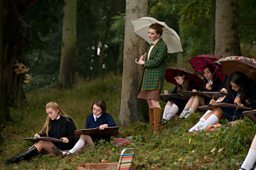
"I have to make a film or I will die" - so says writer/director Carol Morley, whose acclaimed film The Falling, a fictional account of a mysterious outbreak of mass fainting at an all-girls school, receives its UK television premiere on Saturday 4 February on BBC Two. RACHEL ALLISON took Morley back to school to talk mass hysteria and teen rebellion.
Carol Morley on The Falling
The director discusses her 2015 film about a fainting epidemic at an all-girls school.
As she perches apprehensively on the corner of a desk at Glasgow’s Scotland Street School Museum, Carol Morley, who left school at 16 with no qualifications, recalls her own scholastic experiences.
She says: "I went to a very big comprehensive school in Stockport and my mum was taken to the town hall - to court, really - for my truanting, so I was quite bad. I found school quite difficult. I think I wanted to go there to learn but it was quite a disruptive atmosphere. A lot of people were there to muck about."

After a more prolific stint at Central Saint Martins College of Art and Design, where she studied fine art and video, Morley found her voice as a filmmaker. She explains: "In 1999 I got money from the Arts Council to make a film called The Alcohol Years. I thought it would last about 10 minutes but it turned into about 50 minutes - it was an exploration of my wild teenagehood in Manchester in the 80s."
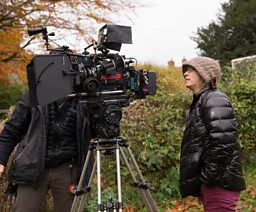
Morley admits that for years she's been obsessed with all-female institutions such as all-girls' schools and nunneries. That interest was strengthened after a phone call with her former film teacher, Bev Zalcock, who told her about a medieval village that had a laughing epidemic.
This sparked an interest in mass psychogenic illness or, as it's more commonly known, mass hysteria - which led Morley to learn about several incidents that occurred at female institutions.
She says: "There are some cases that got quite well written up. One took place in Blackburn in 1965 - the article is called something like 'an epidemic of overbreathing'.
"It was fascinating. Apparently one of the things that accentuated it was that when the school were dealing with it, they were worried the girls were going to fall over and hurt themselves so they started to lay them out in the corridors.
"Other girls saw them laid out and got more worked up and so would start to fall themselves - ambulances were called. Because it was so big the medical authorities got involved. But there are many that go unreported."
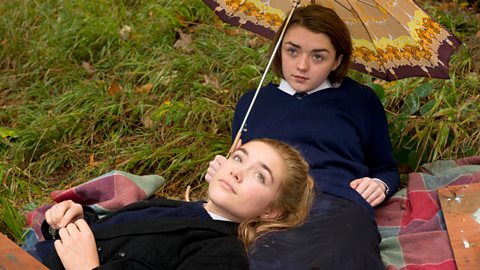
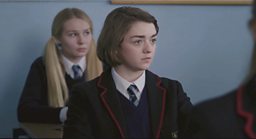
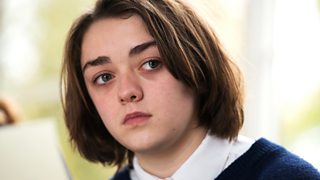
Morley worked with the casting agent Shaheen Baig to assemble a mixture of new and experienced actors. It was through leafleting local schools that they found newcomer Florence Pugh. She plays Abbie, best friend to Lydia, who is played by Game of Thrones star Maisie Williams in the film's central story.
I think Maisie really loved that I'd never seen her as Arya Stark. I think that gave her a lot of freedom
Morley says: "I think Maisie really loved that I'd never seen her as Arya Stark. I think that gave her a lot of freedom as well. I've still never seen it and I don’t want to - I don't want to see them as anyone else, actually, because they belong to me [laughs]."
None more so perhaps than Maxine Peake, who plays Eileen Lamont, mother to Lydia. This is not the first time Peake has appeared in one of Morley's films - and the director hopes it won't be the last.
Morley says: "I really admire her as an actor and I love the conversations that we have. I think Maxine gave me a lot insight into the life of an actor so I feel like I want to collaborate with her on a lot of stuff and work with her again.
"You know how Derek Jarman had Tilda Swinton? Well I've got Maxine Peake, this is how I see it – she is my muse."
The Falling will show on BBC Two on Saturday 4th February 2017.
This article was first published on 20 April 2015.
Related Links
Watch The Falling
![]()
21:45 on BBC Two
At their strait-laced girls' school friends Abbie and Lydia find their lives touched by tragedy.
More film from BBC Arts
![]()
Citizen Kane
Seven things you might be surprised to learn about Orson Welles' classic film.
![]()
Reconstucting reality
When documentary-makers recreate true stories, it can have an incredibly powerful impact.
![]()
British animation secrets
The ingenuity that defines contributions to the art form from the UK.
![]()
Game changers
The black actors, directors and producers who paved the way for the current generation.