Fifty Reasons Why The Lost Era Of The Early 1950s Is Ripe For Rediscovery
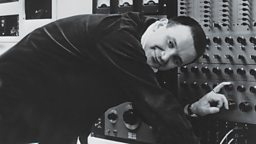
There's more to the 1950s than Buddy Holly. Bob Stanley on the decade that shaped modern music.
1. The very first UK chart was published in 1952 in NME: all forms of music were present (film themes, comedy songs, ballads, teen idol finger-snappers) and the charts would stay that way for the best part of 50 years – all tastes catered for, no snob filter.
2. Al Martino was at the top of that first chart with the semi-operatic, gloopy proto-power ballad Here In My Heart.
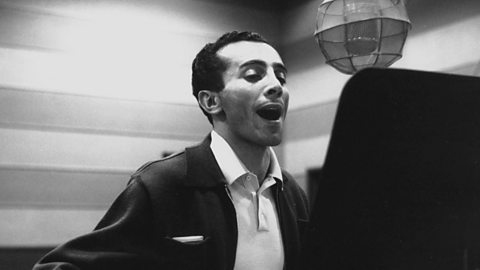
Maureen: Stealing her sister's Al Martino record
Maureen remembers 'liberating' an Al Martino disc from her sister's radiogram in 1953
3. It was dislodged after nine weeks by Jo Stafford's bossy, but decidely sensual travelogue You Belong To Me.
4. Jo was renowned for being pitch perfect, which tempted her into making Les Dawson-esque records under the name Darlene Edwards - check out her version of Staying Alive.
5. Kay Starr's rollicking Comes Along A Love, with its thunking, rock'n'roll-anticipating bassline, went to number one in January 1953 - and, hats off, Kay's 93 and still performing.
6. Vocal group The Stargazers were regulars on The Goon Show. Their bizarre, drunken singalong I See The Moon was number one for six weeks. It's pretty unique - though that might be a good thing.
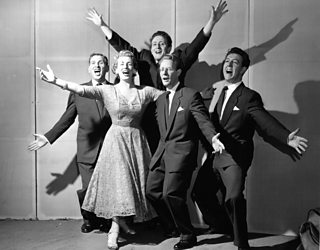
7. Novelty records were big business. Check out Stan Freberg's politely suggestive John And Marsha, as quoted in Mad Men.
8. Some of the oddest records of the era were made by guitarist and tape-manipulating wizard Les Paul with his wife Mary Ford.
9. Their Mockingbird Hill sounds like it's been sculpted from primitive wires and valves - it actually sounds like electricity.
10. Other sonic innovators of the fifties included Raymond Scott, who had written much of the music for Bugs Bunny and Daffy Duck cartoons
11. Scott's Manhattan Research lab, which he funded in the 50s by leading the NBC orchestra on American TV, led to the development of the synthesiser. The young Robert Moog worked for Scott.
12. Mitch Miller was the head of A&R for Columbia Records, managed the careers of several massive stars, and loved to tinker in the studio
13. The first time the world heard a singer harmonising with herself was on Patti Page's gorgeous, Mitch Miller-produced Tennessee Waltz in 1950. All done with tape manipulation, it became a multi-million seller.
14. Country music began to edge into the British consciousness - Slim Whitman's yodelling Rose Marie was 1955's biggest selling single.
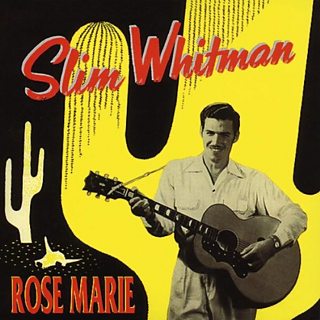
15. British singers Michael Holliday (Nothin' To Do) and Jimmy Young (The Man From Laramie) covered country hits for the UK market, with a certain buttoned-up Home Counties charm.
16. British R&B covers were a rarity. Pipe-smoking Dennis Lotis rugby-tackled the Drifters' Honey Love
17. ... but Alma Cogan did a more-than-acceptable cover of Fats Domino's I'm In Love Again, which suited her nickname "the girl with the laugh in her voice."
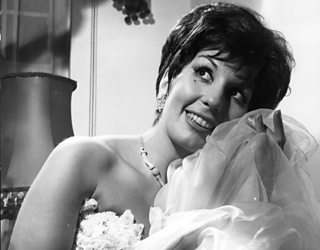
18. Alma later had a cross-generational fling with John Lennon.
19. In America, R&B had its own chart, known in the 40s as the 'race chart', which largely kept black music off the pop charts.
20. Billy Ward & his Dominoes' Sixty Minute Man in 1951 was one of the first to sell so heavily it hit the pop charts anyway.
21. It was rather rude: "There'll be fifteen minutes of kissin' then you'll holler 'Please don't stop'. There'll be fifteen minutes of teasin', fifteen minutes of squeezin', and fifteen minutes of blowin' my top."
22. Most white radio stations, unsurprisingly, banned it.
23. The BBC didn't need much of an excuse to ban anything in the early fifties. Tony Bennett's Stranger In Paradise was struck from the playlists as it was based on a classical piece by Boronin. How disrespectful!
24. Don Cornell's 1954 number one Hold My Hand was banned for it's opening line: "So this is the kingdom of Heaven..." Really? How would Don know? Sacrilegious!
25. Folk group The Weavers, who had an international hit with Goodnight Irene in 1950, received an almighty ban of their own.
26. They helped introduce Sloop John B and Rock Island Line to the world, paving the way for the sixties folk boom...
27. ...but split after two of the group were blacklisted as "Unamerican" for their Communist Party connections.
28. Pianist Winifred Atwell's Poor People of Paris was the only number one hit to use a musical saw. The only one so far, at least.
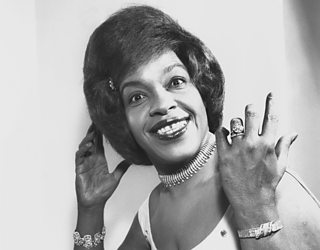
29. Winnie went on to open the first hair salon for black Londoners, in Brixton in the late fifties, and to be Sharon Osbourne's landlady.
30. Eddie Fisher's two UK number ones (Outside of Heaven, I'm Walking Behind You) both found him attending his ex's wedding.
31. In real life, his wives (Debbie Reynolds, Elizabeth Taylor, Connie Stevens) were rather more memorable than his hits.
32.Preston's most famous son, after Tom Finney, was moustachioed charmer Eddie Calvert who was known as 'the man with the golden trumpet'.
33. Calvert's O Mein Papa, a 1953 number one, is the definitive sound of ration-hit post-war Britain. The organ sounds as if it was built from bottle-green chipboard.
34. Smoky-voiced, short-haired Lita Roza was the most glamorous of the UK's female stars of the early fifties.
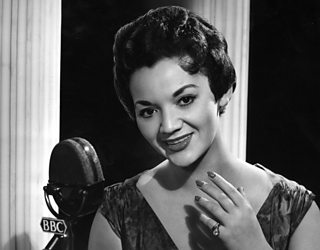
35. Lita was terrified at the prospect of only being remembered for her biggest hit, the Junior Choice-favourite How Much Is That Doggie In The Window...
36. ...so do the late Lita a favour and check out Leave Me Alone, or the superb Listening In the After Hours album.
37. Dickie Valentine was the "British Sinatra" and scored a brace of number ones with Finger Of Suspicion in '54 and Christmas Alphabet in'55.
38. Dickie and Lita both went solo having been singers with Ted Heath's big band (not the same Ted Heath who became Prime Minister in 1970, though he also like to wave a baton, just to confuse matters).
39. David Whitfield rose to fame after winning Opportunity Knocks, making him the godfather to every Britain's Got Talent and X Factor winner since.
40. In spite of his rubbery muppet voice, Whitfield's million-selling Cara Mia has a certain floating, celestial power.
41. That was thanks to the arranger, Mantovani, famous for his "cascading strings" which were extraordinarily rich sounding to austerity-hit Britain.
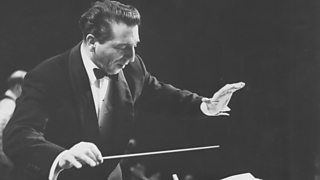
42. Born in Venice but raised in London, Mantovani became Britain's most successful album act before the Beatles, and the first act to sell over one million stereo albums.
43. The first genuine, seven inch hit single was Mario Lanza's Because You're Mine in 1952.
44. Mario acquired this accolade because EMI's first run of seven inches (in October 1952) were all classical titles - pop singles followed in January 1953.
45. The heroic Frankie Laine was a bear of a man who had first hit the headlines by winning dance marathons in the thirties.
46. His singles like Blowing Wild, Where The Wind Blows and Swamp Girl were part western, part gothic horror. Nick Cave is almost certainly an admirer.
47. Frankie's Girl In The Wood was, shall we say, an influence on John Leyton's Joe Meek-produced Johnny Remember Me.
48. Rock'n'roll was there, in a formative stage, if you looked closely enough. Bill Haley and his Comets' Crazy Man Crazy was the first undeniable R&R hit, making the US Top 20 in 1953.
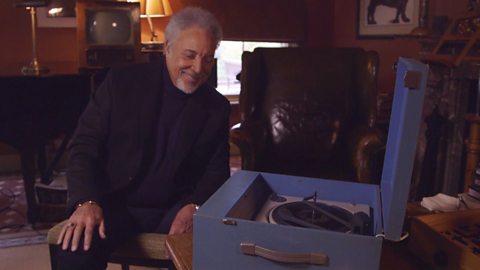
Tom Jones on the 50s: Rock Around The Clock 'hit me like a tonne of bricks'
Sir Tom Jones on the decade that defined him and his music, for BBC Music: My Generation
49. He may have been a rock'n'roll hater, but Frank Sinatra recorded a great jiver called Bim Bam Baby in 1953: "Run your flim flam fingers through my greasy hair!" roars Frankie.
50. Still, Sinatra's early fifties were a commercial fallow period - he turned a corner with the delicious Young At Heart in 1954, and by 1956 was taking on all-comers with his Songs For Swinging Lovers, the first true pop album.
Bob Stanley is a musician, journalist and pop music aficionado. His latest book 'Yeah Yeah Yeah: the Story Of Modern Pop' is out now in paperback.