Forward thinkers: How Marx, Nietzsche and Freud shaped the lives of millions
By Bettany Hughes | 14 June 2016
We might not realise it, but we all live with a 19th-century male philosopher in our lives. Karl Marx, Friedrich Nietzsche and Sigmund Freud are towering thinkers, men with the wit and the will to question the status quo.
Their ideas shaped the lives of millions in the 20th century and in the 21st they still have exponential influence. From pop songs to global economics to our attitudes to sex, the theories and aphorisms of these three dead, white males underpin everyday experiences.
‘What doesn’t kill you makes you stronger,’ opined Nietzsche; ‘the pleasure-principle’, ‘wish-fulfilment’ and ‘anally retentive’ are all Freud’s coinages, while Marx’s condemnation of religion as the ‘opium of the people’ is trotted out to condemn everything from arranging church flowers to ISIS attacks.
If we are to appreciate the potent nuance of these philosophers we have to understand the origins of their works. So, from the snow-blasted Czech Republic to the absinthe cafes of Montmartre and the lunatic asylums of Switzerland, I’ve been tracing their back story for a new BBC Four series, Genius of the Modern World.
And here are some things you might not know about these three game-changers...
Watch on BBC Four

Bettany Hughes begins her examination of three great thinkers with Karl Marx on Thursday 16 June, at 21:00. Nietzsche and Freud follow on 23 and 30 June. Each episode will be available on BBC iPlayer for 30 days. Produced by BBC Religion and Ethics in partnership with The Open University.

1. Marx loved Shakespeare
Marx grew up in thoroughly bourgeois surroundings in the elegant town of Trier, marrying the daughter of a baron who introduced him to Shakespeare.
As a wordsmith Marx’s prose-style is epic, theatrical, quotable. Marx’s family owned vineyards and one relative would go on to found the Philips white-goods empire.
But like Nietzsche and Freud, Marx had a challenging youth. His father had to convert from Judaism to Christianity to keep practicing as a lawyer and as a schoolboy Marx witnessed Prussian oppression first-hand.
Freud grew up in impoverished lodgings in small-town Moravia with his complex, Jewish family (Freud’s infant soulmate was also his nephew), while Nietzsche watched his Lutheran-pastor father die an excruciating death from brain disease.
2. The power of the classical past
Marx’s first major academic work was a study of the Greek philosophers Democritus and Epicurus.
Nietzsche was Basel’s youngest ever Professor of Philology and an acolyte of the Greek god Dionysius, while Freud conceived psychoanalysis as an archaeologist-explorer – examining the ruins of the mind, digging deep to upturn evidence.
Marx and Engels proposed a teleological theory of humanity - the story of class-struggle from the ancient world through time, popularising the term ‘proletariat’ from the Latin proletarius.
3. Sex, drugs and alcohol abuse
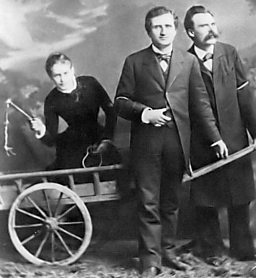
All three believed in pushing boundaries – intellectual and physical. Freud took cocaine, Marx joined a club of middle-class bad boys, the Trier Tavern Club, and Nietzsche had a love affair with Lou Salome, who became a psychoanalyst with expertise in anal pleasure.
One photograph shows Lou ‘riding’ Nietzsche and their philosopher friend Paul Ree, whip in hand.
I’ve had the pleasure of reading Nietzsche’s school report and we know that he was not only suspended for drunkenness but failed maths.

4. Personal philosophies
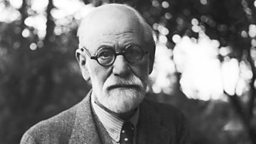
Reading the recently released letters from Freud’s first love Martha, we can meet Freud the proto-psychoanalyst, treating his sweetheart with clinical precision (she sent him a lock of her hair; he asked whether her hairbrush had torn it out) but also encouraging her to talk about her feelings.
Nietzsche had appalling eyesight – one of the reasons his philosophy is delivered in pithy aphorisms: bite-sized philosophy that was dangerously appealing to the Third Reich.
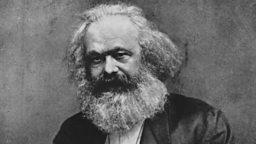
Marx was afflicted – probably from his twenties – with a debilitating skin disease; doctors argue this may have fed his sense of ‘alienation’.
5. Why we need to care today
Marx’s economic analysis might be flawed but it identified the crucial issue of alienation from what he calls ‘our species essence’ – the danger of becoming a cog in a vast capitalist machine.
Nietzsche brilliantly prophesied a ‘health and safety’ culture where, in the absence of God, we would seek the religion of comfortableness. He questioned the disastrous consequence of focusing on reward in the afterlife but reminds us that without a higher Divine purpose (Nietzsche proclaimed that God was dead) we would be liberated, or condemned, to create our own value systems.
Freud’s acceptance of the normalcy of abnormal encouraged toleration, while his rubric to identify and to pursue our desires was used as the basis of US advertising culture.
6. Marx would have been condemned by Marxist regimes and Nietzsche by the Nazis
Millions have been killed in the name of Marxism yet the terrible irony is that Marx would have been condemned by rigid Marxist regimes. Despite his grandstanding statement, ‘communism is the riddle of history solved’, Marx thought we should never stop questioning orthodox ideas.
In Nietzsche’s notebooks, where the thinker sketches out his infamous ‘Will to Power’, a shopping list – toothpaste, buns, shoe polish - has been scrawled over the work-in-progress, yet this text was misappropriated as a foundational truth of Nazi dogma.
All three philosophers remind us of the danger of ideas calcifying into ideologies, that with great ideas comes great responsibility, and that the written word, as Plato said, ‘is often an orphan’ and can be wilfully abused.
The word ‘man’ comes from the Proto-Indo European ‘manu’ – a mind. As a species we are defined by our power to think.
Marx, Nietzsche and Freud throw down a challenge: The future of the world is not down to ‘them’, but ‘us’; we have a social duty to use the power of our minds to work out how best to live, and the point of our lives.
Learn more
![]()
OpenLearn
Discover how 19th-century minds have influenced 21st-century thinking at the Open University’s home of free learning.
More from BBC Arts
![]()
Picasso’s ex-factor
Who are the six women who shaped his life and work?
![]()
Quiz: Picasso or pixel?
Can you separate the AI fakes from genuine paintings by Pablo Picasso?
![]()
Frida: Fiery, fierce and passionate
The extraordinary life of Mexican artist Frida Kahlo, in her own words
![]()
Proms 2023: The best bits
From Yuja Wang to Northern Soul, handpicked stand-out moments from this year's Proms