Class Act - The Sketch
From Walliams and Friend to Horrible Histories, we all love sketches. For a sketch, what you need is one big funny idea that you can turn into a scene, then pack it with big characters, plenty of action and, of course, jokes.
In our Class Act category, we want your students to write some brand new sketches about anything they wish. Think of weird scenarios, unusual characters or crazy things going on in life.
Fire up the imagination and give us a new situation that no one’s ever seen before.
Use the teachers' resources and activity slides to introduce your students to some of the key rules of writing for sketches. You can use our large selection of sketches in the Class Act clip gallery to get your students' creative ideas flowing, and we even have a handy example script in our lesson plan that highlights where various comedy devices have been used in the clip below.
Use this Mitchell & Webb clip in the classroom to explore sketch writing techiques
Spoof, repetition, absurdity.
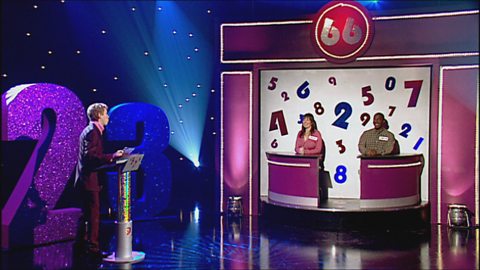
Numberwang - That Mitchell and Webb Look - BBC Two
Numberwang construction
The writers of Numberwang take us behind the scenes of writing the script, and share their tips for writing your own sketch.
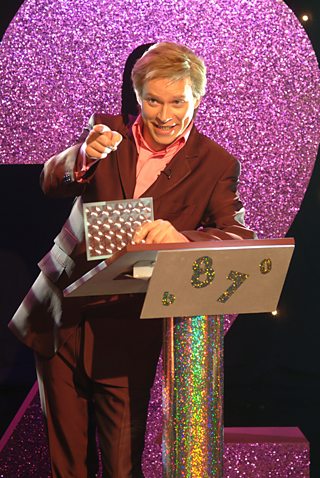
Credit: Numerwang was written by Mark Evans and James Bachman.
The idea was thought of by Mark Evans, James Bachman and David Wolstencroft
James Bachman, co-writer of ‘Numberwang’, tells us:
The first version of this sketch, went on the radio show ‘That Mitchell and Webb Sound’ and was based on Countdown. There’s a numbers board and a Maths-undrum. The main idea we had was that the phrase “That’s Numberwang!” repeated over and over and seemingly randomly, would be funny, which it turned out it was. I think it’s important to note that we decided that not every number Simon and Julie gave should be Numberwang. It’s still funny if it was, but it’s even funnier if there appear to be rules that it’s assumed everyone knows.
The people in the sketch can act crazy, and crazy things can happen, but those things should not be crazy from the ‘point of view’ of the sketch. The sketch ‘world' should have assumed rules that mean that what happens is kind of normal, or acceptable to the people in it. So there appear to be rules in Numberwang even though there are of course none. This is almost certainly why between the radio and TV versions we changed the opening line from "Welcome to Numberwang, the Maths quiz that makes very little sense" to "Welcome to Numberwang, the Maths quiz that simply everyone is talking about". People actually believed that there were genuine rules.
In the TV version we added a lot more jokes about the pointless nature of these kind of daytime shows: learning about the contestants (“any hobbies?” which doesn’t appear in the first TV draft), messing with the drama of the scores by keeping the intonation and wording correct, but the score order the wrong way round, and adding new contestants halfway through the show. As you can see in the first draft, we didn’t yet have the idea that the new contestants kept rotating until we were back at Simon and Julie again, which is a much better joke.
![]()
Class Comic - Clever Captions
Try out our Class Joker resources to introduce students to the world of caption comedy.
Class Act - Red Nose Day 2017
Once your students have completed a sketch, it doesn't have to stop there! A script on its own may be a great piece of comedy in its own right, but it is only when it’s acted out that it comes alive and it can truly hit its comic potential. Try and find somewhere to perform the sketches, and if there are enough writers and actors, why not hold a whole series of them? Host a school sketch-athon for Red Nose Day.

Take a look at the video above for some hints and tips on putting your students' work to use for Red Nose Day 2017.
Mark Evans, co-writer of ‘Numberwang’, says:
Numberwang is essentially a parody of a popular genre of TV show but not a specific one. It resonates with people as they recognise it, but you don't need to know anything about any specific show. Parody is tricky that way - you might be able to lovingly parody a show you love, but if it's not really well known, no one is going to get the jokes. The target has to be chosen carefully, or you have to do it broadly enough that everyone can see why it's meant to be funny. As a first crack at sketch-writing, I think you can do a lot worse than finding a TV show or film and doing a silly take of that.
As for generating sketch content in general, I suppose you can divide sketches into two broad categories, premise based and character based.
For character based, think of a funny character and get them doing funny things in character. This is the Harry Enfield and Paul Whitehouse way, the Catherine Tate way and the way of many others. The best thing is if you get the right character, they're eminently repeatable formats. Premise sketches are harder and really chunk through the old ideas. Obviously some are repeatable, including Numberwang.
As to sketches in general, you've got to think of an idea, squeeze as many jokes as possible out of it, find some way of escalating it so it's not just a list of those jokes, pace it properly and then come up with a great punchline, or failing that at least a satisfactory ending. It's easy!
Class Act - The Sketch
![]()
View the rest of the sketches collection of films
Watch examples of sketch-writing for television.