Nine of the best lyrics about lust
Of the seven deadly sins, lust is out there on its own as the driving force behind some of the best pop music ever written. From innuendo to no-holds barred, brace yourselves…

Little Richard - Tutti Frutti
Recorded and released in 1955, Tutti Frutti was Little Richard’s first big hit and became something of a template for the music that would be widely known as Rock and Roll. Before this wave of music, ‘rock and roll’ was a term used in popular songs as a metaphor for sex. Seemingly sweet and innocent girl group The Boswell Sisters had an entire song dedicated to the metaphor in 1934’s Rock and Roll, which featured some very easy to interpret lyrics:
“Rock and roll, roll and rock away
Up and down, round and round we sway”
Little Richard’s Tutti Frutti continued this tradition, although again it was not difficult to decipher his lyric’s true meaning:
“I got a gal, named Sue, she knows just what to do
She rock to the East, she rock to the West”
Howlin’ Wolf - Little Red Rooster
Blues music in America was born out of a seismic societal shift, as the African-American population rebelled against the roles that had previously been imposed upon them. The lyrics of blues music were an articulation of a liberated spirit. Lyricists took great joy in using clever metaphors to express human lusts and desires.
Chicago blues singer Howlin’ Wolf released his cover of a classic blues standard in 1961, inspiring later versions by Sam Cooke and The Rolling Stones. Roosters appear as a motif in blues music of the 1920s and 1930s and have a double meaning. Considered by some as a symbol of peace, the rooster often lends itself to some obvious allusions to male physiology…
“Dogs begin to bark and hounds begin to howl
Watch out strange kin people
Little red rooster's on the prowl”
Bessie Smith - I Need a Little Sugar in my Bowl
Bessie Smith was a hugely popular, but also controversial figure of the 1920s and 1930s. She was openly, and actively, bisexual and seemingly fearless when dealing with backlash from more conservative quarters. In fact she was so brave, and so formidable, she scared away a local Ku Klux Klan chapter who were attempting to derail a gig of hers in North Carolina. She lived a short and dramatic life, but had a lot of fun with language along the way.
“I need a little sugar in my bowl
I need a little hot dog on my roll”
Frankie Goes to Hollywood - Relax
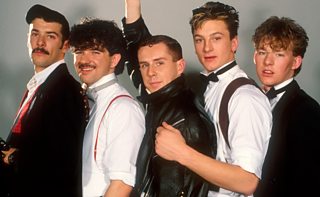
The 1980s saw song lyrics defiantly move away from coded messages of sex, and begin the transition into a more explicit language that continues today. Frankie Goes to Hollywood’s anthem managed to get itself banned by the BBC in 1984, as the meaning of its lyrics seemed just too clear.
The band appeared to be keen to provoke the establishment with their accompanying promotional campaign, both in terms of the homoerotic imagery used, and its tag line “All The Nice Boys Love Sea Men”. Interestingly, they denied the sexual interpretations of the lyrics until 1985, when band member Mark O’Toole conceded “it was about shagging”. It’s a totemic example of how the language of pop music is often ahead of societal attitudes, and how, by making society confront human desires and behaviour, lyrics can force change and prompt acceptance.
“Relax don't do it
When you want to suck it to it
Relax don't do it
When you want come”
Prince - Darling Nikki
Prince was a lyricist who knew how to have fun with both metaphor and more explicit language. He delighted in courting ‘Controversy’ and used his song lyrics to articulate a whole range of sexual activities. This song, from 1984s Purple Rain, went too far for Tipper Gore’s Parents Music Resource Center. They were outraged by the reference to masturbation in its lyrics. The American record industry responded to pressure from the group and introduced the Parental Advisory: Explicit Lyrics stickers that are still put on CDs today. All because of Nikki and her magazine.
“I knew a girl named Nikki
I guess you could say she was a sex fiend
I met her in a hotel lobby
Masturbating with a magazine”
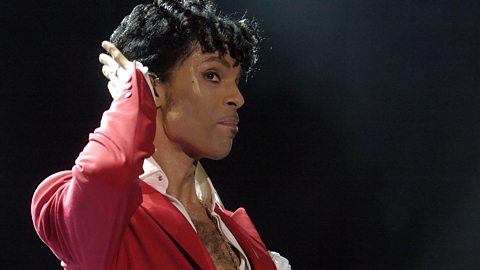
How Prince was responsible for Parental Advisory stickers
Nick Berkeley discusses the impact of Prince's 1984 song Darling Nikki.
Peter Gabriel – Sledgehammer
Peter Gabriel’s 1986 hit hearkened back to blues tradition with these lyrics, which are entirely composed of metaphor. In a decade awash with sex, their meaning went largely unnoticed, but they are a modern masterclass in the art of sexual metaphor.
“You could have a big dipper
Going up and down, all around the bends
You could have a bumper car, bumping
This amusement never ends”
Britney Spears – Toxic
This is songwriter Cathy Dennis’s favourite of her own lyrics.
Interestingly, she’s always felt uncomfortable with the huge success of Kylie Minogue’s Can’t Get You Out Of My Head, because it was a song she wrote quickly and easily. She finds the success of Britney’s Grammy Award-winning song easier to take because she “slaved” over the lyrics.
The result of her effort is a fantastic blend of metaphor and directness that gives voice to the addictive, sometimes dangerous nature of lust.
“With a taste of your lips I’m on a ride
You're toxic I'm slipping under
With a taste of a poison paradise
I’m addicted to you
Don’t you know that you’re toxic”

"I did really slave over that lyric"
Songwriter Cathy Dennis on the writing process behind Britney Spears' 2004 hit Toxic.
Arctic Monkeys - The Hellcat Spangled Shalalala
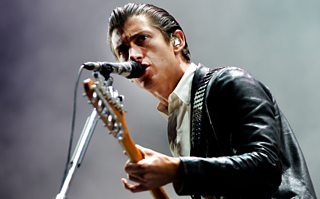
The same sense of danger creates an anxiety about consequences in this 2011 Arctic Monkeys song. The lyrics paint a dark but enticing picture of being tempted into a decision you already know is a bad one.
“And in a Hellcat-spangled cavern
When your judgement's on the run
And you're acting like a stranger
'Cause you thought it looked like fun
And did you ever get the feeling
That these are things she's said before
Her steady hands may well have done
The Devil's pedicure”
Carole King – Will You Love Me Tomorrow
Gerry Goffin wrote this lyric in response to the tales of anxiety about consequence told to him by the women in his life. The words tell the eternal female story of worrying about the aftermath of sex, and how a man’s feelings and behaviour may change. It was considered so edgy in 1960 that it was difficult for Goffin and King to find a female singer for what they knew was a great song. Most people they approached were nervous that radio stations would not play a song that expressed these sexual feelings and concerns, sung by a woman.
The Shirelles were the first act prepared to record it, and the universal resonance of the words made it a number 1 hit. The song has had a long life ever since with a chain of cover versions recorded by the likes of Brian Ferry and Amy Winehouse. Carole King’s seminal version on 1971s Tapestry captures the balance of fear and want in the words.
“Is this a lasting treasure
Or just a moment's pleasure
Can I believe the magic of your sighs
Will you still love me tomorrow”
More music on Radio 4
![]()
The Escaped Lyric Playlist
Explore the power of lyrics through songs of solitude, vulnerability, lust and absence.
![]()
The Missing Lyrics Quiz
Can you spot the words we've removed from some memorable songs?
![]()
Listen to Lust
Nick Berkeley shows how song lyrics help us articulate and negotiate aspects of our lives in The Escaped Lyric.
![]()
10 real-life love stories and the heartbreaking songs they inspired
It takes real emotion to inspire a truly moving love song.