Birds
Themes: The Big Schools Birdwatch; International Dawn Chorus Day; nature; the wonder of creation; looking after birds and our world in general.
Summary: This assembly prompts children to pause and reflect on the beauty of birds and the wonders of nature. It can be linked to either the Big Schools Birdwatch (Jan - Feb) or International Dawn Chorus Day (first Sunday in May). It is a reminder of the life-enhancing role birds play in our world - such a familiar part of our everyday lives that they are often overlooked. It is also suitable for autumn and winter, when garden birds most benefit from humans leaving out food for them.
Key links
![]()
Assembly framework (pdf)
Print out the assembly framework ready for use
![]()
Entry - the dawn chorus
Click to play an audio clip of the dawn chorus
The video:
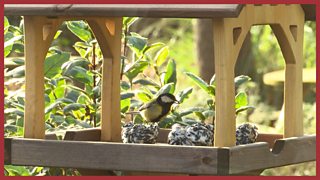
Pupils Sonia and Lamek find out how to help birds and provide a suitable habitat for them in their school grounds. They visit the London Wetlands Centre, part of the Wildfowl and Wetlands Trust (WWT), where they observe birds from a hide and find out about the correct food for ducks. Back at school, the children are joined by a member of the Royal Society for the Protection of Birds (RSPB) to make fat-balls and place them on a bird-table in the school grounds. Soon, Sonia and Lamek see birds fly into school for a meal.
Duration: 5' 07"
End of speech: 'And it's great fun too!'
Video questions
How can we attract birds to our school?
By providing the right conditions for them - bird feeders, water and the right sort of food
What is a 'habitat' and what makes a good habitat for birds?
A habitat is a place to live. A good habitat for birds is an area with trees or bushes
Should we try to stroke birds?
No, they’ll be scared by that
Is it ok to feed birds bread? What can happen if we feed bread to ducks?
RSPB advice is that it is ok to feed birds a small amount of bread in our gardens, as part of a varied diet. See https://www.rspb.org.uk/birds-and-wildlife/advice/how-you-can-help-birds/feeding-birds/safe-food-for-birds/household-scraps-for-birds/
However, the same advice does not apply to wildfowl in the open, where feeding bread has an environmental impact as well as being harmful to the animals. In the video Maggie Kanska from the Wildfowl and Wetland Trust (WWT) says that feeding bread to ducks can prevent them from flying and thus put them at risk from predators.
What is a 'hide'?
An unobtrusive building from where birds can be watched without attracting their attention
Suggested framework
| Content | Guidance |
|---|---|
| 1. Entry music | Play some dawn chorus bird song while the children enter (see Key links). |
| 2. Introduction | Ask 'Does anyone know what the dawn chorus is?’ Gather the children’s responses and guide them to the idea that the dawn chorus happens every day, starting before sunrise, and is loudest in May and June. You might say something like: ‘When the sun comes up, birds wake up and sing together. Most of us never hear the dawn chorus because we’re still asleep in our beds.' Make the link between the dawn chorus and the Big Garden / Schools Birdwatch or International Dawn Chorus Day as appropriate, including for the latter that 'People around the world wake up early, so they can listen to the wonderful singing of the birds.’ You could add: ‘In cold weather, it can be hard for birds to find food and water. The chemicals we often use in our gardens and on our farms can kill the insects many birds feed on. And when we cut down trees to make space for buildings and roads, birds lose places to nest and to live. Some kinds of bird we see every day in our parks and gardens are beginning to disappear. How can we help our birds?’ |
| 3. The video | Play the video. The duration is 5’ 07” and the final words are: ‘And it’s great fun too!’ |
| 4. After the video | Ask the children to think of places they have seen bird-feeders. You could ask ‘Where is the nearest bird-feeder to our assembly hall?’ Perhaps a class in your school might be keen to put up or maintain bird-feeders in your school grounds? |
| 5. Time to talk | Ask ‘What different birds can you name? What do those birds look like?’ The children might respond by naming and describing birds such as robins, blackbirds, seagulls, pigeons, owls or magpies. As the children contribute, prompt them to reflect with questions such as: ‘What’s special about these birds?’, ‘Why are birds important to us?’ and ‘How do birds make you feel?’ The children might comment on the beauty of birds and on the sense of freedom they feel when they see birds in flight, for example. You could ask one or two pupils to sketch their favourite bird as the assembly continues. Another simple activity that helps capture a sense of wonder about birds is to write a whole-school poem called ‘Birds’. Ask the children to come up with two-word nicknames for birds, that all end in -er. Give them some examples: 'Cloud catcher', 'Feather ruffler', 'Storm rider', 'Seed nibbler', 'Sunrise singer'. List each suggestion from the pupils as a line in the poem and then together, read aloud the completed verse. Invite pupils to write their own bird poems at home if they’d like to, or to sketch birds they see. They could bring their poems and pictures into school to contribute to a growing display in the assembly hall. |
| 6. Opportunity to sing | An opportunity to sing your chosen song. Suggestions from BBC collections below. |
| 7. Opportunity to reflect | Ask the pupils to sit quietly and picture birds they have seen. Prompt them to reflect: ‘Take a moment today to notice the wonderful birds around you. What do they bring to our lives? How could we help look after them?’ |
| 8. Opportunity for prayer | Use your standard form of address (Dear God, etc) and: ‘We thank you for the beautiful birds in our skies and our parks and our gardens. Help us to notice them, to wonder at their beauty and never to take it for granted. Help us to do what we can to take care of the natural world. Amen.’ |
Suggested songs
| Song | Collection | Significant words |
|---|---|---|
| 'All things bright and beautiful' | Come and Praise, no 3 | ‘Each little flow’r that opens / Each little bird that sings, / He made their glowing colours, / He made their tiny wings’ |
| 'He’s got the whole world' | Come and Praise Beginning, no 36 | ‘He’s got the plants and the creatures, in His hand / ...He’s got the whole world in His hand.’ |