Martin Lewis answers your money questions
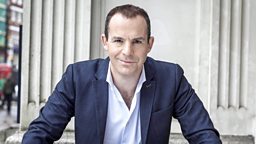
Each Wednesday at 13:00, consumer finance expert Martin Lewis asks BBC Radio 5 Live listeners to send in their questions on around a different money and finance topic.
In the latest episode of the Ask Martin Lewis podcast, he went back to basics and answered questions his listeners had always wondered.
How do interest rates control the economy?
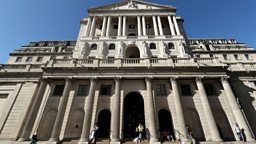
Bod contacted Martin to ask how the economy is controlled with interest rates.
He asks if inflation increases his household bills, “how does putting up my mortgage payments help?”
Martin says the reason we have inflation is to “cool” the economy when it is overheating due to an increased amount of demand. If inflation is raised, then we reduce the demand because if fewer people are buying things, then there’s less demand and prices won’t go up.
He says in simple terms, if interest rates were increased from the current 0.25% to a ridiculous 10%, many more people would be likely to save and fewer people would be likely to borrow money.
“When you put interest rates up, we encourage saving and discourage spending because a lot of people borrow to spend,” he says.
“What both those things do is to take money out of the economy… and that’s why increasing interest rates cools the economy and reduces inflation.
“The problem we have at the moment is that a lot of our inflation, it is argued, is supply side rather than demand – not having the right supply coming in - so we could be cooling the economy too much.”
How can I check how much I’ll have to retire on?

Zoe wants to know how to check she’s on track with her pension fund for living a comfortable lifestyle in retirement.
She has been using online calculators to try and work out what she’ll be left to live on when she retires and has been given “massively varying results”.
Martin says even if he knew the lifestyle Zoe wants to lead in retirement, he couldn’t give her an answer.
“Assuming you have a standard pension where you have a pot of money you’re saving up to use in your retirement within a pension tax vehicle,” he says. “Your money is invested, so the two biggest factors in what money you’re left with when you retire is how much money you put in and how well the investment does.”
“No one can really tell you how your investment is going to do over the next 20 years, so different calculators will give you different answers based on different assumptions.
“There’s an old adage which is incredibly inaccurate, but is a good target – take your age when you start saving for your pension, half it and that’s the percentage you should be saving in order to get a decent retirement.
“So let’s say somebody is 30, half of 30 is 15. If you started at 30 you want to aim to put 15% of your salary in for the rest of your life, if you start at 20 it’s 10%.
“For many people that isn’t possible, though if you’re enrolled to a workplace pension and, as most auto-enrolment pensions do, your firm has to match you then the minimum amount you put in is 4%, you get 1% back from the government in tax relief, the company give you 3% and you’ve got 8% going in to your pension."
Why do loans and savings have different interest rates?

Anna asks why there are different interest rates for loans and savings.
She says she’s feeling “very penalised” for having savings as she’s not earning much interest.
Martin says the simple answer is that’s how banks make money.
“When you save with a bank, what you’re effectively doing is lending them money so they can lend that money out to other people or utilise that money to make investments,” he says.
“At the moment you’re doing very well if you can get 0.5% or 1% interest on your savings, but when they lend it back to us in a mortgage it might be 1%, in a cheap personal loan it might be 3%, on a credit card it might be 19%, on an expensive loan it might me 15% and on a payday loan it might be 2000% APR, so the answer is what’s the difference between the two? That’s how banks make money."
What is an ISA?

Kim asks what is an ISA and when do they start.
Martin says Individual Savings Accounts, or ISAs, are a “tax wrapper” which is available all year round and most people get a yearly limit in April which lasts the whole tax year.
“Imagine you’ve got a chocolate cake and a sponge cake,” he says. “The chocolate cake stands for cash and the sponge stands for shares, you can choose to put your money in either cake, so choose to have cash or shares.”
“An ISA is like a piece of cling film wrapping the cake which stops the tax man being able to take a bite out of it.”
Martin says he used to strongly recommend people invested in an ISA, but his advice changed in 2016 when the personal savings allowance was launched.
“The allowance means if you’re a basic 20% rate tax payer, you can earn £1000 of interest on normal savings and you won’t pay tax on it,” he says. “So that would mean you need £100,000 of savings before you start to pay tax."
“Most people don’t have that amount of savings, so for them there’s no benefit currently of having a cash ISA and cash ISA rates are lower generally than normal savings rates, so you can just go for normal savings instead.
“There are a few benefits to having a stocks and shares ISA, so you may as well use that.”
Can I claim tax relief for working from home?

Nicholas is self-employed and has been working from home during the pandemic, he asks if he’s eligible to claim tax back for increased costs.
Martin says the working from home tax rebate is only for people who are employees, but Nicholas might be able to offset his extra costs against tax on his earnings.
“Because so many people are now eligible for the working from home tax rebate scheme, HMRC have set up a special microservice that means if your employer has required you to work from home for even just one day, you can automatically get the whole year’s allowance of tax relief,” he says.
“You can claim that back on the HMRC website providing you’ve had extra costs due to working from home as an employee. There’s a flat rate of £6 a week which either your employer can give you tax free, or you can claim £6 of tax-free revenue.”
As Martin isn’t a specialist in self-employment business tax, he advises Nicholas to speak to his accountant to work out what reasonable costs he’s incurred through working from home and to see if he can offset those against his tax earnings.