Five freaky Frankenstein facts
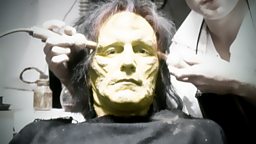
2018 marks the 200th anniversary of Frankenstein’s publication and Frankenstein Lives! examines how the story of Frankenstein has evolved since its conception. Here are five freaky facts about Frankenstein.
1. Is it science fiction?
Frankenstein is viewed by many as the original science fiction novel. However Professor Sharon Ruston of Lancaster University thinks that the novel wouldn't have been viewed as a scientific fantasy at the time. Practical experiments on transplant, robotics and healing with electricity were all being conducted at the time. In 1774 the Royal Humane Society was founded, its goal to help people who were presumed dead and further the field of resuscitation. The notion of raising someone from the dead was a popular field of study, so Shelley’s novel wouldn’t have been taken as entirely impossible.
2. It was not an instant classic
Upon its release, the majority of reviews for Frankenstein were incredibly negative. The Monthly Review dismissed it as “an uncouth story.” The Literary Panorama called it “a feeble imitation of one that was very popular in its day,—the St. Leon of Mr. Godwin.” The British Critic was perhaps the harshest:
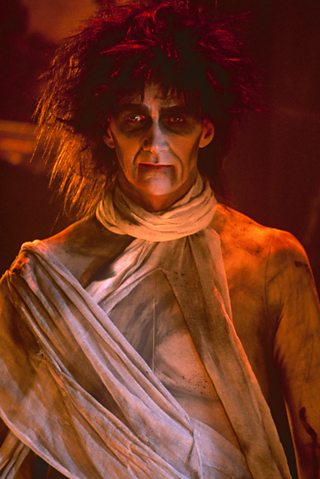
“We need scarcely say, that these volumes have neither principle, object, nor moral; the horror which abounds in them is too grotesque and bizarre ever to approach near the sublime, and when we did not hurry over the pages in disgust, we sometimes paused to laugh outright.”
Only 500 copies were published in 1818 and Shelley’s name wasn’t attached. It didn't sell well.
3. The story of Frankenstein has become very fluid
The monster that can’t really speak. Igor. The aged doctor. All of these mainstays of the modern Frankenstein story are completely absent from the novel and creations of the many theatre and film adaptions of the tale. The changes from the novel began not long after the book was released. Within the first eight years after publication there were 15 stage versions in French and English. The most famous of which is Presumption, which debuted in 1823.
When Shelley saw the play for herself, she declared she was famous. It was these plays that helped launched Frankenstein into the public consciousness. The result is a tale that can be interpreted in a multitude of ways that can still be deemed to be true to the source material
4. Did it come from an inspirational nightmare?
In her introduction to the 1831 edition, Shelley describes how she came up with the idea of Frankenstein. Unable to come up with an idea, she went to bed and had a nightmare about a young doctor bringing a corpse to life. Inspired, she wrote the short story which Percy Shelley encouraged her to turn into a full length novel.
However, there are other theories about how Shelley concocted the idea which aren’t based on visions. As touched upon in point one, scientific experimentation about resurrecting the dead was in vogue and would have been known to Shelley. It is not impossible to imagine the latter informed the former, but we are firmly entering the world of speculation. Speaking of which…
5. What’s in a name?
Many people believe that the origin of the name Frankenstein comes from a boat trip the Shelleys had taken before the novel was written. They went through the region Frankonia, home of the Frankish people. There is a castle on a hill that guards the boundaries of the region called The Rock of the Franks. The German word for this is Frankenstein. Whilst it is highly improbable that she would have visited, Shelly would have known about it. However, she might have been aware of it even earlier in her life.
Between the ages of 14-16, Shelley stayed with the Baxter family in Dundee. William Baxter was an admirer of her father's work. There are theories that the family visited Damstadt, the nearest town to Frankenstein, with Mary and visited the court. There is even a suggestion that she started writing three years before the ghost story competition, although this is very hard to verify.
For more on frightening facts about Shelley's novel, Frankenstein Lives! is available now.
More from Radio 4
![]()
Frankenstein and AI now
Fiona Sampson, Daisy Hay, Christopher Frayling and David H.Guston with Matthew Sweet.
![]()
Five Nikola Tesla predictions that came true
He may have predicted some of the most influential technology in our lives.
![]()
How Long Would You Last in a Horror Film?
Would you be first blood or a horror movie hero?
![]()
The Classic TV Monsters Quiz
Think you know your monsters from your aliens and weird blobs? Take the quiz and find out...