Five life-changing things that shaped Bruce Springsteen
Some artists change music forever. The award-winning podcast Legend tells the incredible life stories of musical pioneers. How did they become legends? And what does their music tell us about our times?
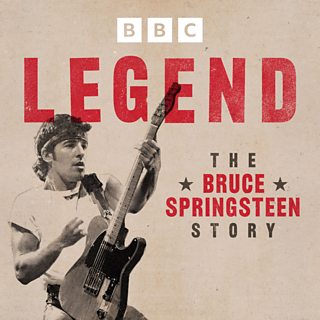
In The Bruce Springsteen Story, Laura Barton uses archive material, and interviews with collaborators, experts and biographers to explore one of rock music’s most revered artists.
Here, she explains five key things that shaped The Boss’s life and music.

1. His relationship with his Father
Bruce Springsteen grew up in Freehold, New Jersey — a small town surrounded by farmland, with a rug factory and a Nescafe plant. His was a large, extended family, made up of several generations of Irish and Italians. In his early years, Bruce and his parents lived with his paternal grandparents — an arrangement that would prove quietly destructive. Bruce was the first baby in the house since his father’s younger sister had died in an accident, and his grandparents indulged every whim, imposing few rules. It was, he said, a “horrible and unforgettable, boundaryless love.”
“The greatest and saddest sanctuary I have ever known.”Springsteen's reflections on his childhood.
Bruce’s mother, Adele, was a legal secretary and the family’s main breadwinner. His father, Douglas, worked at the rug mill until it closed in 1964, then fell into a succession of jobs. All the while, he resented his son — for the affection he received within the family, and later, for his long hair and his insularity; for the fact he was not tough or outgoing or conventional.
Douglas was bitter, enraged and sometimes violent, and grappled with mental health issues that went undiagnosed until later life. Until then, he self-medicated with alcohol. Often, the young Bruce would be sent to fetch him from the local bar or would return home to find his father sitting alone in the darkened kitchen, drinking.
In later years, when Bruce was himself on the cusp of fatherhood, there was a kind of resolution: Douglas drove 400 miles to turn up at his door, unannounced. “You’ve been very good to us,” he told his son. “And I wasn’t good to you.” For Bruce, it felt something like an unshackling; he was no longer bound to the furies of his Father, nor destined to repeat them as he raised his own children.
Still, for a long time, the complexity of that relationship would prove a puzzle he attempted to solve through his song writing. On many nights he would return to drive the streets of Freehold, and park up outside his grandparents’ former home. In the darkness, he would remember the feeling of those rooms, those relationships. It was, he said: “the greatest and saddest sanctuary I have ever known.”
2. The Asbury Park music scene
Bruce’s sanctuary throughout his difficult early years was always music — from the Top 40 hits his mother would play in the kitchen, to the sound of Sam Cooke and The Drifters coming through the Japanese transistor radio he kept beneath his pillow.
When Bruce is 19, his family moved to California, leaving him alone in Freehold. With little now to hold him to his hometown, he relocates a half hour east, to Asbury Park. By the time Bruce arrives, it’s a faded seaside town filled with casinos and pinball arcades and famed for its nightlife: in one square mile, there are 73 clubs, duke joints, bars, and ballrooms, all offering live music. Bruce devotes himself to this scene and focuses on learning to be the best guitarist in town.
It’s here he forms Steel Mill, among its members Steve Van Zandt and Danny Federici — musicians who will be by Bruce’s side throughout his career. They are soon kings of the Jersey Shore, building a phenomenal following, selling out 5,000-capacity venues, and opening for acts such as Ike & Tina Turner, Black Sabbath and Grand Funk Railroad.
Long after Steel Mill break up, the sound of the Shore will run through Bruce’s music. He will call his first album Greetings from Asbury Park, hoping to capture something of the town’s stories and spirit: the clamour of the boardwalk on a Saturday night, cars, carnival bands, a cast of characters and gathering chaos. It’s a sound that we will come to recognise as distinctly Springsteenian.
3. A four-track tape recorder
Bruce’s recording career has a bit of a rocky start, but by his fifth album, The River, he’s hitting his stride. This will be his first number one record, accompanied by a punishing 140-date tour. By the time he returns, the singer is depleted, and bewildered, too, by the new-found fame and media attention. He feels a deep consternation that he is becoming separated from the people he had grown up around; the people who have populated his songs.

He rents a ranch house in Colt’s Neck, NJ, and retreats, spending much of his time watching films — Terrence Malick’s Badlands and John Ford’s adaptation of The Grapes of Wrath, listening to Bob Dylan and Hank Williams. He also reads widely — books about American history, crime novels, and, crucially, the short stories of Flannery O’Connor, admiring their moral ambiguity and the directness of their telling. It seems to Bruce that she illuminates an essential part of the American character – its capacity for meanness and brutality.
When he starts working on the songs for his sixth album, they hold a hard, bleak desperation. His plan is to record them with the E Street Band, but frustrated by the time it takes to organise studio sessions, he comes up with another plan. He buys a four-track tape recorder — then quite a new piece of technology, sets it up in a spare bedroom, and in the company of his guitar technician, begins recording the songs on acoustic guitar. Together, they mix the tracks using a tape delay effect machine, then use an old boombox, somewhat water-logged after falling into a lake, to bring the final mix onto cassette.
The songs will defy attempts to be re-recorded in the studio with the band. They will somehow refuse to be polished up or remixed or rendered anything close to the pristine sound of most commercial albums. They will persist in remaining just as they were first set down — strange, warped, intimate recordings, their subject matter dark and uncomfortable.
Those who expected Bruce’s sixth album to be another radio-friendly juggernaut will be horrified by Nebraska. But it will come to be regarded as one of the greatest artistic statements in rock music history. It is the point at which Bruce’s writing style truly takes flight, and its lo-fi bedroom recordings and introspective lyrics will pave the way for generations of indie artists that follow.
4. The misinterpretation of Born in the USA
Post-Nebraska, post-emotional breakdown, post-psychotherapy and with an all-new exercise regime, Bruce returns anew in 1984 with Born in the USA. It is a colossal album, filled with radio hits, that remains one of the best-selling albums of all time, and certainly of the singer’s career.
But it is also ripe for misinterpretation: its cover and promotional campaign, all red, white and blue, guitars, blue jeans and gym-honed machismo, seems, at first glance, to echo the American hubris of the age. In early September, a Conservative columnist in the Washington Post writes in praise of the singer’s classic American values, and of the “grand, cheerful affirmation” offered by the title track’s refrain. Ronald Reagan, then in the midst of his Presidential campaign, catches wind of this new American hero, and sees fit to reference him in a speech in New Jersey.
Bruce is horrified. His “grand, cheerful” anthem was in fact written as a Blues. It takes the perspective of a Vietnam veteran, disillusioned by life after the war; the jingoism of its chorus in tension with the verses’ exploration of social issues: the exploitation of working-class communities, economic hardship, and male isolation.
It was not that Bruce was not political prior to these events — he had appeared at the No Nukes concert in 1979, and the lyrics of many of his songs could be taken as social commentary. But this misapprehension of his work, identity and perspective encourage him to speak more openly about his own political values and persuasions. In the years since, he has been a vocal supporter of Democratic candidates and spoken in support of vulnerable groups such as immigrants and striking workers.
5. Returning to New Jersey
In the mid-90s, there is a broader sense of Bruce returning to what he knows. His music has seemed to fall out of favour, or perhaps out of step with his audience, and while albums such as Human Touch and Lucky Town have sold well, they have not hit the dizzy commercial, critical or emotional heights of their predecessors.
It’s his piano player, Roy Bittan, who steers him back on track. Out for a desert drive together, Bittan points out that for three albums, Bruce’s lyrics have largely focused on themes of men and women and romantic relationships. He recognises, now, that the songs that have always resonated most deeply, that have helped to form a kind of congregation around him, have been about the broader lives of working people.
In 1995, Bruce begins work on an acoustic album that in many ways continues the themes and socially conscious work of the Nebraska album. The Ghost of Tom Joad will be largely set in California, and he researches his themes meticulously: visiting the farming communities where many migrants find work, and reading widely — stories of deindustrialisation; John Steinbeck’s 1939 portrait of the Great Depression, The Grapes of Wrath; Dale Maharidge and Michael Williamson’s 1985 Journey to Nowhere: a study of homelessness in America. When the songs come, they show how he can let his own voice disappear into those of his characters.
He tours the album alone, and among the stops, in November 1996, is a benefit held at the St Rose of Lima Catholic School in Freehold, NJ — the same school he had attended as a not-terribly-studious youth. It’s a remarkable return — what local historian Kevin Coyne will describe as “a homecoming concert in every sense of the word.”
More from BBC Sounds
![]()
Legend: The Story of Joni Mitchell
Joni Mitchell's influential life and career, told in her own words.
![]()
Bruce Springsteen on Desert Island Discs
Bruce Springsteen is castaway by Kirsty Young.
![]()
Soul Music: Dancing in the Dark
What Bruce Springsteen's iconic song means to people around the world.
![]()
Eras
The stories of the biggest musical artists in the world.