Travel photography tips you shouldn't leave home without
Have you been consumed by wanderlust, booked that trip of a lifetime but come home from your travels with disappointing pictures of sun-bleached sunsets, blurry action shots or the backs of people's heads?
We asked travel photographer Tom Parker to shares his top tips on how to capture the perfect travel photo. Having journeyed to more than 85 countries, he has what some people might consider the dream job.

1. Timing is everything - the majority of all the best travel photographs ever taken were at the beginning or the end of the day, what photographers generally refer to as the 'golden hour'. If you are taking photographs when the sun rises or sets, the colour and 'fall-off' of light makes everything look dramatic and beautiful. So get up early, before sunrise and walk to the area you are thinking of shooting so that you are there for when the sun pops. Some of those moments walking around on your own as the world is waking up are the most special you can ever have.
Be patient - for many kinds of photograph - the best shots are those which capture a moment
2. Plan your shoot. All professional photographers plan their shoot schedules obsessively. Work out what you want to take photos of the day before - even do a little recce so you know what the best angles/viewpoints beforehand. For example if you want to take photos of an early morning fish market - ask some locals what is the best time to get there, and work out where the fishing boats are coming in. It’s always good to ask as many questions as possible so that there are no surprises or disappointments.
3. Be patient - for many kinds of photograph, the best shots are those which capture a moment, this particularly applies when taking pictures of people. You have to be constantly observant of the world around you to take great photographs - watch how people move, how their expressions change and capture them when they are at their most interesting - when you capture an emotion or side of them which isn’t predictable.
The best way to approach people is with a big smile - it’s very rare that people don’t respond well to this
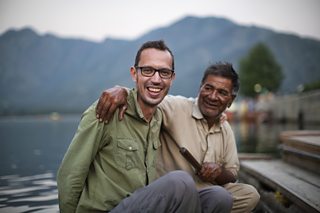
4. Talk to the people you want to photograph. If you see someone you want to photograph as a portrait - introduce yourself, explain what you are doing - and use every bit of charm you possess - you need to put people at ease. The best way to approach people is with a big smile - it’s very rare that people don’t respond well to this.
Time to get snap happy

The man behind the lens
Tom Parker travels the world taking photographs for magazines such as Conde Nast Traveller, Travel and Leisure and Departures. He was originally a radio journalist for BBC Radio 4 but switched to photography over a decade ago. He has lived in India, Sri Lanka and Nepal and travelled to over 85 countries.
How did you first get interested in photography?
When I moved to Nepal to work for a newspaper, I bought a SLR camera and started taking photographs for fun. It soon became a complete addiction.
How did it feel to see your first cover shoot? What was it?
My first ever cover was pretty early on - it was for the Independent newspaper when I was living in Sri Lanka when the tsunami hit in 2004 - I was hired by various international publications to report on it which was an emotionally difficult assignment.
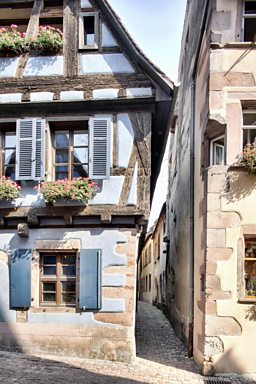
"If you are taking photographs outside try and make sure the sun is about 90 and 180 degrees to one side so you get the best fall off of light"

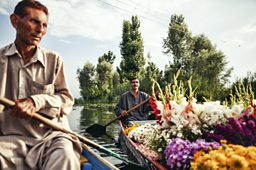

5. Look for the light. The more you practice the more you understand that light is your best friend. If you are taking photographs outside try and make sure the sun is about 90-180 degrees to one side so you get the best fall off of light. Once you start looking at how light affects a photograph, it becomes second nature and you start seeing the whole world differently.
If you are taking photos inside - turn off all the lights so that the natural light doesn’t mix with artificial light.
6. Turn the lights off. If you are taking photos inside, turn off all the lights so that the natural light doesn’t mix with artificial light. Time wise - the best is in the middle of the day when the sun is at its highest and everything inside is bright. A north facing window is a very good place to take portraits of people - the light in the middle of the day is strong, even and diffused - a trick the famous travel photographer Steve McCurry always uses to take his portraits.
7. Take different versions of the same photograph. Digital technology has allowed you to be a lot freer with your camera. When you are taking photographs try different compositions - think outside of the box. Sometimes the best photographs are close up details which have such a great focus that they tell the story much more succinctly than the wider shots. Most famous landmarks have been shot so many times that people end up taking the same photograph as the thousands of others who have been there. Try looking through something or from a different level or shoot from an unexpected angle.


Understanding your camera
1. The easiest mode is automatic - and it’s good to use this when you are learning some of the other basics. When you are feeling confident you can go on to experiment with the manual modes. This is what professionals use and it allows you more creative control over your photographs.
2. With composition think of the viewfinder or the digital screen as a noughts and crosses board. The points where the lines cross are the points of interest in a photograph. Place your subject roughly at one of these - what’s known as the “rule of thirds”.
3. Read the manual when you get the camera and go through the functions of your camera straight away. You might not understand all of them but you will some of them - it will familiarise you with new functions and encourages you to experiment in the future.
4. Use flash when taking portraits in the middle of the day. Most non-professional cameras have built-in flash. These are actually best used in the middle of the day when taking portraits. They will “fill-in” nasty shadows on faces or objects when the sun is too bright or there is a shadow on your subject.
5. Don’t overshoot. Despite what I said early on - just because it’s a digital camera be thoughtful about what you are shooting. The most important thing in photography is consideration of your photograph. There’s no such thing as luck in photography - a professional will take 9/10 photographs which are usable.
Related Links
Elsewhere on the BBC