Six pieces to help you relax from the BBC Proms
Are you feeling the searing heat this summer? Take a moment to unwind with our handpicked selection of tranquil musical moments from this year’s BBC Proms season, perfect for cooling off and finding calm amid the hustle, bustle and heat.
The Lark Ascending by Vaughan Williams
We begin with a timeless classic: Ralph Vaughan Williams’s legendary The Lark Ascending, inspired by George Meredith’s 1881 poem of the same name. The music takes us away from the human realm and invites us into the serene and untamed beauty of Britain’s natural environment.
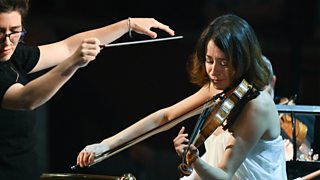
The piece opens with a tranquil introduction from the woodwinds and strings, establishing the pastoral beauty of the Cotswolds countryside. The solo violin enters with a soaring cadenza, representing the lark’s graceful flight. A gentle pastoral theme follows, shared between the orchestra and violin, and after a second violin cadenza the flutes introduce a new theme. Delicate trills from the soloist lead into a more animated section, full of light and movement in the winds. The main theme is reprised once again, and the lark ascends into the sky.
Liya Petrova performed Vaughan Williams’s The Lark Ascending with the BBC National Orchestra of Wales and Nil Vendetti on 5 August.
Copland’s Clarinet Concerto, first movement
The opening movement of Copland’s beloved Clarinet Concerto feels like submerging yourself in a warm bath. Gentle, deeply lyrical and wholly enveloping, the solo clarinet’s solo line floats gently on a warm bed of harp and strings. The piece is structured as an intimate slow dance in three-time, drawing inspiration from a pas de deux (a duet for two ballet dancers). Midway through the movement, the music evolves: elegiac and more complex harmonies emerge, and the sense of dance dissolves bringing with it a hint of melancholia.
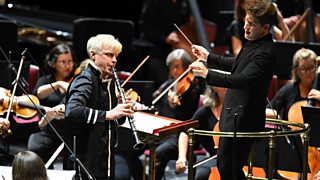
The piece is widely known as one of Copland’s most romantic works. The composer once mused, ‘I think it will make everyone weep.’
Martin Fröst performed Copland’s Clarinet Concerto with the BBC Philharmonic and Joshua Weilerstein on 31 July.
‘Venus, The Bringer of Peace’ from Holst’s The Planets
Gustav Holst conjures a serene and mystical atmosphere in ’Venus, the Bringer of Peace‘, from The Planets. Introduced by a solo horn, Venus arrives with a gentle warmth and an elusive sense of wonder. The alternating chords from the flutes and harps that follow expand the celestial soundscape, while short, intimate melodies from the solo violin and cello are seamlessly woven into the cosmic stillness.
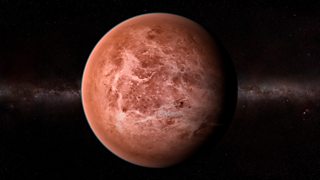
The near absence of a grounding bass harmony lends the piece a floating, ethereal quality, perfectly mirroring the planet’s hazy atmosphere. Bringing the movement to a close, the flutes and horns trace undulating chords in contrary motion and the celeste meanders gracefully above, as if imitating the twinkling of the stars.
The National Youth Orchestra performed Holst’s ‘Venus’ as part of The Planets suite with Dalia Stasevska on 9 August.
Ravel’s Piano Concerto in G major, second movement
The second movement of Ravel’s Piano Concerto in G major is incredibly popular, and for good reason: the nostalgic ballad is arguably one of the most poignant and evocative movements written for piano and orchestra.
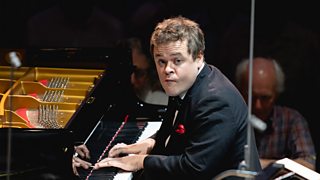
It begins with a solo piano passage, a flowing melody that feels almost improvised, gently supported by a simple waltz-like accompaniment in the left hand. This intimate introduction gradually gives way to a contrasting middle section, where the orchestra enters and the woodwinds take up the melodic line. Meanwhile, the piano adopts ornamental figurations that speed up and become more intricate as the harmonic shifts in the orchestra intensify. Ravel’s masterful blend of musical influences is evident throughout the movement; from the pulsing bass, reminiscent of a Mozart slow movement, to the lush harmonies and Romanticism of the music of Saint-Saëns. The result is an exquisite fusion of emotional sensitivity and melodic clarity.
Pianist Benjamin Grosvenor performed Ravel’s Piano Concerto in G major with the BBC National Orchestra of Wales on 15 August.
‘Ave Maria’ from Puccini’s Suor Angelica
The opening of Giacomo Puccini’s one-act opera Suor Angelica (Sister Angelica) stands out as one of the most serene in the operatic repertoire. The gentle tolling of church bells places the opera in an Italian convent, and the nuns emerge to sing the ’Ave Maria‘ to a beautifully flowing melody. Accompanied by the delicate birdsong of the piccolo and the shimmering upper strings, harps, and bells, their voices intertwine in a charming two-part harmony, setting the stage for Suor Angelica’s first entrance.
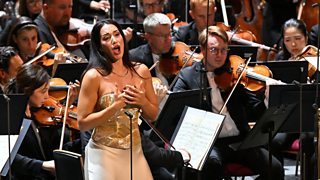
The music is tender and contemplative, perfectly capturing the atmosphere of devotion and spiritual reflection within the convent. This peaceful introduction lays the emotional groundwork for the opera’s central conflict – Suor Angelica’s grief over the loss of her son and her journey towards redemption.
Puccini's Suor Angelica was performed by the London Symphony Orchestra and conductor Sir Antonio Pappano on 19 August.
Górecki’s Symphony of Sorrowful Songs, second movement
Heart-wrenching and profoundly moving, Henryk Górecki’s Symphony of Sorrowful Songs for soprano and orchestra is a different take on relaxing music. Its most famous movement, the second, opens with the strings evoking a radiant dawn, only to plunge into a haunting darkness. From a low, sustained drone in the strings, the soprano voice rises with a tender prayer to the Virgin Mary, sung in Polish. The text, discovered inscribed on the wall of a Nazi prison cell in Zakopane, southern Poland, is enveloped by rich, resonant harmonies.
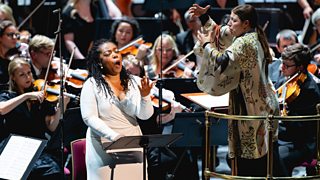
Scored solely for soprano, clarinets, horns, harp, piano and strings, the orchestration may seem sparse, yet it conjures a vast and immersive emotional landscape. As the movement draws to a close, Górecki introduces the opening words of the Polish ’Ave Maria‘, chanted on a single note, before fading into silence.
Górecki’s Symphony of Sorrowful Songs was performed by soprano Francesca Chiejina and the BBC Symphony Orchestra under conductor Dalia Stasevska on 22 August.
You can listen to all of these special musical moments on BBC Sounds after they have been performed until 13 October 2025.
All Proms are broadcast live on BBC Radio 3 and many are available to watch on BBC TV and BBC iPlayer.
![]()
BBC Proms 2025
Find full programme and concert details for the 2025 season.
![]()
BBC Proms on TV
Find the full list of BBC 2025 Proms on TV.
![]()
BBC Proms Features
Discover articles and quizzes from the BBC Proms 2025 and years gone by
![]()
BBC Radio 3
Arts, culture, music and ideas from the BBC – and the home of the BBC Proms on air. Listen live on BBC Sounds.