California's sea otters
Question. What do Bernard Shaw, the Reverend Jesse Jackson and President Reagan's son have in common?
They were all last weekend in Geneva covering the most hyped-up showbiz summit in the 30-year history of the game. There's an unfair catch to the name Bernard Shaw. He's the correspondent for an Atlanta station, television station, a 24-hour news cable channel. President Reagan's son covered the summit for Playboy magazine, an assignment that must have given pause to diplomatic correspondents, not to say to young Mr Reagan.
It all reminded me of the weekend before the 50 nations assembled here in San Francisco 40 years ago last spring to cover the founding conference of the United Nations. I remember being jammed in a lift at the Palace Hotel one day with two or three delegates and a small flock of reporters. The inhabitants of the lift included, apart from James Reston of the New York Times and me, Lord Halifax, Adlai Stevenson and such renowned diplomatic reporters as Lana Turner, Orson Welles and Groucho Marx.
Orson Welles, I recall, set up shop like a Hyde Park orator in one corner of the press room, not to beat a typewriter, but to hold a press conference, but since the competition in press conferences included at other locations around town Mr Molotov, Field Marshal Smuts, Anthony Eden and the like, and since a press conference held in the Mark Hopkins' basement converted into a press headquarters was an audible impossibility with a couple of hundred reporters clacking away on typewriters, even the organ tones of Mr Welles could not be heard.
Moreover, we were all a little puzzled to know why Mr Welles felt the urge to pronounce on the significance of the emerging United Nations' bodies – the security council, general assembly, trusteeship council and so forth. So, Mr Welles beat it back to Beverly Hills, along with all the other high-minded celebrities who simply had to be in on the dawn of universal peace.
I imagine Geneva was much the same, only bigger and thicker with celebrities who cannot possibly have had any practical connection with or real interest in the Reagan-Gorbachev summit. Geneva was simply the 'in' place to be not only for 3,700 of the world's press, radio and TV people, but for a dazzling fringe group of dress designers, jet-set leaders, the rich, the bad and the beautiful, from Paris, Palm Beach, Beverly Hills and every other capital of conspicuous wealth and leisure.
I feel no guilt in not being of their number – the number of the thirty-seven hundred reporters that is – though the proposition was put up to me. How could a commentator of any pretensions hope to comment on the summit if he wasn't there? Well, Karl Marx did pretty well in commenting on, and even preparing, the coming revolution from his stuffy little room in Hampstead and Lenin, as we all know, put the finishing touches to it in his quiet Swiss retreat.
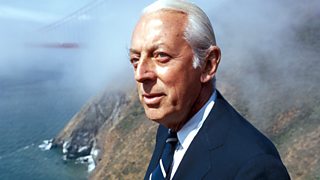
I was in my hammock and 8,000 miles away. I was a hundred miles south of San Francisco, sitting on a terrace with the sky broken by those great, grey ghosts of the Monterey cyprus, a tree indigenous to this slim, 17-mile coastline of Northern California and I was looking out on a vast, magical horizon of blue mountains on the edge of the great, heaving surface of the Pacific. 'Nowhere', wrote Robert Louis Stevenson, 'is there a more dramatic meeting of land and sea and sky.'
Suddenly, my host waved and shouted and pointed. About a couple of hundred yards offshore, bobbing placidly in the swell amid a little flotsam of seaweed, were 16 (count 'em) 16 funny round, brown heads with a sprout of whiskers just barely looking out of the water at their own round, fat chests. They constituted a convention of the sea otter, a harmless, fat beast that floats on its back at feeding time. This is a process that makes them look even more like one of the more preposterous creations of Walt Disney.
When they begin to feel peckish, they dive down and pick up a rock which they then nuzzle under one arm. They swim around looking for some, any, crustacean – an oyster, a clam – as an hors d'oeuvres. The main meal is the abalone, a big mollusc with a solid wallop of meat that is known to Californians and only, I may say, to Californians, as a great delicacy. The otter then flops on his back and elevates his chest and bangs with the rock on the offending tough shell till it's broken, with the other paw he then quietly takes his main meal.
You must not think me perverse if I tell you that the sight of those sea otters brought immediately to mind the Russians. I thought of all the trouble we'd gone to, and failed, 15 years ago to find even one sea otter to film when I was making my television history of America. And why should I have wanted to do that? Well, it's an old, but fascinating story.
The Spaniards, you remember, had conquered and colonised the American south-west, including our California, so long ago as the early seventeenth century. Some time in the late eighteenth century, King Charles of Spain heard about the sea otter that floated off the coast of Northern California in this very place, between Carmel and Monterey. The Spanish had found that they could kill the sea otter by spearing him from boats, if you drifted with the tide and made no noise and were prepared to stand poised and motionless for quite a time.
The point of this sport was not sport, but trade and, suddenly, very precious trade. The sea otter pelts brought a big price in the China trade, another 6,000-mile jaunt the Spanish were quite used to making without benefit of jets. The Chinese paid in mercury, which could be used for the ores to work the California silver mines. The Spanish flourished here and enjoyed a monopoly of this remote otter trade, but in the late eighteenth century, the Russians heard about the sea otter and so did the Yankees of New England and so did the English of old England, but the Russians got there first, bringing along hundreds of natives of the Aleutian Islands to the far north. The Aleuts were specially apt at the frozen gymnastic necessary to catch the otter unaware and spear them.
When King Charles in Madrid heard about this, he immediately inferred, as we always do when a Russian appears anywhere, that the Russians were about to invade California. So the Spanish king ordered the Franciscan friars, who'd been slowly moving north from San Diego and founding rude missions to convert the native Indians, the king ordered more and more missions to be built all the way north to San Francisco and beyond. They would, for all the world to see, be there as Christian missions. They would, also, be formidable forts against the oncoming Russians.
There must have been a tense decade or two while the Spanish scouts and random anchored British and Yankee ships watched the hovering Russians. Especially tense when the Russians moved ashore and built a fort. It's still there – Fort Ross. But that was all. To the bafflement of the wary Spanish, the Russians used this fort to collect the sea otter pelts and ship them from there to China.
About, I think, 1830, the Russians had fished the waters out and when that happened, they sailed away. The sea otter, and not conquest, was all they came for. The Californians breathed easy for a hundred years till the California publisher, William Randolph Hearst, began to rouse his countrymen and his fellow Californians with dire warnings that the Japanese, the yellow peril this time, not the red peril, the Japanese were on their way. A foolish fear indeed, until the morning of Sunday 7 December 1941 and the pulverising of the American's Pacific naval base at Pearl Harbor in Honolulu.
Well, once the sea otter fields were fished out, the otters knew better than to play around the coast of northern California. They vanished for decades at a time. They came back sporadically during the next century and were there in wary small numbers into my time and yours, but by the 1960s, they had vanished, which is why we, the BBC television crew and I, were so distressed in 1970 when I wanted to tell this story and we stood silent on a peak, along the 17-mile drive, and peered into the Pacific and heard and saw the croaking sea lions, but not a blob of a sea otter in sight.
Now, viewers with sharp and flattering memories of that television series will swear they saw one. So they did. We sneaked in a brief shot, a close-up of a sea otter at feeding time and we got it from – and the Russians only know where they got it from – the Museum of Natural History at South Kensington.
I'm talking to you, by the way, before the historic results of the historic summit will be pronounced historic and shortly, I suspect, to be forgotten. 'It is a mistake', said Machiavelli, 'for princes to attempt solutions which their envoys have failed to consummate.' We shall see.
On this coast, in San Francisco anyway, there was another ocean inhabitant which preoccupied every man, woman and child here for about three weeks and about which the reporting and the speculation were a good deal more thoughtful and accurate than anything written before the summit began.
There was a whale stranded in San Francisco bay. His name was Humphrey until an expert said, 'Rubbish! His tail markings show he's a female and pregnant to boot!' Well, they could never get near enough to him or her to tell, in spite of bell ringing and other sophisticated devices which are supposed to be as seductive to whales as soft rock music.
He was sighted. He was gone. He could not live for long in diluted sea water. He spouted. He was cheered by hundreds on the shore line. Finally, he, too, vanished and is now presumed gone to his fathers or his wife in the blue Pacific.
My own theory is that he was a plant by the KGB, that he carried sophisticated telecommunications equipment, that he spotted the best beaches on which to invade San Francisco and is now on his way back to his keepers in the Kremlin.
This transcript was typed from a recording of the original BBC broadcast (© BBC) and not copied from an original script. Because of the risk of mishearing, the BBC cannot vouch for its complete accuracy.
Letter from America audio recordings of broadcasts ©BBC
Letter from America scripts © Cooke Americas, RLLP. All rights reserved.
![]()
California's sea otters
Listen to the programme