Cyber spy: Keeping secrets from my family 'came at a cost'
Sally Walker spent 25 years working for the UK’s intelligence agency GCHQ, before leaving the high-level role in 2020.
In her role as ‘Director Cyber’, she led teams supporting military operations in the Balkans, Iraq and Afghanistan and was in charge of cyber security operations for the London 2012 Olympic Games.
Her final years in the job were spent masterminding the creation of the National Cyber Force, which Boris Johnson said last year would transform the UK’s cyber capabilities to disrupt adversaries and keep the UK safe.
She spoke to 5 Live’s Naga Munchetty about her career and what she’s been doing since leaving the spy agency.
‘If you say you’re a civil servant, they don’t ask any more questions’
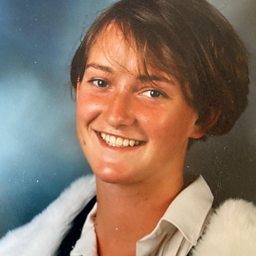
Sally signed the official secrets act upon starting her work with GCHQ and, as such, cannot easily explain what she did for a living.
She says the most straightforward answer is that she was responsible for developing “the national tools and instruments that will enable us to fight the next war effectively”.
A big part of that was finding the right people.
“It was encouraging talent and finding those people who don’t know how good they are and giving them safe boundaries to operate in,” she says.
‘My sons didn’t know anything about what I did’
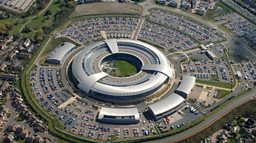
Sally says signing the official secrets act has “an impact” on the families of those working within the security community, because it means they are not able to speak about their work with anybody but their work colleagues, which “has a cost”.
She says: “The job is a huge responsibility. That community work tirelessly 24/7 to keep us safe and take a huge burden and responsibility on their shoulders and they’re a tight-knit community for good reason, because they can’t share those burdens and responsibilities with their friends and families.”
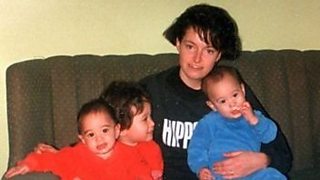
She says her sons still don’t know what she did.
“The closest my sons came to knowing I had a job that was in any way responsible was during the Olympics when I was a little bit more open about what I was doing,” she says.
“They ask occasional questions and it’s been interesting for them having a mum at home [since I left GCHQ] and listening to me talking about my future and what I’d like to achieve in a very open way, which is very different for us as a family.”
‘There was no maternity policy at that level’
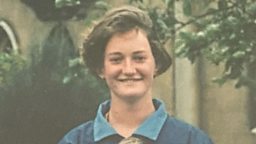
Sally was one of the first women to be promoted to a senior level within GCHQ, something she puts down to women in previous generations being expected to resign their civil service commission when they got married.
“Fifteen years ago I was promoted to the senior civil service, and then had to point out I was pregnant and realising there was no maternity policy at that level because we didn’t have women operating at that level, at that age, at that time – and so that’s the kind of legacy I can look back on and say, ‘it’s now completely normal for women to have children and be doing very senior and responsible jobs.’”
Sally says she is proud that after her tenure in the role, the agency is “much more diverse and representative of the community it aims to protect”.
‘That was the culture of the time’

Office culture was very different at the start of Sally’s career too, she says she did experience “challenges” she hopes the next generation of women don’t have to face.
“I look at what I thought was normal in the workplace and I would not accept it now if either of my sons behaved that way or if any of the girls I mentor in different organisations were exposed to that type of behaviour.
“I saw it as normal because it was, that was the culture of the time…I tolerated it because I had no inspiration from elsewhere there could be a different and better way.
“That’s not to make excuses for it, but to say it was the norm, and occasionally it was difficult and occasionally I didn’t notice it. I hope the next generations don’t face some of the challenges that I did.”
‘I feel for anybody who is starting a new job over Zoom’

Sally left her post at the start of the pandemic and says she “feels for” anybody who has found themselves starting new roles remotely.
“Covid has made the transition hard… Zoom and all of this networked stuff is brilliant if you know the people at the other end of the line… but if you’re starting out afresh it’s quite challenging.”
Despite Covid making the “transition [to civilian life] hard”, Sally has begun working on collaborations with people in the education sector, tech startups, and has helped put on a music festival.