Neil Gaiman on the weird and wonderful Norse gods
The bestselling author of Neverwhere, Stardust and Good Omens returns to Radio 4 with the adaptation of his mystical epic Norse Mythology. We catch up with him to talk about comic books, celestial sleuths and chariot-pulling cats.
![]()
Listen to Norse Mythology
The Radio 4 adaptation of Neil Gaiman's mythical epic, starring Colin Morgan, Natalie Dormer, Derek Jacobi and Diana Rigg.
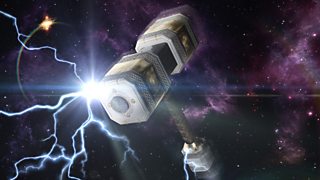
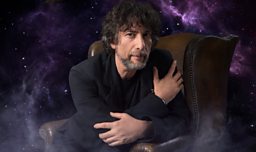
I first came across the Norse myths in the glorious four-colour Marvel Comics version.
When did you first come across the Norse myths?
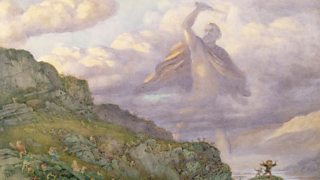
I came across the Norse Myths as a boy, initially in the glorious four-colour Marvel Comics version. I was fascinated. This was the mighty Thor and he was wonderful. I wanted to know more and I got hold of a copy of a book called The Myths of the Norsemen, by Roger Lancelyn Green, and read it and loved it and was fascinated by the differences between the comics characters that Jack Kirby had come up with and the actual mythic version. Thor seemed very different, Loki seemed much more interesting. There were glorious weird stories. So that is how I first met them and fell in love. And I kept coming back to them as a young adult, as an adult, as a writer, until eventually I started reading the Prose Eddas and the Poetic Eddas. The stuff that I had already read was essentially a re-telling, a reconfiguration of these stories and poems. And I thought it would be wonderful to tell those stories afresh for a new audience.
What can the Norse gods teach us in these uncertain times?
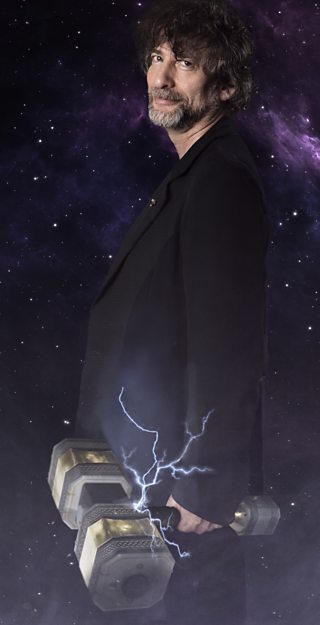
Freya travels around in a chariot pulled by cats. Anybody who can train cats to pull a chariot has to be badass.
One of things about the Norse gods is that everything ends very badly. It all ends in something called Ragnarök, which is the end of the world. And I was actually asked in an interview by a journalist who had read Norse Mythology if we’d hit peak Ragnarök yet, and I had to say we haven’t even reached the foothills of early Ragnarök yet. But I think what is so marvellous about the Gods is how human they are. There is no infallibility. They are the gods of a cold place and they are always on guard against characters who are even colder – the frost giants. They are very us. They are incredibly human and it's that humanity that makes them fascinating.
Who are your top three Norse gods?
If you have make a list of your favourite gods it’s very easy to go for the ones that everybody has heard of, to go for Odin who’s wise and crafty, or Thor who’s brave and mighty, or even Loki who is not necessarily a God. He’s partly frost giant. He’s tricky, he’s weird, but he lives with them in Asgard and is accepted by the gods, but is dangerous.
But I don’t think I would go for them. I would go for Kvasir, who is an incredibly wise god. He’s created by the Aesir and the Vanir, the two tribes of gods, who get together to become our Norse gods as part of a peace process of the war between them. And they mix their spittle. They all spit together, and out of their spit they form Kvasir, who is incredibly smart. He’s like the Sherlock Holmes of the gods. He’s really, really bright and because he’s really, really bright he’s murdered fairly early on by some rather wicked dwarves or dark elves. And they turn his blood into the Mead of Poetry and when you drink it you get poetry. And because some of these stories get to contradict each other, he actually comes back from the dead and returns in a later story where he does an act of glorious Sherlock Holmes-ian deduction about Loki having created the first net and then burned it to hide all evidence. And he figures this out. He’s wonderful.
Freya, I adore. We know that she is beautiful. We assume she is a fertility goddess of some kind. But I love her because she takes no crap from anybody. She travels around in a chariot pulled by cats. And anybody who can train cats to pull a chariot has to be badass. And Freya is absolutely, magnificently badass. So definitely Freya And after that I think I probably want to pick Heimdall, the far-seeing. We don’t know a lot about Heimdall. There are stories that are obviously missing. There’s one where he fights Loki in seal form to get a necklace back. But I love him because he just perceives more than the other gods. And he is the only one who gets to last out until the very end and die in battle with Loki. It’s glorious.
You mention that so many of these myths have been forgotten. How do you feel about that?
Myths are fascinating things. We have hundreds upon hundreds of Greek and Roman myths of heroes, myths of gods and stories about the interactions of humans, heroes and gods. They are glorious and they are huge and they are part of world literature. With the Norse, very little was written down. This was part of an oral tradition. It was the oral tradition of people who told great stories and who had a tradition of poetry that was committed to memory. We don’t know how much we’ve lost. All we know is that we’ve lost an incredible amount. One reason Snorri Sturluson, who wrote the Prose Edda, started writing this down was in order to explain what are called kennings. These are poetic turns of phrase, ways that a poet would use a specific metaphor; and in order to understand the kennings you need to understand the story they were based on. For instance: Why gold is called “Freya’s ransom”. You need to know. There’s a story there. And we have these other amazing stories. We have stories of apples of immortality. We have stories of escape and stories of trickery. Most of them are male, but we have lots of names of goddesses, which makes you think there must have been lots of stories of these goddesses. But we probably only have a handful. We have the tip of an iceberg, or possibly the tip of a fjord.
More from Radio 4
![]()
In Our Time: The Norse Gods
Melvyn Bragg on Viking theology.
![]()
With Great Pleasure at Christmas: Neil Gaiman
Author Neil Gaiman shares his favourite writing.
![]()
Pilgrim: The Winter Queen
The tale of an immortal wanderer continues.
![]()
The Case of Charles Dexter Ward
Listen to H.P. Lovecraft's spooky thriller.