Herbert Howells’s Greatest Hits
Herbert Howells stands as one of the most distinctive and gifted English composers of the early to mid-20th century. A successor to the generation of Elgar, Vaughan Williams, Holst and Delius, he forged a sound-world unmistakably his own that reshaped the landscape of English church music forever.
The BBC Singers have a long and distinguished relationship with Howells’s music, including giving the world premiere of his Requiem in 1980. In 2023, we welcomed former Shadow Chancellor Ed Balls to conduct works by Howells, his favourite composer, in a special concert at St Martin-in-the-Fields. Click here to watch him learning to conduct Howells's music for the first time.
As we prepare to perform Howells’s great masterpiece Hymnus Paradisi on Thursday 26 February alongside the BBC Concert Orchestra, Iain Farrington, and our chief conductor Sofi Jeannin at Milton Court Concert Hall, we’re looking back at five defining works from across the composer’s remarkable career. For more information about the concert and to book tickets, click here.
Christmas anthems
A Spotless Rose · Sing Lullaby · Here is the Little Door

Between 1918 and 1920, Herbert Howells composed his first significant works for choir: the Three Carol Anthems. These pieces, A Spotless Rose, Sing Lullaby, and Here is the Little Door, have become cherished staples of the Christmas repertoire.
Howells composed A Spotless Rose in a single sitting in Gloucester, inspired by the sight of continually passing trains from the window of his cottage. The text comes from Catherine Winkworth’s English translation of the famous German hymn Es ist ein Ros entsprungen. This cherished Christmas piece was performed by the BBC Singers in 2025, using Jan Sandström's 1990 adaptation. Howells uses the first two verses of the hymn for his anthem, which meditates on the purity of Mary and the birth of Christ.
The music unfolds gently, almost like a breeze, and the melody is given over to a solo male voice in the second verse. Despite its simplicity, the anthem is meticulously crafted. Subtle changes of metre highlight the natural stresses of the words, and the final cadence on the phrase ‘cold winter’s night’, is an expressive highlight in the Christmas carol repertoire. The crunchy harmonies and many suspensions are an indulgent delight; composer Patrick Hadley famously wrote to Howells, saying, ‘I should like, when my time comes, to pass away with that magical cadence’.
The other two carols in the set are just as beguiling. Sing Lullaby, a haunting cradle song set to the words of F. W. Harvey, and Here is the Little Door, a charming setting of Frances Chesterton’s poem written from the perspective of one of the Magi as he greets the Christ Child.
Requiem
The 1930s marked a new chapter for Howells and a maturing of his musical style. He composed his Requiem for unaccompanied choir, written especially for King’s College, Cambridge, but the piece was never sent to them. It was completed in 1932.
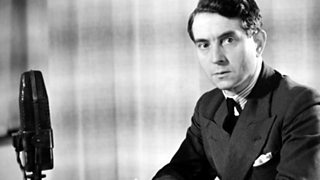
The piece consists of the composer’s personal choice of psalms and passages from both the Catholic and Anglican liturgies, with the resulting structure of six short movements that are organised symmetrically, with two outer movements (Salvator mundi and I Heard a Voice from Heaven) framing settings of the Latin requiem and two psalm-settings. The structure was modelled on the little-known work, Henry Walford Davies’s A short Requiem composed in 1915. Walford Davies was one of Howells's earliest teachers at the Royal College of Music, and the piece was composed in memory of those killed in war.
The Requiem is an intensely moving work of heartache and extraordinary beauty. For the Latin settings, Howells employs his most harmonically adventurous writing, drawing on polytonality, dense chord clusters and the simultaneous use of major and minor keys. By contrast, the psalm settings are intimate and hushed, using chant-like passages for single voices and full choir, and the outer movements employ long, unfolding melodies that are free-flowing and wholly enveloping.
For many years, the work was lost and forgotten about. It resurfaced thanks to the efforts of Joan Littlejohn, a pupil of Howells and a librarian at the Royal College of Music, who discovered that a previously known incomplete section of the Requiem could be matched with a second manuscript in the college’s archives to form the complete work.
The Requiem finally received its first performance in 1980 given by the BBC Singers with their chief conductor John Poole. In December 1982, a 90 year old Howells listened to a broadcast of the piece from his bed. His daughter Ursula reported that the composer ‘lay there spellbound from start to finish. He really was delighted and moved by the beautiful performance.’
Hymnus Paradisi
Tragedy struck Howells in 1935 when his beloved 9 year old son Michael fell gravely ill and died from polio. It was a harrowing event that left an indelible mark on Howells’s life and music forever. From here on, the profound spirituality already present in his music took on an even deeper, more personal intensity.
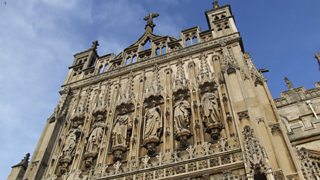
In the months following Michael’s death, Howells was engulfed by grief and unable to compose. Gradually, however, and with the encouragement of his daughter, he found the strength to channel his sorrow into his music. The result was Hymnus Paradisi, an expansive, enormous choral work for soprano and tenor soloists, large chorus and orchestra, composed largely between 1936 and 1938.
Howells pours out his innermost suffering in Hymnus Paradisi. Beyond the overwhelming grief following Michael’s death, he may also have been mourning earlier losses including friends killed during the First World War, and the harrowing experience of his youth when he was diagnosed with Graves’s disease and given only months to live.
In composing Hymnus Paradisi, Howells drew extensively on material from his unpublished Requiem. The work’s opening orchestral prelude incorporates themes from the Requiem's second and third movements, and both pieces share closely related melodic settings of Psalm 23. The two pieces also both share a selection of English and Latin texts, have similar melodic and harmonic constructions, explore complex dissonances and display the same free-flowing rhythmic flexibility that became a hallmark of Howells's mature style.
At the prompting of the organist Herbert Sumsion, who asked Howells if he had a piece that could be performed at the 1950 Three Choirs Festival in Gloucester, the work was completed and orchestrated. Howells himself conducted Hymnus Paradisi’s at the festival on the 7th of September, the day after the 15th anniversary of Michael’s death. It was a great public and critical success, and today the piece remains one of his best-known works.
Collegium Regale
Te Deum · Jubilate · Communion · Magnificat · Nunc dimittis
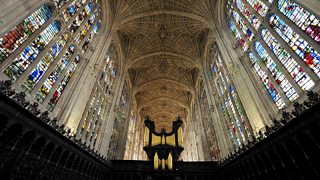
During the Second World War, while Howells was working at St John’s College, Cambridge, he attended a tea party at the neighbouring and rival King’s College, where three of the university’s organists and Directors of Music wagered him one guinea that he couldn’t write a Te Deum setting for the college choir. Howells accepted the challenge and completed the workin 1944.
This Te Deum became the first piece in a celebrated collection of choral settings known as the Collegium Regale (Latin for ‘King’s College’), written for the daily Anglican liturgical services.
For Mattins (morning prayer) were the Te Deum, the ancient Latin Christian hymn of praise, and the Jubilate, a setting of Psalm 100 (Make a joyful noise unto the Lord). For Holy Communion was a Mass setting. For Evening Prayer, were the evening cantles, the Magnificat (song of Mary) and Nunc dimittis (song of Simeon).
The Magnificat and Nunc dimittis are among Howells’s most admired works. Rather than presenting Mary’s words (‘My soul doth magnify the Lord’) as a bold proclamation from the whole choir, Howells gives them to the solo trebles, their pure tone evoking Mary’s innocence and the miracle of Christ’s conception. In the Nunc dimittis, Simeon’s song of departure is introduced by a long, tender tenor solo, which carries a weariness and acceptance after beholding the infant Christ. Both pieces begin with a hushed, almost mystical atmosphere, before opening into a radiant and expansive ‘Glory’.
A Hymn for St Cecilia
Herbert Howells’s anthem A Hymn for St Cecilia sets a poem by Ursula Vaughan Williams in praise of the Catholic Church’s patron saint of music. The work was commissioned by the Worshipful Company of Musicians, of which Howells was Master at the time, and completed at the end of 1960. It received its first performance on St Cecilia’s Day, 1961, in St Paul’s Cathedral.
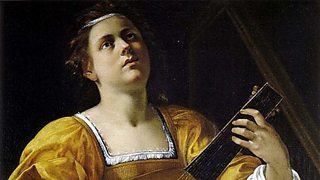
St Cecilia’s feast day falls on 22 November, a day when many musical celebrations, festivals, choral concerts and services are held in her honour. Cecilia was an early Roman Christian martyr who, according to legend, heard heavenly music and sang inwardly to God during her wedding to the pagan Valerian. Her martyrdom followed the execution of her husband and his brother at the hands of the prefect Turcius Almachius.
This radiant anthem for choir and organ features one of Howells's most unforgettable melodies. He gloriously brings to life Ursula Vaughan Williams’s vision for St Cecilia, as ‘a girl in one of those magical gardens from Pompeian frescoes, a romantic figure among colonnades and foundation; Herbert’s tune takes her briskly towards martyrdom’.
The music’s vitality comes from the first syncopated vocal entry ‘Sing for the morning’s joy, Cecilia, sing,’ delivered in unison by the choir. From there, the melody climbs steadily higher, its cumulative energy building verse by verse. At the request of St Paul’s cathedral organist, a soaring descant was later added to the third verse, lifting the setting to new celestial heights.