Contributors to The Immortalist
Dmitry Itskov
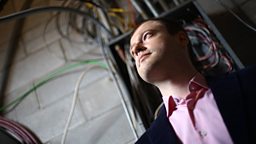
Russian internet millionaire Dmitry Itskov is pursuing a bold plan to upload the human mind to a computer by 2045.
His plan started recently when he invited some of the world’s leading neuroscientists, robot builders and consciousness researchers to a conference to devise a system that would allow him to escape his biological destiny.
Using his fortune to fund research to the tune of millions of dollars, Dmitry is one of a growing number of the mega-rich financing their own scientific projects.
Professor Hiroshi Ishiguro

Among those attending his conference was the Japanese robot builder Professor Hiroshi Ishiguro. His latest creation, Erica, is one of the world’s most human-like robots, with ‘emotions’ and speech powered by artificial intelligence.
Professor Ishiguro’s aim is to create robot replicas of real people that could replace them in society after they die.
Beyond this kind of robot legacy, Professor Ishiguro believes that immortality could be achieved as humans and machines merge, because human destiny is to one day become robotic and overcome the constraints of time.
Erik Sorto
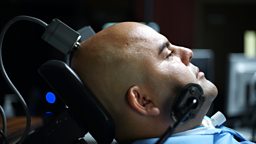
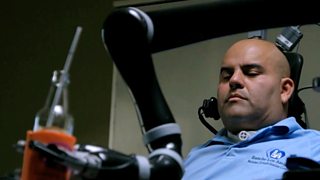
Perhaps the first steps to this future have already been taken. In Los Angeles Erik Sorto, a quadriplegic man, has allowed scientists from Caltech to implant two arrays of electrodes inside his brain.
These allow Erik to control a robot arm using just the power of his thoughts, an example of how science is already merging the human and the machine.
Dr Ken Hayworth
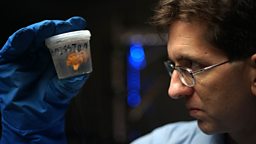
Dmitry’s desire to upload his mind to a computer is rooted in the way many mainstream neuroscientists approach the brain as a kind of computer.
Dr Ken Hayworth, who maps tiny pieces of mouse brain, believes that if our ‘connectome’ – the connections between the 86 billion neurons that make up the human brain – could be mapped, then it should be possible to copy the brain into a computer and upload the mind.
But because he thinks such a step is decades away, Dr Hayworth has run a competition to try to find a way of preserving all the information inside a brain for hundreds of years.
Dr Hayworth believes that once there is a reliable method, those diagnosed with Alzheimer’s disease should be given the choice to preserve their brains, to allow their minds to be uploaded in the future, a course of action that would be fatal long before any natural death.
Professor Rafael Yuste
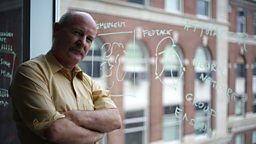
To upload a mind to a computer, first you have to record its activity and the world’s biggest neuroscience research project, the $6 billion Brain Initiative, aims to do just that – map the entire activity of the brain.
It’s a huge task and Professor Rafael Yuste, one of the Initiative’s chief scientists, has made a breakthrough. For the first time he has recorded the activity of all 300 or so neurons of a Hydra, a tiny freshwater organism, though it cannot yet be interpreted.
Professor Yuste believes that if the human brain does work like a computer, then the Brain Initiative could help bring about mind uploading.
Professor Miguel Nicolelis
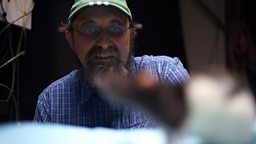
There are scientists with serious doubts about Dmitry’s enterprise. Professor Miguel Nicolelis, who invented a robot exoskeleton to help paraplegics walk, thinks it is waste of money and our humanity to try to upload the mind to a computer because the brain cannot be replicated in a machine.
As evidence of how dynamic the brain is, Professor Nicolelis has run experiments in which a rat with an electrode in its brain takes on a new sense, ‘feeling’ infrared light. He says this shows the brain does not work like a computer.

![]()
Horizon on Facebook
Shareable videos, photos and discussion for each episode