Quilty pleasures: Six amazing quilts to inspire you to Get Creative
By Kathryn Morrison
Want to know more about quilting? We've got you covered with this snapshot of the joy of quilts. Whether modern or traditional in design, many of these examples are cherished heirlooms lovingly handed down through the generations, as well as unique historical objects.
For early American settlers, quilt-making inspired generations of women to work together stitching and telling stories as they pieced together a new life amidst the harsh conditions of the New World.
It’s more than likely quilting and patchwork came to North America courtesy of the first British families who emigrated there. Now, the craft is experiencing a creative rebirth with over 6,500 members of the Quilters’ Guild, plus many other artists and creative people making wonderful quilts blending the traditional and the contemporary.
Get Creative Live
![]()
Get Creative Weekend
Coverage of Get Creative Weekend from around the country plus watch our dance, painting and quilting masterclasses.
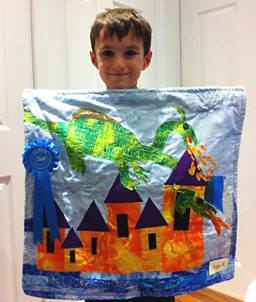
Not just for girls
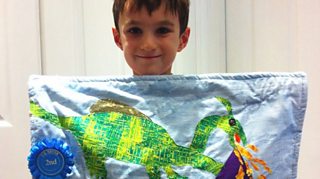
It’s not just a hobby for adults, there are at least 400 youngsters aged between five and 18 who are regulars at countrywide Young Quilter’s groups. And alongside the girls, there are enthusiastic boy quilters keen to show off their needle skills.
“Most boys don’t think it’s fun but it is – it’s fun to do, you get to make it and then you can give it away to someone”, says one youngster at a group in Kent. Eleven-year-old Isaac, whose Nan runs the club, sewed this fearsome fire-breathing dragon looming over Hever Castle when he was just eight.
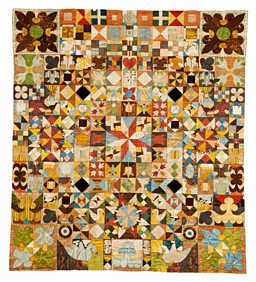
A stitch in time
One of the earliest surviving quilts is the 1718 Silk Patchwork Coverlet from the Quilters’ Guild Collection. These expensive silks represent over 120 different dress fabrics, many carefully preserved from other garments, with the oldest fabric dating from the 1640s.
Among the patchwork mosaics featured are a man and woman, stylised flowers, a partridge, pheasant, deer, a cat with a bird in its mouth, a dog, a unicorn, and geometric shapes.
The quilt has been put together using a technique known as 'piecing over papers', where the fabric is folded and tacked over a paper shape before being stitched together. It was crafted for a Wiltshire family, the Browns of Aldbourne, but no one has been able to identify the name of the creator - nor who the letters "E" and "H", so carefully sewn into the quilt, refer to.
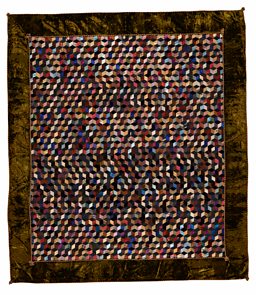
Victorian coverage
Soft furnishings with lashings of embroidery and trimmings found their place in the crowded Victorian parlour. Here’s a silk mosaic patchwork coverlet sewn by Lucy Anson, who was born around the middle of 1860.
She stayed on an extra year at her school to finish a huge tapestry showing a hawking party preparing to leave Derbyshire’s Haddon Hall. Later, her creative flair came to the rescue of her family when her husband became ill and unable to work. The company she founded under her married name of Harrison made parasols and umbrellas in the Wicker area of Sheffield.
Her love for patchwork never left her - this one was sewn just before she died in 1914.
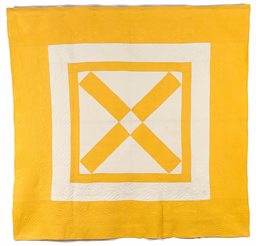
Regional quilts
Sometimes quilts can pinpoint the era or the region where they were created. The “Wholecloth” quilt, like this one from the North of England, was the fashion in the late 19th and early 20th centuries.
In the North, craftspeople or quilt “stampers” drew designs such as feathers and twisted ropes. These days, quilting styles are not so rigid nor confined to a distinct geographical area, as there are more fluid boundaries and sharing of styles and techniques.
Frances Binns, from Corbridge, near Hexham, made this yellow and white quilt for the 21st birthday of her son’s wife Annie in 1902, and she made many others to help supplement the family income.
Quilting, slavery, and freedom
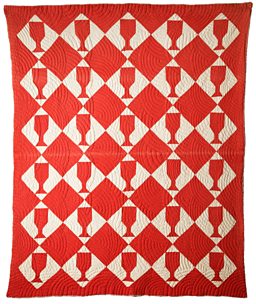
Many American quilts were produced by slaves. This one, on display at the American Museum in Britain, is from the Mimosa Hall Plantation, in Marshall, Texas. It was made by the plantation slaves for the visit of the Anglican bishop of New Orleans sometime around the middle of the 19th century.
The Bishop toured the cotton plantations to perform baptisms and marriages and afterwards the quilts were given back to the slaves.
The chalice on the quilt is a common religious symbol but it also represented a freedom from the suffering of slavery and the prospect of a better life in the next world.
Quilt maps and runaway slaves
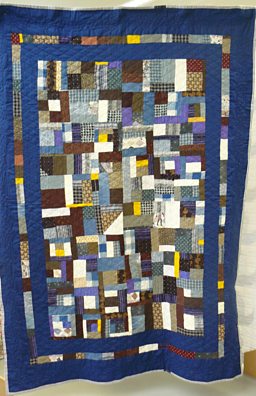
There is a popular theory that quilts with patterns like “Bear’s Paw”, “Wagon Wheel” and “Log Cabin” were used as route-markers, to help runaways slaves follow the escape routes of the Underground Railroad.
Stretching from the south to the northern free states and Canada, The Underground Railroad was a loose network of people or “conductors” who led slaves to safe places. Some were freed slaves, others were Quaker abolitionists.
The Girl with a Pearl Earring author Tracy Chevalier became fascinated by the Underground Railroad and by the Quakers, many of whom were quilters. Her research sparked a book, The Last Runaway, and an absorbing love affair with quilting.
One of her creations, Mrs. Reed’s Quilt: Homage to Gee’s Bend, is currently hanging in an exhibition by the London Quilters.
How to get involved
If you want to try your hand at quilting then check out the activities being organised by the Quilters' Guild this weekend.
Related Links
Get Creative Weekend: 7-9 April 2017
![]()
Everything you need to know
Full details about the glorious celebration of creativity across the United Kingdom.
![]()
Share your creativity with the world!
Do you paint, dance, knit or sing? Then grab your phone and film yourself doing your hobby.
![]()
Go hopping mad for origami!
And watch three BBC weather forecasters take on the folded paper rabbit challenge.
![]()
Quilty pleasures: Six amazing quilts
What to learn more about about quilting? We’ve got you covered!