10 reasons you need to know Górecki’s music
A million people can’t be wrong
Even if you know next to nothing about Górecki, you almost certainly know his Symphony of Sorrowful Songs. It was written in memory of the victims of the Holocaust, and uses texts including words that were written on the wall of a Gestapo cell by a young Polish prisoner.
In 1992, it was recorded by the London Sinfonietta, conductor David Zinman and soprano Dawn Upshaw – and became a best-seller, even making it into the UK pop charts. It has since sold over a million copies.
A fairly surprised Górecki himself said: “Somehow I hit the right note, something they were missing. Something, somewhere, had been lost to them. I feel that I instinctively knew what they needed.”
The BBC Symphony Orchestra are proud to have given the first UK broadcast of the work in 1987.

He wrote music for the harpsichord hundreds of years after it was the done thing
It takes a pretty daring musician to compose a piece for harpsichord c.200 years after it was fashionable.
But in 1980, Górecki went ahead and wrote his Concerto for Harpsichord and String Orchestra. Only nine minutes long, what it lacks in length it makes up for in dazzling originality. This is the harpsichord as you’ve never heard it before.

His crunchy church music harmonies
Choral lovers: you need to hear Górecki’s church music. It’s full of unexpected harmonies, haunting melodies and some heart-breakingly beautiful phrasing. You need this in your life. Sort of the aural equivalent of this:

He used music as a political weapon
In the early 1980s the communist Polish government was faced with serious opposition in the form of Solidarity – a trade union that quickly became a broad anti-communist movement.
In March of 1981 members of the union were beaten by police, in the town of Bydgoszcz. When Górecki composed his Miserere that year he wrote, at the top of the score: ‘I dedicate this to Bydgoszcz.’ The peaceful, quietly determined work wasn’t premiered until 1987.

He wrote his Beatus Vir to mark Pope John Paul II’s visit to Poland in 1979…
The dramatic setting of psalms for baritone, chorus and orchestra irritated the communist government, who regarded Christianity as a relic of the past.

…And resigned at the communist authorities’ refusal to welcome the Pope
Górecki was Rector at the Higher School of Music in Katowice and handed in his notice when the government stopped the Pope visiting the city. The composer still managed to conduct the premiere of his Beatus Vir in Kraków, though –despite militia roadblocks meant to discourage people from attending the papal events.

Totus Tuus
Written to mark Pope John Paul II’s third visit to Poland Totus Tuus starts with a bracing fortissimo call to the Virgin Mary. It’s for unaccompanied choir and is deceptively simple and completely haunting. It’s available to stream online (as is much of Górecki’s music) and you should stop whatever you’re doing and go and listen to it right now.
We can wait for you you, go ahead.

BBC Singers perform Totus tuus
Paul Brough conducts the BBC Singers on 24 April 2015
SPACE
Of the musical kind. Bear with us on this one. If Bruckner’s symphonies are cathedrals of sound, Górecki’s music gets rid of the metaphorical roof to reveal the sky.
Listen to his orchestral work ‘Refrain’ and tell me you can’t hear that wide, open space stretching into the distance.

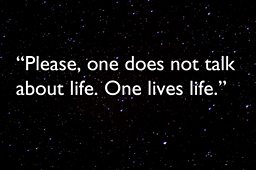
His wise words
He can encompass an entire model of the universe in one symphony
Górecki felt daunted by the prospect of writing a symphony to celebrate 500 years since the birth of Polish astronomer Nicolaus Copernicus. How was he to encompass the scale of his countryman’s shattering discovery that the earth moves around the sun? To him Copernicus’s work represented one of the greatest tragedies in the history of the human spirit: an entire system of thought was in ruins. Not an easy subject for a symphony huh?
Never one to turn away from a challenge, Górecki’s Symphony No. 2 ‘Copernican’ beautifully juxtaposes a grinding and overwhelming first movement against the second movement which anticipates the soundworld of his third symphony. Resolution is achieved in the final stage as the music rises and sets, like the sun, as if to symbolise the truth of Copernicus’s astronomical vision.
It’s pure genius!

![]()
Total Immersion- Henryk Górecki: Polish Pioneer
Experience the genius of Górecki in a day of film, discussion and concerts of his music at the Barbican with the BBC Symphony Orchestra & Chorus and guests