‘I turned down Strictly’ – 5 things we learned from Chris McCausland’s interview with Emma Barnett
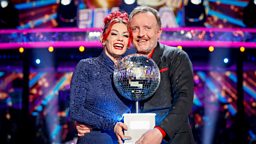
Comedian Chris McCausland fiercely didn’t want to be different – and has always wanted to do things perfectly.
After losing his sight from childhood, and being fully blind by his mid-twenties, Chris gave up on things he loved, like playing football, because he refused to play it badly.
Fast-forward a few decades, and Chris achieved something few might believe to be possible: not just competing on Strictly Come Dancing without being able to see, but taking home the Glitterball trophy in a blaze of glory – and moving many of us to tears in the process.
Speaking to Emma Barnett on her Ready to Talk podcast, Chris, 48, talks about his career, fatherhood and dancing – and why letting go of perfectionism has been a “game changer”.
Here are 5 things we learned from Chris’s interview on Ready to Talk with Emma Barnett.
1. Losing his sight was a slow process
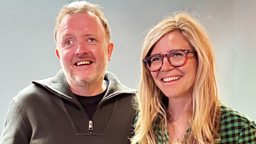
Chris started losing his sight at an early age and was fully blind by 25. At 26, he first picked up a microphone. It was “a long and winding road”, he says.
“I lost my sight so gradually that you're never really able to acclimatise to a constant. It’s always shifting and you're always moving into a worse level of sight than you realise you've got.”
“And so, you can accept the idea of deteriorating sight, but you can't accept the current state because it won't be there for long.”
2. He didn't want to be 'the blind comedian'
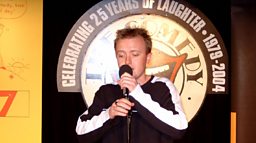
When Chris decided to try his hand at stand-up, he was determined not to be known just for his disability.
“I purposely pushed against all of that,” he says.
“I can be quite judgmental, you know. I knew that if I was sat in an audience and I came out on stage, I would think, ‘Oh, God, this is going to be 20 minutes of blind jokes’ – and I knew that other people would think the same thing.
“And so, I did the exact opposite.”
Chris says he always felt the need to address – as he puts it - “the elephant in the room” first though, before launching into his set.
“I did a joke at the beginning because I thought, well, you've got to tell people what's going on… and then move on.”
It’s part of what he believes has led to his success.
“I don't think I would have had anywhere near the success I had and the progression I had on the UK comedy circuit, if I’d gone in differently to that,” he says.
“The idea that I was doing just regular stand-up is what made it work with audiences, I think.
“Making people forget, I think, is sometimes more powerful than reminding them all the time, in terms of normalising disability.”
3. The most nerve-wracking part of being on stage was getting to the microphone
“I picked a microphone up when I was 26,” Chris says, “So it was very, very soon after I'd say the kind of the final dregs [of sight] had gone.”
“It was still very new to me. I was still kind of accepting this new identity of being
blind.”
Despite being “terrified” before his first show, Chris got into the “routine” of gigs quickly.
His nerves after that were never about performance – instead, he worried about his entrances onto the stage “in case it looked incompetent” or “clumsy”.
“In the past, I might have gone up [on stage] and the microphone lead… was a bit tangled. If I kind of looked clumsily nervous trying to untangle that, they'd be nervous for me.”
But he says the big “turning point” was when he realised he “cared too much”.
“If I don’t care, then the audience don’t care. If the audience see that I care about something that goes wrong, they’re going to be nervous rather than laughing.”
He says: “I’d just hold the microphone out to the front row and go ‘Untangle that for us or we’ll be here all day!’
“And then all of a sudden, I realised that no one cares anymore.”
Letting go of perfectionism was a liberation for Chris.
“To stop caring about the faults and the perception and any little flaws that occur was the biggest game changer because it just put me at ease and it put audiences at ease and then you can start being yourself.”
4. He turned down Strictly at first
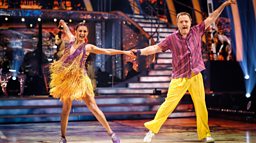
When Chris got the call to do Strictly, he initially wasn’t keen – fearing it would be a “disaster”.
“Strictly has always pushed on that representation, which is fantastic,” he says.
“But representation is only good if it's positive and not if it sends out a negative message. And so my concern, my fear, was that it could be a disaster.
“It does nobody any good, if the blind guy goes on Strictly and has a disaster... it doesn't do me any good, it doesn't do blind people any good, it doesn't do disability any good.”
At first, Chris was vehement in his refusal. But Strictly “kept on asking”, and his feelings began to change.
“I said no to the year before. I said no to the Christmas special. They asked me to do the series I did, I said no. They kept on asking though.
“I knew they wanted somebody blind to do it because they kept on asking me. There's a lot of straight white northern comedians out there so they obviously wanted somebody blind to do it.”
Chris says he came to a realisation – that he would feel deep regret if he felt blindness wasn’t “represented positively” on the show.
“I knew that I would be the best person, or one of the best people, to do this,” he says.
“I didn't know if it was possible - that was the problem.
“But I knew that if they went and got somebody else and they came on with a sob story or their little violin and made it all sad and sympathetic – or they didn't put the effort in to really, really push the boundaries – I knew I'd be furious with myself.”
Chris decided to say yes – and the rest is Strictly history.
5. He feared his disability would make him a 'bad dad'

Becoming a parent presented Chris with fresh worries about perfectionism, fearing – as he puts it – he wouldn’t be a “normal, proper dad”.
“My dad did loads of stuff with me when I was a kid. And I was like, ‘Well, I can't do that’… I felt sorry for my daughter before she existed.”
But the actual lived “experience of being a dad” helped him look at things differently.
“When you haven't got kids, you're so self-centred and you're so focused on yourself,” Chris says.
“And then you have a child – and you suddenly are able to see yourself through their eyes… and they don't have any of that baggage,” he says.
He realised what was really affecting his ability to be a dad was “dragging” his worries around and letting them weigh him down.
Instead, Chris decided to focus on what he could do, rather than what he couldn’t – realising he and his wife had “different roles” to play in bringing up their children.
“Loads of parents don't do the driving round of their kids, loads of parents don't do some of the specific jobs that are shared between mum and dad,” he says.
“We've ended up where we've ended up because of limitations and necessity out of any kind of choice of preference. But the result is that it's probably no different to a lot of parents who divvy up responsibilities and roles.”
Hear the full conversation with Chris McCausland on Ready to Talk with Emma Barnett.
From his childhood and early struggles with sight loss to the comedy influences that shaped his career, Chris opens up about breaking into stand-up and the extraordinary experience of learning to dance without sight.
Listen now to Ready to Talk with Emma Barnett
![]()
Strictly Changed Me with Chris McCausland
Comedian Chris McCausland discusses how he got past perfectionism and blindness to dance on live TV in front of millions of viewers.