Unashamed: Garth Greenwell's alternative gay narrative
01 April 2016
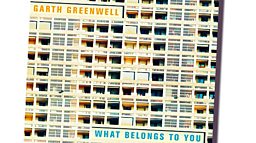
The excitement surrounding Garth Greenwell’s debut novel What Belongs to You has made it one of the publishing events of the year. Highly autobiographical, it is a story of erotic obsession and has been hailed as the great gay novel for our times. SIMON RICHARDSON meets the Kentuckian to discuss his views on queer life at a unique moment in gay history.

In the opening chapter of What Belongs to You, an American man new to Bulgaria finds himself in a gay cruising spot, the bathrooms beneath Sofia’s National Palace of Culture.
Here he meets Bulgarian rent boy Mitko and a transaction - the start of an ambiguous relationship that will consume the novel and its narrator - takes place.
Cruising parks and bathrooms were the first queer communities I foundGarth Greenwell
Mitko is a young hustler. He never calls himself a prostitute. He uses the word priyateli, which is Bulgarian for friend.
“It also means boyfriend,” Greenwell explains.
In a story of what gets lost in translation, any clarity of what these two men mean to each other is one of the first things to go.
Out of this miasma comes a deeply compelling novel about a young teacher in an unfamiliar culture.
That first meeting comes straight from Greenwell’s own experience working as a teacher in Bulgaria, when he would go cruising beneath the National Palace of Culture. “I had this weird sensation of homecoming in a very foreign place,” he says.
“Cruising parks and bathrooms were the first queer communities I found and they were the places that I came into a sense of myself as a gay person.”
The furtive status of gay life in modern Bulgaria reminded him of how homophobic his native Kentucky once was.
That uncanny juxtaposition proved fertile territory. “This point of contact between where LGBT rights are in Bulgaria today and where they were in Kentucky in the early 90s when I was growing up is really what the novel sprang from.”
Setting the novel in Bulgaria was an opportunity for Greenwell to inhabit the emotional landscape of his youth.


Not surprising then that much of What Belongs to You is informed by crises of adolescence.
The first experience of queer desire almost always carries with it a sense of prohibitionGarth Greenwell
Aside from the travails of our unnamed narrator, Mitko is himself infantilised by the economic doldrums in which he has grown up, as well as conservative Bulgarian society’s view of his ambiguous sexual practices.
Even for gay people in a world of equal marriage, Greenwell explains, adolescence usually represents a point of crisis.
“The first experience of queer desire almost always carries with it a sense of prohibition, of not being able to have the thing one wants, and I wanted to explore that. To someone like my narrator the experience of exclusion and the experience of satisfaction of desire seem inextricably linked.”
It’s not until the middle of the book’s three movements that we come face to face with the ingredients of this abiding sense of the narrator’s exclusion.
Through a series of vividly wrought flashbacks, this 40 page passage with no speech marks or paragraphs breaks, explores the primal scenes of the narrator’s adolescence, including an alienating collision with heterosexual sex.
It concludes with a blistering account of the narrator’s rejection by his father.
“The voice of that part was quite different from the more controlled voice of the rest of the novel… it was by far the most painful section to write. It took me back to my childhood which I’ve spent much of my adult life running away from.”
This writing here is scintillating and would be worth the read alone.
'As young as I was, I knew what he said was absurd, I was
myself a little boy, what could he be accusing me of, though
now I think it was his only understanding of what I could
be, the person I was was lost in it. But it didn’t matter that it
was absurd, I was already crying, I was a mess of tears, and
when my mother started to come toward me I motioned her
away, turning my back to her. I was ashamed of my tears, I
could hardly breathe, and it was all I could do to say to him
But I’m your son, which was my only appeal and the last
thing I would say. He made a dismissive sound, almost a
laugh, and then he spoke again, with a snarling voice I had
never heard before, he said The hell you are.'
“I wrote it in a white heat,” says Greenwell.
“I was seized by this voice and I was writing these passages on receipts and napkins and scraps of paper. It was like I had to write it on trash to write it at all. Then once it was finished I couldn’t look at it for a year without feeling physically sick.”
In the novel’s third section, as their relationship moves beyond the sexual, both the narrator and Mitko approach different kinds of crisis and the narrator is forced to confront the limits of his own empathy.
In this highly autobiographical novel the personal is clearly the political. Greenwell’s candour about gay sexual practices has a purpose.
Greenwell’s candour about gay sexual practices has a purpose.
Having championed the cause of equal marriage with its squeaky clean rendering of gay experience, he now wrestles with anxieties about some of that campaign’s unintended consequences.
“That mainstreaming narrative is based on the heterosexual model of two monogamous people focussed on raising a child, which is in itself very beautiful, but it has also expunged other really important elements of queer life, like these cruising bathrooms. I wanted to write these spaces to recognise their moral, emotional and human richness in the way I have experienced them my entire life.”
Greenwell’s project - to celebrate other aspects of queer identity - comes in his view at a unique moment in gay history.
“I feel like both for me and the narrator we’re entering a new sort of gay subjectivity,” he says. What Belongs to You offers an anatomy of that moment and how it informs a young gay man’s actions in Bulgaria in the early twentieth century.
A novel about shame that is unashamed, it’s a reminder that queer people must bear the wounds they carry even as they champion new narratives for gay life.
As Greenwell concludes, “Shame has been part of the gay narrative for ever but the shape of that shame is changing.”
What Belongs to You, by Garth Greenwell, is published by Picador.

More from Books
![]()
#Vote100Books
Seven must-read novels by female authors.
![]()
Middle-earth in colour
Tolkien's own illustrations of his fantasy universe.
![]()
Neil Gaiman
The author picks his three favourite works of science fiction.
![]()
Publishing design cliches
Judge these books, and their genres, by their covers.


More from BBC Arts
![]()
Picasso’s ex-factor
Who are the six women who shaped his life and work?
![]()
Quiz: Picasso or pixel?
Can you separate the AI fakes from genuine paintings by Pablo Picasso?
![]()
Frida: Fiery, fierce and passionate
The extraordinary life of Mexican artist Frida Kahlo, in her own words
![]()
Proms 2023: The best bits
From Yuja Wang to Northern Soul, handpicked stand-out moments from this year's Proms