Seven times when sport became political
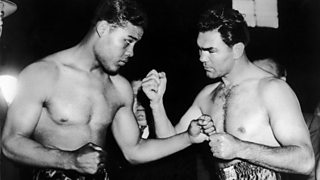
The June 1938 boxing match between Joe Louis and Max Schmeling became known as one of the biggest sporting moments of the 20th Century. But as WWII loomed, their fight became much larger than a bout in the ring, taking on massive international, social and cultural significance.
Schmeling had shocked the world two years earlier when he defeated Louis and became the toast of Germany, with Hitler and Goebbels among his fans. A rematch was inevitable. For the first time, most of white America was behind a black fighter and Jews in the US and Europe, all too aware of the Nazi threat, were also cheering Louis.
Here are seven more occasions when sport became political…
Black Power Salute – Mexico Olympics (1968)
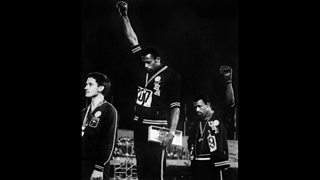
Black American sprinters Tommie Smith and John Carlos made history by staging a silent protest on the podium at the Mexico Olympic Games, after winning Gold and Bronze respectively in the 200m. The athletes entered the stadium shoeless, to highlight poverty, and wearing beads, to illustrate lynching in southern USA. They famously raised a black-gloved fist in a “Black Power” salute against ongoing racial inequity in America as The Star-Spangled Banner played. Promptly banned by the United States Olympic Committee, their actions have since become one of the most iconic sporting protests in history.
Taking the Knee in the NFL (2016)
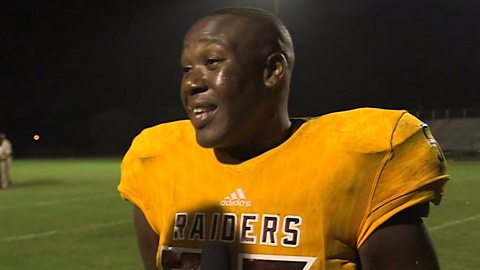
'Why I'm taking a knee'
Student in Belle Glade: Why I'm taking a knee
In a display against police brutality and social injustice facing black Americans, San Francisco 49ers player Colin Kaepernick began kneeling during the national anthem before matches. The protest spread as players from other teams took to their knees. This demonstration prompted President Trump to Tweet: “If NFL fans refuse to go to games until players stop disrespecting our flag and country, you will see change take place fast. Fire or suspend!”
Kathrine Switzer ran the Boston Marathon (1967)
Kathrine Switzer broke the rules and became the first known woman to run the Boston Marathon in 1967, after entering the all-male marathon using her initials instead of her full name. The race director Jock Semple tried to physically pull her out of the race, but was stopped by Switzer’s boyfriend who barged him away from her. Following the race she continued to campaign for women to be allowed to enter the marathon. And in 1972 women were officially allowed to compete. Katherine Switzer has now run 42 marathons, including the London Marathon in 2018.
Polish pole vaulter gestures at crowd during Moscow Olympics (1980)
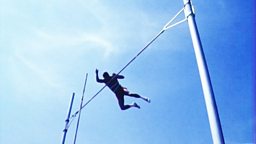
The 1980 Summer Olympics in Moscow were surrounded by controversy after U.S. President Jimmy Carter called for a boycott of the games following the Soviet invasion of Afghanistan, but this wasn’t the only time when politics entered the 1980 competition. Polish athlete Władysław Kozakiewicz celebrated his world record pole vault with a bras d’honneur gesture which many saw as retaliation to the noise of the Soviet crowd. The move received support in Poland from those who interpreted it as a symbol of resistance against Soviet control over Eastern Europe.
Pussy Riot at the Sochi Winter Olympics (2014)
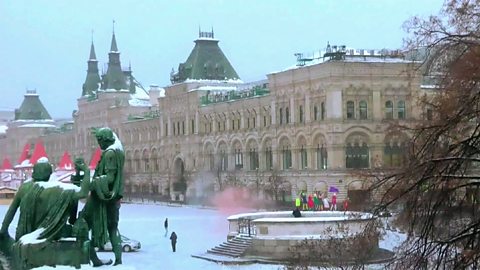
Pussy Riot Performance in Red Square
Members of Pussy Riot perform on top of stone plinth in Red Square, Russia
Feminist punk rock group Pussy Riot were beaten with whips by Cossacks as they performed an impromptu protest song in Sochi, during the 2014 Winter Olympics. The band said the Sochi Games were a political event, and were fiercely critical of President Putin who was the main driving force behind them.
Protesting Farmers Disrupt Indian Cricket League (2018)
For years the Indian states of Tamil Nadu and Karnataka have disputed access rights to the water in the Cauvery River. Pressed by drought, farmers from the Tamil Nadu state demanded access to more water. In 2018, protests broke out at the Chennai Super Kings’ first home game in the Indian Cricket League, in Tamil Nadu. Black balloons were released into the sky and shoes were thrown at players as tensions escalated. Due to the protest the Chennai Super Kings were forced to move their six remaining matches to a ground in Pune, over 1000km away.
Brazil World Cup (2014)
Anti-World Cup protests broke out in 12 cities in Brazil in the run-up to the World Cup over concerns about public safety and transport infrastructure. Unrest grew following claims of corruption and bribery, leading to strikes, and demonstrations on the streets. Protestors criticised the money spent on the tournament, which they claimed would be better spent on social projects in the country.
More from Radio 4
![]()
The Fight of the Century
The politics behind one of the biggest fights of all time.
![]()
Thinking Allowed: Boxing - Urban Outcasts
An exploration of boxing's history in terms of race, class, and representation.
![]()
Great Lives: Muhammad Ali
Nicholas Stern explores the political impact of Muhammad Ali.
![]()
Short Cuts: Civil Disobedients
Josie Long hears stories of small radical acts.
More from Seriously...
![]()
The Pankhurst Quiz
Think you know your Suffragettes from your Suffragists? Take this quiz to find out!
![]()
Five women who broke the glass ceiling
These remarkable women have made a real an impact on democracy in their countries.
![]()
The Frankenstein Quiz
Is your Frankenstein knowledge “Alive!” or in need of a jolt?
![]()
Why is country music a hit in Nigeria?
Tayo Popoola travels to West Africa to find out.
![]()
Seven things you need to know about Antifa
What is the leftist movement that has been making headlines?
![]()
A plate of Peru
Try Martin Morales puka picante vegetariano recipe.
![]()
10 Jokes That Make Russians Laugh
Viv Groskop gathers some of the best Soviet satire and proletariat punchlines.
![]()
Five Things I Learnt from Wearing a Wig
What Brian Kernohan learnt about himself and our relationship to wigs.
![]()
Why are acid attacks on the rise?
Ayshea Buksh investigates the rise in UK attacks.
![]()
Five slogans to live your life by
Could we really live by our lives by the words of a slogan? Possibly not...
![]()
Ten words that prove you aren't posh
Etiquette expert William Hanson explains what U and no-U now.
![]()
Why Ian McMillan loves being early
The poet and broadcaster ponders his need to make the clock bend to his will.
![]()
Fake wine – honestly, it’s a thing.
A guide to who counterfeits wine and how the Wine Detectives catch them.
![]()
The death and rebirth of Zora Neale Hurston
Once forgotten, the author is now revered by Alice Walker and Solange Knowles.