Revolution at the V&A: It's like Lourdes on LSD
8 September 2016
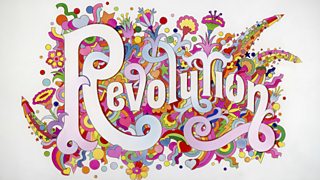
As a follow-up to this year's blockbuster show on ladies' pants, the Victoria & Albert Museum has opted to celebrate the era when, apparently, we let it all hang out. Thus, You Say You Want A Revolution: Records and Rebels 1966-1970 whisks us back to the business end of 1960s, the radical era which brought us Opportunity Knocks, tie-dyed T-shirts and the most erotically-charged office furniture in history. Newsnight's Culture Correspondent STEPHEN SMITH joins the flower children to conduct his very own acid test.
As you get older, you expect that policemen will start to look like young shavers. But in the brunch-hour of mid-life where I find myself, I’m struck that history is getting younger too.
In books and documentaries, pop culture historians guide us through the Seventies, the Eighties, the day before yesterday, the moment before last.
I understand that telly don Dominic Sandbrook is at the centre of a fierce bidding war as publishers scramble for the rights to his new one, 'I Know What You Did Last Summer'. (You can have that one on me, Dom). Nor have our august institutions been slow to join in the fashion for instant history.
The V&A has plenty of form here, under its outgoing supremo, the attention-grabbing Martin Roth. In the exhibition Disobedient Objects (2014), a kind of quartermaster's store of kit retrieved from protests dating from the Seventies to the present day, Roth introduced a bullhorn into a china shop. To the V&A’s familiar bouquet of souvenir lavender water, he added base notes of tear gas.
Visitors have also been treated to the creations of fashion's troubled bad boy, Alexander McQueen (d. 2010), and a hugely successful homage to David Bowie. And now the big autumn show is You Say You Want A Revolution? Records and Rebels 1966-70. Yes, summer may be on the way out but the Summer of Love never ends, it seems.
We're returned to another period within living memory, when America was on the brink of electing Richard Nixon, Harold Wilson was riding the tiger of public opinion over the Common Market, and one of the most popular programmes on television was a talent show, Opportunity Knocks.
There are 'shards of Hendrix's guitar'... fragments of the true axe. It’s like Lourdes on LSD.
Recalling the advent of women's lib, gay rights, black power, and the 1968 evenements in France against a priest-riddled ancien regime, the exhibition tells the origin story of the secular liberalism that we now enjoy, if that's the word I want.
Yes, these movements were hammer blows for iconoclasm. But with an irony that savvier figures in the 'revolution' such as Andy Warhol anticipated, the artefacts displayed at South Kensington have ossified into sacred relics.
Here they come again, the shades of John Lennon and George Harrison in the shrouds of the suits they wore on the Sgt. Pepper's cover; the still-living wraith of Mick Jagger is summoned by a velvet jumpsuit slashed to the pubis; and there are even 'shards of Jimi Hendrix's guitar' – in other words, fragments of the true axe. It’s like Lourdes on LSD.
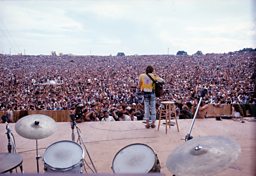
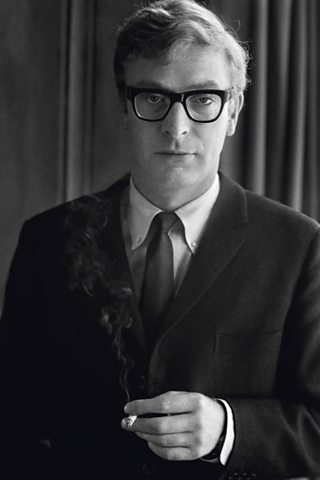
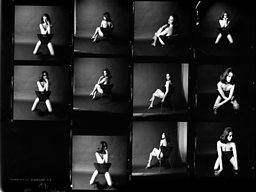
This lovingly assembled miscellany includes the most erotically-charged office furniture in history, a relic of Christine Keeler’s notorious photoshoot; Woodstock recreated in the comfort of a carpeted gallery; and images of working class arriviste Michael Caine from his counter-jumping salad days in Alfie and The Italian Job.
You might justifiably point out that the very practice of curating transforms acts of revolution - from Impressionism to Cubism to Pop Art, and so on and on - into bourgeois soft furnishings. The point is that these once-electric touchstones and familiars of the Sixties are no exception.
This is what posterity, or to put it another way, consumer culture, does to the memory of the flower children: it charges you to look at their jottings and raiment as if they were the personal effects of Louis XIV.
![]()
Revolution on Front Row
John Wilson takes a tour around the V&A's new blockbuster show for BBC Radio 4.
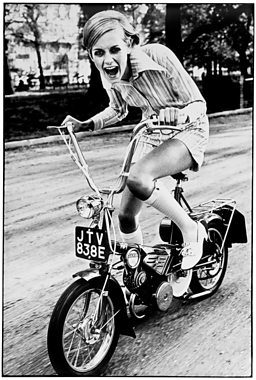
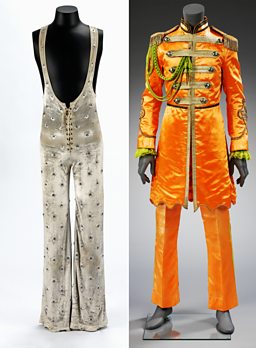
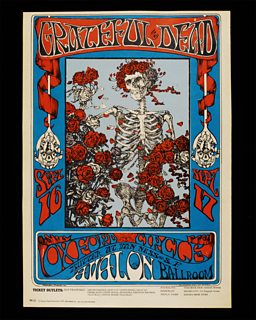

The allusion to a court isn't entirely idle. 'The Sixties' happened to graduates and the middle classes - at least, at first – so to people of some privilege, then; and this exhibition sits very happily among the toney collections of the V&A.
After Austin Powers was done with them, after the limp reboot of ‘Cool Britannia’ in the Nineties, surely the Sixties no longer excite a frisson of insurrection?
But seriously, are we buying all this again?
The Sixties seem to be on a constant loop, endlessly recycling in front of our eyes like a tie-dyed T-shirt in a laundrette porthole, to the point where poor old Karl Marx – who was much name-checked in the decade in question – must have lost count of how often this particular slice of history has repeated itself.
After Austin Powers was done with them, after the limp reboot of ‘Cool Britannia’ in the Nineties, surely the Sixties no longer excite a frisson of insurrection?
Cynics might wonder how much difference they made, anyway. After all, America is on the brink of electing a bellicose president, Theresa May is riding the tiger of public opinion over the EU, and one of the most popular programmes on television is a talent show, The X Factor.
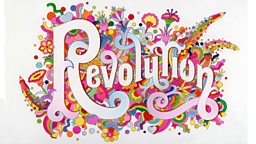
Of course, Revolution... will be a huge hit. Alongside goggling millennials, who may have escaped the deifying of Sixties luminaries until now, will be hippies and heads and ageing groovers, making a sentimental pilgrimage.
In the song that gives the exhibition its name, Lennon goes on to say, 'We all want to change the world'. Let's agree that he and the others did that.
But for the men and women who stormed the citadel of the Establishment, the rampage ends somewhat bathetically in a gift shop. They were only supposed to blow the bloody doors off.
You Say You Want A Revolution? Records and Rebels 1966-70 opens at the V&A on September 10 and runs until February 26, 2017.
Stephen Smith is Culture Correspondent of Newsnight

More from BBC Arts
![]()
Picasso’s ex-factor
Who are the six women who shaped his life and work?
![]()
Quiz: Picasso or pixel?
Can you separate the AI fakes from genuine paintings by Pablo Picasso?
![]()
Frida: Fiery, fierce and passionate
The extraordinary life of Mexican artist Frida Kahlo, in her own words
![]()
Proms 2023: The best bits
From Yuja Wang to Northern Soul, handpicked stand-out moments from this year's Proms