10 reasons to love the Edinburgh International Film Festival
16 June 2017
Edinburgh is host to the world's longest continually-running film festival, which has had its fair share of milestones since launching in 1947. Ahead of the 2017 event, MARC DAVID JACOBS takes a look at what makes the Edinburgh International Film Festival unique.
1. John Huston said so
After a semi-scandalous visit nearly two decades before, Huston returned to Edinburgh in 1972 to present his latest film, Fat City, on the festival's opening night.
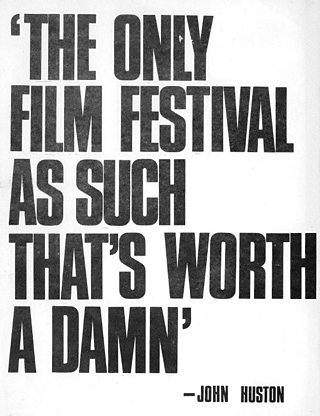
Any fears of a repeat performance were quickly allayed when the actor-director was quoted as saying 'I rarely go to [film festivals]. The only one as such that's worth a damn is Edinburgh. My God, it's unique.'
The festival was so pleased that it had a separate page of Huston's words specially printed.
2. It was one of the world's first feminist film festivals
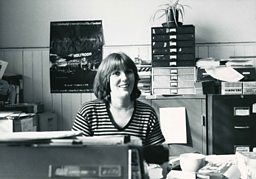
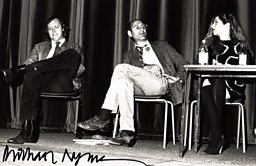
In 1972, Claire Johnston, Laura Mulvey and EIFF deputy director Lynda Myles staged the Women's Film Festival, a revolutionary celebration of female directors which screened classic works by Dorothy Arzner and Maya Deren alongside new features by Věra Chytilová and Jane Arden (whose The Other Side of the Underneath would remain the only British feature film of the 1970s to be solely directed by a woman).
The following year, Myles was promoted, becoming the first woman director of a film festival anywhere in the world.
3. They started here
Before they went on to make their first feature films, dozens of notable directors had their early short works premiered in Edinburgh, ranging from Michelangelo Antonioni (1948) to John Schlesinger (1956) and George Lucas (1967), whose prize-winning THX-1138-4EB was said to 'rival Kubrick'.
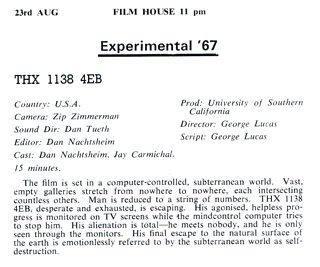
Continuing its track record of discovering the work of female directors, the festival screened Kathryn Bigelow's first film, The Set-Up, in 1978 - and, in 1984, festival director Jim Hickey discovered Jane Campion's short, Passionless Moments, amongst hundreds of films submitted to the festival that year.
> View the EIFF programme entry for Experimental '67
4. It started out as a celebration of world documentary
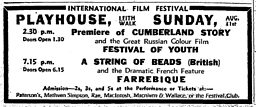
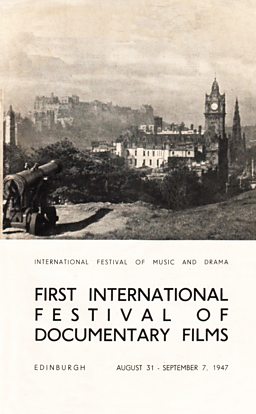
When the Edinburgh International Festival declined to have cinema feature in its celebration of music and drama, the organisers of the Edinburgh Film Guild decided to create a festival of their own, to be focussed on documentary filmmakers.
The 1947 First International Festival of Documentary Films was scheduled to begin with a film about the work of Henri Matisse, featuring the septuagenarian painter himself. But this was eventually rescheduled for closing night in favourite of sports documentary Festival of Youth - thanks to pressure from the film's Soviet representatives, who wished to have their film open the festival.
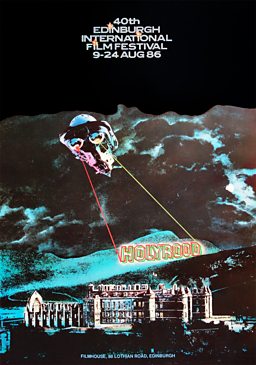
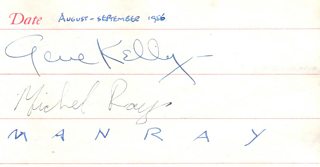
5. It's where Gene Kelly met Man Ray...
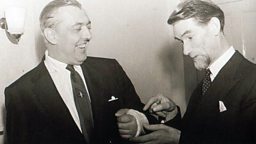
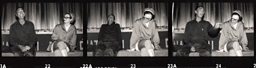
On paper, at least. The EIFF guestbooks are full of interesting names - some of which can be almost impossible to decipher. In 1956, Kelly, visiting for the gala presentation of his Invitation to the Dance, and Ray, on a jury to award a prize for films on art, could be commended for the clarity of their penmanship. But previous guests Dirk Bogarde and Italian director Vittorio De Sica required a bit of extra detective work to finally pin down their identities.
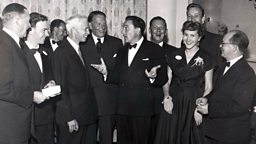
6. It's a secret
There's a long-standing festival tradition of surprising films cropping up at the last minute. In 1968, a chance airport encounter between EIFF's assistant director and the manager of folk-jazz band Pentangle led to the unscheduled European premiere of John Cassavetes' breakthrough feature, Faces.
Music became a recurring theme of programme additions, with a 1979 screening of what was then called simply Bowie (later renamed Ziggy Stardust: The Motion Picture), and Paul Simon's One-Trick Pony in 1981.
And, in 1989, the festival began its tradition of surprise movies with Peter Greenaway's acclaimed The Cook, the Thief, His Wife and Her Lover.
7. Never mind the critics
To be fair, not everyone gets it right all the time. The Maysles Brothers' first masterpiece, Salesman - co-directed by Charlotte Zwerin and recently voted by the British Film Institute one of the 25 greatest documentaries of all time - was universally panned when it screened at EIFF 1969; one critic summed up by calling it 'a film without a point to make, which makes its point accidentally, and looks consistently grey'.
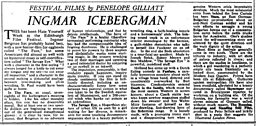
Likewise, Penelope Gilliatt's 1959 review of The Face - the third film by Ingmar Bergman screened at the Festival, following premieres of The Seventh Seal in 1957 and Wild Strawberries in 1958 - witheringly referred to his work as 'generalised metaphysical glower'.
> Read the full-size cutting of Penelope Gilliatt's 1959 review of The Face
8. It pioneered the film festival retrospective
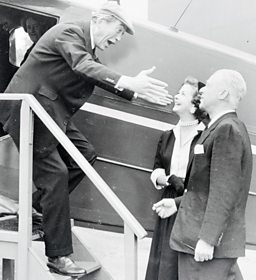
When maverick director Sam Fuller was greeted by a band of pipers at Edinburgh's Turnhouse Airport, few expected this would usher in the now-established practice of film festival retrospectives, featuring wide-ranging selections of work by a single fêted filmmaker.
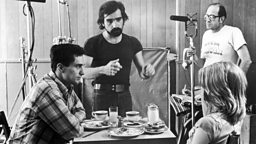
Over the following decade, the festival would reclaim past masters like Douglas Sirk and Jacques Tourneur from obscurity, whilst also celebrating the work of up-and-comers such as Martin Scorsese and Werner Herzog.
9. Homer Simpson showed a film there
In 1965, the festival's opening night programme began with an experimental short called A Study in Wet, a collage of surfers and still ponds set to a soundtrack composed of electronically-manipulated sounds of dropping water.
The director of this well-hydrated marvel? Homer Groening, whose then-11-year-old son, Matt, would go on to create The Simpsons - and name its erstwhile paterfamilias after his own father.
10. It's been censored
Every film festival loves a controversy, and Edinburgh is no exception. Perhaps the greatest string of shockers came in 1970, when things started off with the cancellation of West German feature O.K. for being 'too anti-American'.
The city's magistrates then requested viewings of over two dozen further festival features in order to determine their suitability for screening.
The most prominent was Roger Corman's aptly-titled gangster tale, Bloody Mama, but others under the microscope included Portraits of Women, a Finnish feature described as 'the bluest of the blue', and a Danish Henry Miller adaptation Quiet Days in Clichy, which ultimately had to be withdrawn.
The 2017 Edinburgh International Film Festival runs from 21 June - 2 July.
A version of this article was originally published in June 2016.
More film features
![]()
Danny Leigh's British Film Mavericks
Profiling the mavericks, rebels and brilliant outsiders of British cinema
![]()
Best pictures
The Oscars' golden moments with Marlon Brando, Audrey Hepburn and more
![]()
Yesterday's tomorrow
Harry Lange and the art of 2001: A Space Odyssey
More from BBC Arts
![]()
Picasso’s ex-factor
Who are the six women who shaped his life and work?
![]()
Quiz: Picasso or pixel?
Can you separate the AI fakes from genuine paintings by Pablo Picasso?
![]()
Frida: Fiery, fierce and passionate
The extraordinary life of Mexican artist Frida Kahlo, in her own words
![]()
Proms 2023: The best bits
From Yuja Wang to Northern Soul, handpicked stand-out moments from this year's Proms