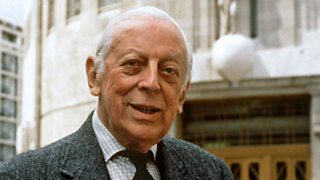
The first World AIDS Day - 3 December 1993
Last Wednesday in Washington a scene was enacted, no enacted is wrong, it was a happening, entirely unrehearsed, totally unexpected, frightening for a moment or two but unlike anything I can recall happening to a president of the United States.
Mr Clinton arrived at the Georgetown medical centre in Washington, to talk to an audience of doctors, students and researchers, particularly people doing research on the plague of our time, Aids.
Wednesday 1 December had been proclaimed by the secretary-general of the United Nations as World Aids Day. I don't know how it was observed in your town, I can imagine a dozen or more towns that I know where, from fear, indifference, distaste or actual opposition, there would be no observance at all. But in Berlin, Christmas shoppers were handed out free condoms. In India, one newspaper broke a practically sacred taboo and published explicit illustrations of what we've come to call safe sex.
It was of course known that President Clinton was going to talk about Aids and when he arrived at the centre, the audience rose to him. I should like to have seen a camera pan, roam slowly across the rows of faces, to guess at the various emotions with which this special audience was greeting him, the Aids researchers especially.
I doubt any of them would have been flushed with great expectations, not because of any prior dislike or distrust of Mr Clinton but if you've talked ever to an Aids researcher, you'd have recognised a look on many faces of resignation, sad, serious, stoic resignation. Many of them came to this specialty a year or two ago, full of hope and bravery and determination to help solve the riddle. They have certainly become privy to the literature of the teams in many countries that have been slogging away for a few years or for most of the 12 years only that separate the first alarm bell going off in San Francisco from our present condition, in which only seven years from now that 40 million men, women and children around the world will have become infected.
There is today no answer, a little light. The researchers know it and the politicians know it but the politicians drone on through thick clouds of federal prose, promising this and that, especially money and there was no cause to believe that President Clinton would sound any different.
But this speech was - I was going to say, unlike any he's given, but there was one, only a week ago, in the church where Dr Martin Luther King preached the day before he was assassinated - and Mr Clinton's was not only a moving speech, it was about the crime that stalks the land. But also he made a frank admission that the federal government with all the money and good intentions in the world cannot solve the problem, that in the main, it is up to the cities, the towns, the citizens and parents.
Now let's not forget that Mr Bush never mentioned Aids until he was two years into his administration and that he and certainly his predecessor were more embarrassed by Aids than alarmed by it. It's been really, until the past year or two, a topic that politicians, compelled by now to say something, always worked into a speech the passing tribute of a sigh, as you would in referring, say, to the deaf and the blind. So the audience sat up and took notice when, in his first sentences, President Clinton struck a quite new note.
Today, he began, I think just about every American who has ever been touched by Aids will think of people they know who have died or who have suffered family loss. That sentence alone could hardly have been spoken by either of the two previous presidents. Not out of embarrassment on their part, but because they probably never met or knew anyone with Aids. But anyone of Bill Clinton's generation, who has a wide acquaintance, would have to be a hermit not to know someone who is infected or dying or dead.
The president went on to say something else that you could not possibly have heard from Mr Bush or Mr Reagan. I want to say a special word of appreciation today for the people who are infected with HIV and the people who are living with Aids. Some of them are here today and I think them for the power of their example and for their commitment to life. He thought that maybe this whole disease is bringing out the best and the worst in America. I can't incidentally ever recall any president of my time using the phrase, the worst in America. I mean, he went on, it's exposing some of our prejudice in ways that are self-defeating, since every family and every child is now at risk and yet it's also showing the courage, the self-determination, the incredible capacity of people to give and to love.
Well, then, the scene. A young man exploded from his seat, dashed down the aisle and stopped only a few yards from the president while the Secret Service men jumped to form a protective ring. In a high treble voice, shrill with rage, the young man said, and I can only say, not shriek, his words: "If you're so concerned about Aids, where's the Manhattan project on Aids you promised during your campaign? One year, lots of talk, no action." Well by then, any other president I can think of would have flushed with anger or shuffled in a fluster of discomfort or like Eisenhower once, I'll never forget, would have been out in the aisle striding in on the man and rasping, say that again, say that just once more. But, the most extraordinary response.
Mr Clinton leaned on the lectern and cradled his chin in the palm of one hand. He looked gently, attentively at the young man, as he might to a younger brother telling him his personal troubles. The tirade went hurling on, "30 recommendations on Aids go sitting on a shelf, gathering dust in your White House, while me and my community are dying in ever-increasing numbers and all you do is talk. Talk is cheap and we need action. Slick Willie, the Republicans were right, we should never have trusted you."
Long before his final jabs, normally he would have been hustled out by the Secret Service and/or the police. As it was, the president listened, almost sweetly. The man had his screaming say and a police officer led him away. And the president, in the same quiet, reasoning voice, he said, part of my job is to be a lightning rod, to lift the hopes and aspirations of the American people, never fully closing the gap between what you're reaching for and what you're actually doing and knowing for sure there's no way I can keep everybody alive who already has Aids. So the fact he's in here, expressing his frustration to me means at least he expects me to do something. I'd rather that man be in here screaming at me than giving up altogether.
Then he told of the directions to every federal employee with instructions and education about Aids for three million families and, at a time when domestic spending was absolutely flat, we have increased the research funding for Aids by over 20% and funding for care by 66%. Of course, he added, that if the Congress passed his healthcare plan, a practical impossibility before this time next year, then people living with HIV and with Aids will not lose their benefits when they lose their employment. As for what can be done now and all the time, he ended on a note similar to his warning about crime. Each of us has to take personal responsibility for our own conduct. If you want children to do that, they have to be educated about the consequences of their personal conduct, which means someone else, not government.
I don't think anyone who saw this scene will ever forget it. The steady gaze, the soft answer may not have turned away wrath but it left the impression of a rare emoting, a look of mingled frustration and genuine deep concern. If you put yourself in his position, you'd think of other things, true things you could have said to that young man, things that are not often blabbed aloud and that together contribute to a widespread, but unspoken, public resentment of Aids victims who mount protests and parades. First we must admit, there is among many people an inborn or acquired distrust, if not actual dislike, of homosexuals. There's the un-contradicted fact that Aids is very largely a disease of homosexual men and of intravenous drug users and is picked up by women who are even mildly promiscuous and by the children of such women. Every day, in New York City, one more Aids-infected baby is born.
Indeed, the burden of treating Aids in this city and in San Francisco, the two capitals of the infection, is heavy to the point of being soon impossible to bear. It is true, incidentally, that the Bush administration increased the federal funding of Aids by 10 times the amount it added to cancer research.
What stimulates a sort of angry boredom with the Aids public protesters is the sight and sound of what seem like hysterics who appear to believe that more money will mean more research and a quicker cure. What this naive attitude shows is an ignorance of the nature of research and of the tireless work being done in many countries and a blithe unawareness of the social fact that we do not see indignant parades of sufferers from multiple sclerosis, from motor neurone disease, from cancer even, stomping around, demanding more money, more action. It occurred to me that if I'd been in the president's place, I would have reminded that young man, they've been researching cancer for several thousand years and billions of dollars and pounds and francs and rupees are being spent on it at this moment, but there is no cure. But then, Mr Clinton is president of the United States and I am not.
THIS TRANSCRIPT WAS TYPED FROM A RECORDING OF THE ORIGINAL BBC BROADCAST (© BBC) AND NOT COPIED FROM AN ORIGINAL SCRIPT. BECAUSE OF THE RISK OF MISHEARING, THE BBC CANNOT VOUCH FOR ITS COMPLETE ACCURACY.
Letter from America audio recordings of broadcasts ©BBC. Letter from America scripts © Cooke Americas, RLLP. All rights reserved.
![]()
The first World AIDS Day
Listen to the programme