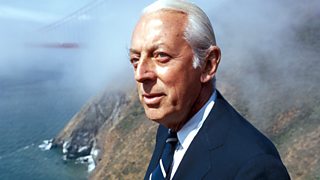
O.J.Simpson, sports star
Watching the president the other day gamely, and rather nervously, standing his ground against a barrage of questions from the press, I couldn't help thinking back to the presidential press conference as it was in the days of Franklin Roosevelt. It's strange to think now that while previous presidents had been uneasy with the institution and most of them abandoned it, Roosevelt revelled in it and made it a cherished bond with the press.
Of course, he had some enormous advantages over President Carter. I'm not thinking of personal advantages – manner, demeanour and so on – but the institution itself. There was no television in those days and the press conference was not put on the radio, no transcript of the proceedings was ever published, not until the president was dead and gone, when we could read the transcript of most of his over 990 press conferences.
More than that, Roosevelt, from the day of his first press conference in 1933, laid down precise ground rules and nobody challenged them, which they certainly would today. There were to be four categories of news, nothing was to be quoted directly as coming from the president. There was news and comment he gave you for attribution to a high official, unnamed, of the administration. Other stuff could be attributed to the White House. The third category – and the most useful to the press – was known as 'background', and always labelled as such. That meant the president was giving you his view of how things stood on any policy or argument that came up, but this was not to be printed in any form; you're meant to bear it in mind in writing your own commentary. The fourth category was that of direct quotation of the president in quotation marks and this was so rarely allowed that whenever Roosevelt said, 'And you can quote me!' there was a rustle of pens on paper like a convention of grasshoppers. The next morning, every paper in the country would headline the actual word just handed down from Olympus.
This well-respected system meant that the president was, at all times, in complete control of his questioners and could say anything that came to mind without fear of being damagingly quoted.
Now, here, for instance, I've come on a short exchange only a week or so before the Japanese bombed Pearl Harbor. At that time, the president and Mr Hull, the Secretary of State, were exchanging messages and negotiating points with the Japanese that looked towards a general peaceful settlement in the Pacific. At the conference, the president handed out a government release about the neutral status of American merchant vessels sailing to Europe, to Central and South America, and the last sentence read: 'American merchant vessels sailing on routes in the Pacific Ocean will not be armed under existing circumstances.'
And now, a reporter asked, 'Mr President, could you say how long you think existing circumstances may prevail?' The president, 'I think I'd ask that question in Tokyo, not in Washington.' Question: 'Is there anything you can tell us, sir, about these Japanese negotiations?' The president: 'I think I'd better not.' Question: 'Well, Mr President, could you say, sir, whether these negotiations have broken down temporarily?' The president: 'No, they haven't.' Question: 'Mr President, can you tell when the next meeting will be held with the Japanese?' The president: 'I don't know.'
And, at the next press conference, the president reported that large Japanese forces had been moving in Indochina and that, at his request, the Japanese government had been asked, very politely, what was the purpose of these moves? Question: 'Was there any time limit put on it?' The president: 'No, no! That's a silly question! One doesn't put a time limit on anything any more, that's the last century. We are at peace with Japan, we're asking a perfectly polite question, that's all!' End of press conference.
Well, imagine an exchange like that today, the next morning's papers headlining 'President vague about Japan negotiations. President insults reporter, calls him silly'.
Perhaps the commonest phrase the president used in those days consisted of two famous words: 'No comment', said either firmly, or blankly, or with a wink or a chuckle. In other words, he knew things that you didn't and weren't meant to know. He was permitted the necessity – today we should say the luxury – of keeping some things to himself. And it was well understood by all newspapers and broadcasting networks that delicate negotiations could be conducted only in secrecy, that their news value emerged only with the publication of a communiqué. Any president who today said, 'No comment!' to anything, would be considered not only rude, but evasive, deliberately cheating the people of what they have a right to know.
The way the press conference has gone, with the president knowing that every word and gesture is being heard and seen on television and that next morning, the New York Times will publish a complete transcript of the dialogue, does this mean that we are now privy to state secrets, that we are better informed than we ever were? I think not. It means that the president has to cover up the delicate fabric of things being negotiated with not very illuminating verbiage. If Roosevelt had been asked in the privacy of his White House office, where the press conferences were always held, whether he thought the recent elections in Rhodesia were free and fair, he'd have said, at least, 'No comment'; at most, 'We're going into that with the British. For the moment, I have no comment'.
What Mr Carter said was, 'We have been consulting closely with the British government since the new administration under Mrs Thatcher took over. Secretary Vance has just completed several days of discussions both with her foreign minister and with other officials. The new Rhodesian government will take office, I think, the 1st of June. Within two weeks after that date, I will make my decision about whether or not to lift existing sanctions. I've given the Congress this assurance and obviously my decision would be made taking into consideration those consultations with Great Britain.'
Well, there's not much more in that than 'No comment yet'. But the president now has to pretend that he's giving the people, through the press, all the facts. He promised a government open to the people before he took office and he's stuck with that promise. So, nothing is too complicated or scandalous or indiscreet, or silly, to ask him. And, you'll have noticed there's less formal respect paid than there used to be, less 'Mr President' and 'Sir' and more, 'Why did you do this, or that?'.
In short, in Roosevelt's day, the president granted the press the favour of a press conference. Today, the president is up against the press. We don't really know any more than we did but we have a greater freedom to embarrass the president and make him appear to be cagey or indecisive.
Now this new openness or, if you like, this new convention, of allowing the press to challenge rather than inquire, to demand that he tell all, to put him on the spot, I think it has much to do with the general complaint that we lack great leaders. Old men shake their heads in any country. They think of Churchill and Roosevelt and Smuts and Menzies, and say 'There were giants in those days'. If so, I can only say they were lucky giants. They lived at a time when public opinion granted them a measure of authority which they did not have to prove. They may have been as baffled as President Carter is by the intransigence of Congress and the indifference of the public to shrinking supplies of petrol or natural gas, but the giants could say 'No comment' or they 'had the matter under consideration'.
Today they have to bare their ragged state and confess that, once you get in the presidency, it's a brutally complicated job that tends towards muddling compromises rather than strong, authoritarian measures handed down from on high.
Well, while the president stands there like the boy on the burning deck, forced to make positive statements about oil, inflation, airplane safety, Rhodesia, Palestinian autonomy, the MX missile, the presidential intentions of Senator Edward Kennedy and why he, the president, used up fuel in a helicopter to go fishing last Saturday? The rest of us knit our brows about all these things and don't pretend to know much and say 'Fill her up' to any petrol station that's open and go fishing. Or watch baseball, or tennis.
The dog days are on us. The steaming summer days are coming in and this, of course, is the great season for games and wishing good riddance to all sententious or apologetic politicians.
Next week there will be a banquet in the Waldorf Astoria Hotel given for the benefit of the American Cancer Society. The tab is $150 per person per dinner and there the award will be handed out, as it is once every ten years, to the athlete of the decade. Lesser awards will go to the swimmer, Mark Spitz, swimmer of the decade, Chris Evert-Lloyd and Jimmy Connors, tennis players of the decade, and so on. But the grand award, Athlete of the Decade, will go to Jack Nicklaus, the best golfer of his time and probably the best golfer of all time. Certainly, while other golfers have dominated the game for as long as four years or five years or, in Bobby Jones's time, six years, nobody has begun to approach Nicklaus's record of being the number one man for 15 years. It is enough.
Among those who'll be present and honoured is the extraordinarily attractive figure of O. J. Simpson who is probably the best black American footballer there has ever been. Mr Simpson made a lucrative living at football and he's made a princely living by doing television commercials for an automobile renting agency. He will stand there as a model and an enviable example to millions of black boys who yearn for similar national fame in the big games for the big money. It's a dazzling will o' the wisp.
A sociologist at the University of California has just published a study of sports and the black man. He finds that no more than 900 black athletes in this country earn any sort of a living and that the odds against any ambitious black boys making a career as an athlete are about 20,000 to one. Arthur Ashe, that very sensible black tennis star, has urged the black sports stars not to appear before schoolboys except to urge them to get an education.
Or better, he suggests, 'send to the schools the guy who didn't make it and have them ask him if he sleeps every night. Ask him whether he graduated. Ask him what he would do if he became disabled tomorrow. Ask him what happened to his old high-school athletic buddies'.
This transcript was typed from a recording of the original BBC broadcast (© BBC) and not copied from an original script. Because of the risk of mishearing, the BBC cannot vouch for its complete accuracy.
Letter from America audio recordings of broadcasts ©BBC
Letter from America scripts © Cooke Americas, RLLP. All rights reserved.
![]()
O.J.Simpson, sports star
Listen to the programme