BBC Pandemic join a potentially life-saving citizen science experiment
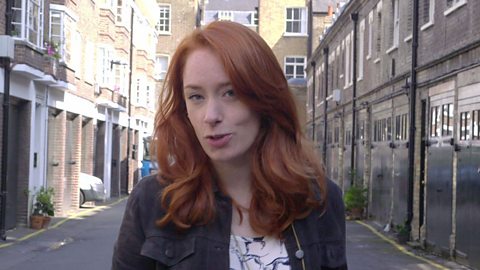
Hannah Fry wants you to download the BBC Pandemic app
Download the BBC Pandemic app and join a groundbreaking citizen science experiment.
The BBC is conducting a groundbreaking, ambitious and potentially life-saving citizen science experiment, and we need you to take part.
Nearly 100 years ago Spanish Influenza raced around the globe, decimating communities and resulting in up to 100 million deaths.
Today a global flu pandemic remains at the top of the UK Government's Risk Register.
It currently estimates a new pandemic could infect up to 50% of the population and kill as many as 750,000 civilians in this country alone.
Mathematics and data are among the most important weapons for fighting an outbreak of a deadly infectious disease.
If a pandemic were to arrive in the UK tomorrow, the government would rely on computer models to predict how the disease might spread through our homes, our communities and our country.
These models are used to help to dictate the government's response - where the vaccines should go, whether schools should be shut and if travel should be restricted.
However, the POLYMOD study, which is regularly used for public health modelling to make these vital decisions, is nearly a decade old now, had a relatively limited sample of roughly 1,000 people from the UK, and relied on participants simply estimating how far they had travelled over the course of a day.
By inviting people to participate in a nationwide study, using the BBC Pandemic app, we are hoping to improve that data and potentially provide better models that can be used to fight back.
BBC Pandemic is a free app that you can download from Google Play and the App Store.
As part of the study, it will record your approximate location (within a squared kilometre) at hourly intervals over 24 hours, and ask you about the types of interactions you had: did you speak to the person at the supermarket checkout? Did you hug that friend you met for drinks?
The data will be anonymised and fed to a team of researchers from the University of Cambridge and the London School of Hygiene and Tropical Medicine.
If just 10,000 people download BBC Pandemic app and take part, it would be a significant improvement on current data sets.
Together, we can give mathematicians the information they need to predict how a pandemic will spread, and, crucially, how we can slow that spread down.
Where next?
![]()
More from BBC Pandemic
Why should you take part?
![]()
Eden Project: Invisible Humans
Explore planetary phenomena beyond our senses.
![]()
Eden Project: The Human Microbiome
Taking a closer look at the invisible ecosystem within your body.