Jon Hunter: notes from the script editor
The Show What You Wrote's script editor Jon Hunter gives his notes on the work you've submitted and his tips for future success.
As I’ve been giving rewrite notes on sketches for The Show What You Wrote, I’ve found myself typing the same things over and over (and over).
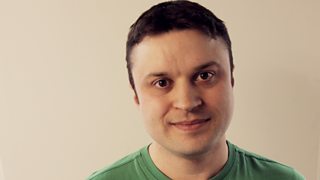
Since it’s impossible to give individual feedback on all 12,000 sketches we received for series 1, I thought it might be useful if I wrote a list of some of the more common mistakes, so the next time you’re submitting sketches somewhere, you’ll have a nice checklist so you can avoid the same pitfalls again.
So – in no specific order – here are some things to look out for when you’re writing and submitting sketches:
If the sketch fits
- This should be an obvious point, but have you read the writing brief? Any show you’re submitting to will be slightly different to the others so make sure you read the brief properly.
- The Show What You Wrote is a non-topical show where the sketches fit different genres or themes, so sketches that feel like Newsjack rejects aren’t going to suit it. On my first day of script editing I read four sketches about Michael Gove and had to check I hadn’t opened the wrong folder.
- The same thing goes for characters – The Show What You Wrote has two male and two female performers so a sketch with only five men talking might be tricky to pull off.
Length
- The phrase I’ve typed the most whilst giving notes is “you could cut at least a page out of this”.
- A good habit to get into before sending in a sketch is to read it to yourself and ask; ‘is all of it funny?’ Are there any lines, exchanges, or even words that could be removed without damage?
- In a perfect world nothing should be in there that’s not (a) funny (b) absolutely necessary for the sketch to work and (c) preferably both.
- Obviously the perfect length of a sketch depends on the idea itself, but if your sketch goes over three pages it’s very likely that there are cuts to be made.
- In a show that's trying to pack in as much as possible short (one or two page), funny sketches are always popular.
LOL
- The internet has caused irreparable damage to the phrase ‘laugh out loud’ – children and the illiterate constantly use it in place of ‘I found that slightly amusing’, ‘that is relatively witty’ or ‘I have just written a sentence’. However, when you’re recording a comedy show in front of an audience you really do need them to laugh out loud, so sketches that are just clever, wryly amusing or weird aren’t going to make the cut. Nobody’s going to broadcast the sound of a studio audience nodding in appreciation.
- As you're reading through your sketch put a tick next to any bits that will make an audience laugh. Properly laugh. Be honest with yourself; are there any? Are there enough? Are you sure?
- If not then it’s time to rewrite: make the punchlines punchier, turn the interesting ideas into actual jokes and then look over it again – is the bit that's going to make people laugh at the end of the sentence? No? It probably should be, so rewrite again.
- Ed Morrish (producer of Newsjack and John Finnemore’s Souvenir Programme), wrote a blog entitled ‘Everything I Know About Newsjack’ that you should definitely read as it goes into more detail about this.
- Concepts aren’t funny in themselves – it’s only in the writing and then through performance that they make people laugh. A funny idea is not enough to make an audience laugh out loud – you need to relay that idea to the listener in the funniest possible way. It's hard work, but then again writing should be hard work.
Waiting for the funny
- You’d be surprised how many sketches I’ve read which don’t have anything even attempting to be funny in the first page. You’d be even more surprised how many sketches still don’t attempt to be funny in the second page.
- There are some payoffs that work best after a moment of seriousness, but I’m not sure any payoffs are good enough to survive 2 minutes of a mundane scene playing out in a mundane manner.
- Check your setups; remember you can set a scene with sound effects and with background atmospheres - you don’t need a character to say “I do like this swimming pool” to show we’re in a swimming pool. The quicker we can get to the first laugh the better.
I say, I say, I say
- The way characters speak is as important as what they’re saying. It helps differentiate between them and can really focus the wording of a joke or a funny line. Politicians sound different from the kids at the back of the bus, arrogant people speak differently from nervous people – a distinct way of speaking/phrasing can really help round a character out in the otherwise brief time we’re with them.
Boing! Smash! Miaow?
- Hearing (or ‘seeing’ if you’re writing for TV or stage) the funny thing happen is almost always funnier than being told about it happening by a third party.
- You know when someone’s trying to tell you about a hilarious thing that happened to them and it just doesn’t seem that funny? Usually ending with the line, “you had to be there”? Well you’ve got a chance to put the audience there, so why not take it?
Format
- While sketches are ultimately written to be performed, first of all they’re going to be read. As a writer you should make it as easy as possible for whoever’s reading you material to find it funny, which means using spacing, and correct spellings and grammar.
- We’re not going to turn something down just because it’s not typed up in the correct ‘BBC Radio Comedy format’ but, as you really should be formatting it anyway, why not use that one?
- Correct formatting also allows us to get a better idea of pacing and to see how regular the laughs are within the sketch. Three laughs on a densely written page of text can easily translate into only one laugh per page of a correctly formatted script.
- Dan Tetsell wrote an excellent blog about formatting when he was script editing Newsjack. Unlike a lot of things written for Newsjack it still makes sense several years later...
Punchlines
Unlike this article, a sketch should end on a laugh.
Please note that these are not hard and fast rules; I’m sure all of you will be able to think of an excellent sketch that breaks one or more of these suggestions, but I do think they’re worth taking on board the vast majority of the time.
Keep up with Jon Hunter
More from The Show What You Wrote
![]()
Think Again
Producer Carl Cooper on writing to a brief and the genres featured in the first series of The Show What You Wrote
![]()
About the show
Budding writer? Find out how to submit your sketches here
![]()
What happens next?
Producer Alexandra Smith explains what we'll be doing with your submissions
![]()
Script example:
Writer Jack Bernhardt shares his work and top tips for sucessful scripts
![]()
Script example: thriller
Writer Tom Neenan presents an annotated script as a guide to writing for the show