Object of the Week
Each week we'll introduce you to one of the many intriguing objects found in the museums we visit...
Week 5: Lars Tharp
"Billy and Charley - of Fools and Horses"

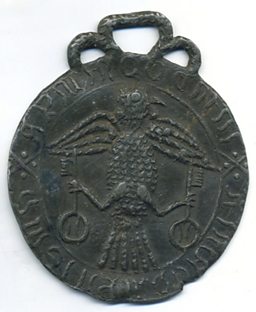
On the shores of the Thames, as each tide washes over the last, each exposes fresh layers for treasure-hunting mudlarks. Early Victorian antiquarians paid good money for archaeological finds surfacing from the ancient City: coins, pilgrims’ cap badges, trinkets, medieval children’s toys, Roman, Saxon and earlier wares. Obliging purveyors of such treasures were dealers William Edwards and George Eastwood. From around 1857 their stock increased dramatically. Suspicions were aroused and the authenticity of their goods was challenged. Eastwood sued for libel.
Giving evidence at the trial, respected scholar Charles Roach Smith maintained that (contrary to the opinion of the British Museum) the finds must be genuine on the grounds that no forger could produce such a variety of ‘preposterous’ objects, or on such a scale. Smith later shifted his view, saying that the pieces were probably made in the reign of Queen Mary I, replacements for medieval treasures purged in the iconoclasm of her father’s Reformation.
Finally, when the forgers’ moulds were discovered and put on public display at the Society of Antiquaries of London, the scam was truly nailed. The medaliferous mudlarks supplying the dealers were exposed as a pair of East End chancers, William Smith and Charles Eaton of Shadwell. From 1857 to 1870 (i.e. even after the exposure of the fraud) ‘Billy and Charley’ churned out several thousand pieces in pewter and ‘cock metal’. Today, a testament to credulous collectors, ‘Billies and Charlies’ are collectible in their own right, a colourful story with a useful warning: “If it’s got a value it’ll be copied”.
So if you’re looking for examples of Shadwell Shams yourself… beware of imitations.