Six reasons why the US Supreme Court matters
1. It has the final word on many key issues
From abortion to affirmative action, gun control to healthcare, many of the most important issues in American politics today are decided not at the White House, or Congress, but by the nine members of the US Supreme Court.
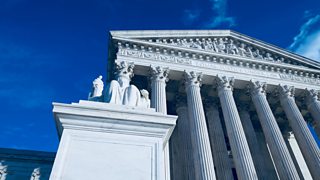
Their rulings are the final word in the American system of government and can only be overturned by amending the constitution (a hugely laborious process which has only happened 27 times in 200 years) or by the Court itself backtracking.
In the last decade – amongst other things – the Court has given a constitutional right to gay marriage, affirmed an individual's right to own a gun, overturned rules on political campaign funding, and upheld President Obama’s healthcare reforms.
2. It’s deciding more important cases
The US Constitution is designed around a series of checks and balances, to make sure no one part of government – the Presidency, the Congress or the Courts – gets too powerful. But Congress is bitterly divided and often unable to reach detailed agreement on complicated issues. It has tended to delegate the power to regulate American life – everything from clean air to workplace safety – to government agencies.
And Presidents, particularly Obama and Trump, have issued "executive orders" to get things moving. If you don’t like those regulations or orders, and Congress won’t act, you need to go to Court to get them changed. That happened from conservatives when President Obama was in office, and now it’s liberals battling President Trump. Either way, the most important cases end up at the Supreme Court.
3. The retirement of Justice Kennedy is a watershed moment
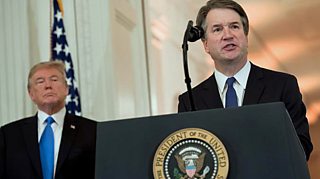
There are only nine members of the Court, each appointed for life. For years the political makeup has been finely balanced: four conservatives, four liberals and one conservative, Anthony Kennedy, who voted with the liberals on key social policies like abortion, affirmative action and gay marriage. It made him the central figure on the Court: when he spoke in a hearing, everyone in the courtroom would sit forward in their seats, anxious to hear if his questions gave away his likely eventual decision. Now he’s retired, and if he’s replaced by a more reliable conservative, as President Trump’s nominee Brett Kavanaugh may turn out to be, the Court will tilt in a conservative direction.
4. A changing Court could change America
With so many important decisions coming before the Court every year, a change in the ideological composition could have a big impact. Activists disagree exactly how far and fast it might go on a variety of issues. But most people accept the Court will be more conservative on abortion – perhaps by permitting laws which restrict it state by state. Most people accept it will be more conservative on affirmative action – or racial preferences – in university admissions. And the fact that the National Rifle Association is pumping money into ads suggests they think it’s likely to move on gun control, too.
Any change on other issues is less obvious – Justice Kennedy was already conservative on many issues so the difference will not be as great on every issue.
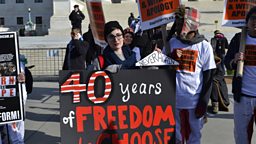
5. The Court risks becoming seen as another political branch of government
For generations, Chief Justices have understood the vital importance of the Court being above the political fray.
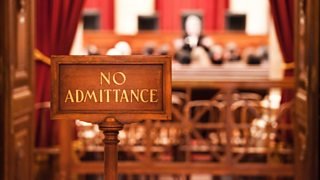
In the 1950s, Chief Justice Earl Warren urged the other members of the Court to join him in ruling unanimously in the Brown v Board of Education decision so that it was a clear, unmistakable legal and moral rebuke to segregation in education.
Today, Chief Justice Roberts will be very aware that if the Court too often overrules the elected branches of government, if it is seen as partisan, it may lose that credibility. As the custodian of the tradition of being above the fray, he will look for compromises and less far-reaching rulings except when he believes they are no longer possible.
6. The politics of the court may get more fraught
For years, the court has been a focus of conservative politics. Campaigns against Roe v Wade, the ruling making abortion legal in all 50 states, and other more recent decisions, have animated activists and politicians alike. And in 2016 many evangelical conservatives voted for Donald Trump because they welcomed his promise to nominate conservatives to the Court.
But these court appointments have rarely been a staple of political campaigns on the left. If the Court changes, so will that, with the stakes higher for every new nominee.
Listen to Politics Supreme, on the future of the US Supreme Court, now.

US Politics on Radio 4
![]()
Politics Supreme
James Naughtie examines how the retirement of a single US Supreme Court Justice could dramatically reshape America.
![]()
The Invention of the USA
Misha Glenny explores how one builds the most powerful country in the world.
![]()
Could abortion be banned in the United States?
Philippa Thomas explores the past, present and future of this most controversial issue.
![]()
How Popular is President Trump?
Are the figures tweeted by the American President accurate?