Meet the Filmmakers
We spoke to director Adam Patterson and producer Michael Hewitt about making More Than a Flag
Tell us a bit about your background and how you got into the industry
My approach to winning peoples trust is to be completely honest with themWe felt it had great potential as a documentary
Michael: I’m going to have to take you a long way back in time – in fact we’re talking the 80’s! I never had any formal training in film making – media studies wasn’t around back then – but I always had a passion for film and knew I wanted to make films for a living. After graduating from Queen’s University with a degree in English & History, I went out with a camera and taught myself the basics by working on my own projects. Around that time, I met Dermot Lavery who was doing something similar and together we founded DoubleBand in 1988. In the early days we made small films for organisations like the Arts Council and then one day we got our first television commission – and we haven’t looked back since!
Adam: I don’t have to go back quite as far as Michael! I actually started out working as a documentary stills photographer. I studied photojournalism at the London College of Communication in 2008 and after graduating I was mostly working off my own bat – pitching stories on social/health issues to various magazines and media outlets. Eventually, I started to get my own commissions and made the transition into working with moving images. When I moved back to Belfast in 2010 I started doing some work as a freelance Assistant Producer with BBC Panorama. Around that time I got a call from DoubleBand to say they’d seen some of my stills work online and wanted to ask if I’d be interested in putting together a multimedia film for Channel 4. Since then we’ve kept in touch and when ‘More Than a Flag’ came up, Michael called me to see if I’d be interested in working on it.
How did the idea for More Than a Flag come about?
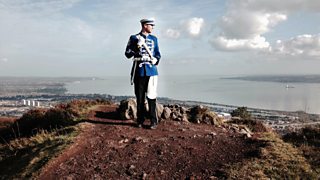
Michael: It was really through Dan Gordon; we had worked with Dan on a documentary called ‘In search of Richard Hayward’ last year and he came in to talk to us a short time later about this project he was working on, taking a group of young bandsmen from East Belfast who had never acted before and putting on a play about World War One. We felt it had great potential as a documentary so we pitched the idea to the BBC and they liked it.
What was the main challenge in making More Than a Flag?
Adam: One of the main challenges with any documentary is finding the right characters to drive the narrative. An important part of this is building the trust necessary to get people on board with the project. We live in an age when people are very media savvy and are understandably concerned that they might be misrepresented or shown in a bad light. My approach to winning peoples trust is to be completely honest with them about the nature of the project, why you would like their time to take part in it and how they might be portrayed. Dan played an important role in laying much of the groundwork here too; as someone who grew up in the area he had a good deal of local knowledge and credibility within the community.
Tell us about the filming process
Adam: We started filming at the end of August 2014 and filmed on and offfor around two and a half months. From the outset, the play provided a strong narrative to follow but as you get to know the main characters other narratives also come to the surface. We had an open mind from the beginning about where that would take us. For example, I didn’t realise at the start of filming that one of the characters – Jason – had a great granddad who died in World War 1 and that he had always wanted to visit his granddad’s war grave in France. That provided a new avenue to explore within the documentary.
Michael, from a producer’s perspective, what are the important things to consider when pitching a documentary idea to a television commissioner?
Michael: I think the key is that you have to be passionate about what you’re pitching – and if you are then the commissioner will see that . It’s also important to think carefully about who your audience will be; is it an idea that will appeal broadly to the public or is it a very niche, personal idea? From a practical perspective, if you’re taking your first steps in the industry it might be worth approaching a production company first who can take the idea to a broadcaster for you, as not all broadcasters will accept submissions from individuals. You can find lists of local production companies online and look at the sort of work they tend to specialise in to get a feel for which company is the best fit for your idea.
Adam, from a director’s perspective, what advice would you give to anyone who wants to break into documentary filmmaking?
Adam: I think the best piece of advice for someone starting out is to go out and make your own content; there are so many ways of creating content and sharing it online and it’s a great way of learning the craft. Also keep an eye out for schemes like BBC’s True North Shorts and Channel 4’s director’s scheme. The short film format is also a great place to start. Filmmaking is a very competitive field but I firmly believe that if you want it badly enough you will succeed; patience and persistence pay off. You need to be able to deal with rejection along the way though –if you work in this industry then one thing you can guarantee is that things won’t always work out and being able to not take that personally and to move on is part of the job. That said, it’s an incredibly rewarding and interesting line of work.