'I would love to work with Tilda Swinton' - Akram Khan on his creative awakening and what he still wants to achieve
23 October 2015
Dancer and choreographer Akram Khan has an impressive CV including performing at the London 2012 Olympic opening ceremony, working with figures from Sylvie Guillem to Kylie Minogue, artist Antony Gormley and taking a seat on the BBC Young Dancer 2015 judging panel.
In a Q&A for Get Creative, ahead of the premiere of his latest production, Chotto Desh, as part of the Get Creative Family Arts Festival, he talks about being honest with yourself about what a big break means to you.
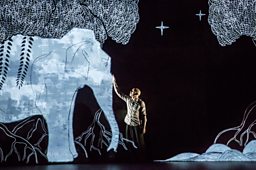
You were taught Bengali folk dance by your mother and began studying kathak at the age of seven. Does dance run in your family?
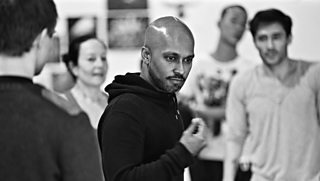
If you are really good at what you do and you work on your craft, you will get your break because people will seek you out
Definitely not! Certainly not on my father’s side. My mother was a bit more artistic – she studied Bengali literature – but she was forbidden from dancing when she was a child because her father was a great mathematician and he did not condone that sort of thing. Girls learning to dance was not seen as a good thing in those days, never mind boys. People thought dance was all about sexual connotations; they didn’t see the spirituality of it. It was only when they moved to London and I was born that my mother really started to explore dance and push me into it.
Do you think you would have become a dancer without those early experiences? Or followed another creative path?
I would not have followed any path. I’m a bit of a dud – like a nuclear missile that doesn’t work. I would have loved to have done nothing, just contemplate. I owe everything to my parents, especially my mother. There are some people who are truly phenomenal and do it all by themselves, against all adversity and without help from their parents, but I think that’s very rare. My parents did it all. My father was also supportive, although not in such an emotionally engaging way as my mother was.
You’ve spoken about winning respect at school by winning a disco competition impersonating Michael Jackson. What advice would you give to children, especially boys, about getting involved in dance?
My usual advice is to give no advice, but if I am going against my usual advice, I would have to say try to be honest with yourself about what a big break means to you. In today’s generation, a big break could be appearing on a reality TV show or dancing with a pop star. But that’s not what I would call a real break. Reality TV is hollow – there is a lot of talent, but also a lot of mediocrity. You are famous for a second and then it’s over. But I feel that if you are really good at what you do and you work on your craft, you will get your break because people will seek you out. My advice is to work on your craft – whatever that craft might be. You have to work on becoming technically refined and sophisticated, and then you can break free.
You’ve collaborated with artists ranging from Anish Kapoor to Kylie. What would your dream collaboration be?
I would love to work with Tilda Swinton. She’s phenomenal – I find her so natural. She is one of those actresses who doesn’t seem as though she is acting; she seems as though she really is the character. That is quite rare.
Get Creative Family Arts Festival
The Get Creative Family Arts Festival started in October 2013 with the aim of developing the range of arts events and activities available to families - the quality as well as the overall experience.
It is the initiative of eight organisations: The Association of British Orchestras, Dance UK, the Independent Theatre Council, The Society of London Theatre, UK Theatre, Contemporary Visual Arts Network, Family and Childcare Trust, The Audience Agency.
Since launch, more than a million family members have taken part. Events span all forms of performing and visual arts, and leading figures from the arts including Lord Lloyd Webber and Zoë Wanamaker are supporters.
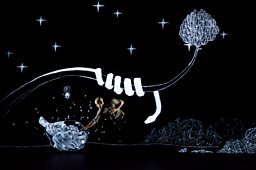
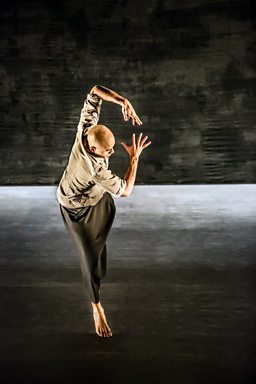
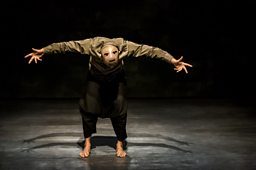
Your company’s new piece Chotto Desh is adapted from your work Desh and aimed at children aged seven and upwards. How has the narrative and dance been adapted to make it suitable for younger family members?
It has been completely reinvented, using the same starting point. It’s a transformation, but you will see the connections if you’ve seen Desh. It touches on the same themes – identity, fathers, parents, children, migration and immigration. It’s important to remember that we are all immigrants, if you go back far enough. We tend to forget that. These are universal themes and it’s important for children to know about them.
This year’s Get Creative Family Arts Festival also includes other shows with themes not normally associated with children, including death. Why is it important to produce work for younger people that explores ‘difficult’ themes?
The world is not a beautiful place at the moment and it’s important that children are aware of that, at least to a certain extent. It’s important for them to question things. Our childhood shapes so much of how we are as adults and these are very important issues that they will have to tackle eventually.
You have often combined speech and storytelling in your pieces – do you think this helps to draw audiences with no experience of dance closer?
Perhaps, but that is not my intention. I’m not trying to apologise to people if they don’t get it. The body is the most important, most sacred way to express emotion. Words are always political, but the body has the power to be ambiguous and to communicate ideas through a physical and emotional experience. Sometimes I use words – and singing – because there are some things that cannot be expressed through the body. For example, in Desh, I use words to convey the fact that my father is a cook. I didn’t know how to visualise that, so I decided to speak it.
How should families be encouraged to attend more contemporary dance?
Money is the key. More money has to be given to productions because they affect children hugely. More theatres and festivals are engaging with children these days – I just wish there was more money for research. The government should encourage people to become involved with dance, especially children. When I was at school I found refuge and confidence in my body and I would like to think other children could do the same.
You loved maths as a child, inspired by the geometric patterns of Indian music. Should our education system make more connections across subject boundaries?
Actually I hated maths. I loved the idea of it, because my grandfather was a mathematical genius who had a formula named after him, so everyone thought I could be a maths genius too. But I failed A-level maths three times and eventually it dawned on me that I wasn’t very good at it. What I did learn from maths, though, was how to understand patterns, in humans and in life, and I have carried that through to my choreography. Everything is connected in ways you can’t even see.
You have mentioned you would like to make a dance piece with your daughter – can we look forward to seeing it?
She is only two and a half, so you might have to wait a bit. In any case, if I made a piece with her she would have to be the star of the show – she doesn’t want to dance with me, I would be like the chorus in the background. But I definitely want to dance with her while she is still a child, while things are not yet formed, because she is at her most creative and free, with no inhibitions, and that’s a beautiful thing. It would be nice to do that before she becomes a civilised, formed person. I love that she is completely wild.
The Chotto Desh world premiere is at DanceEast on 23 October, as part of the Get Creative Family Arts Festival, and then on tour throughout the UK.
Feeling inspired?
![]()
Put on your dancing shoes...
...and get some ideas to help you throw some shapes
More from Get Creative Family Arts Festival
![]()
'All of us have it in us to be creative'
Get Creative Family Arts Festival patron Michael Morpurgo talks creativity
![]()
Carve a fright-fully good pumpkin
Banish wonky fangs and mismatched eyes with this ste-by-step guide
![]()
Tunes that are delicious
Carrots, courgettes and peppers are instrumental for this orchestra