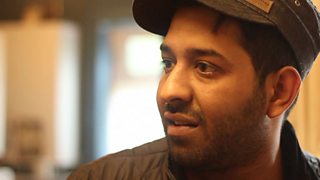
BBC Fresh Profile: Ibrahim Ahmed
Student film-maker Ibrahim Ahmed talks about the inspiration behind his documentary short Khat.
Legislation banning recreational use of the drug khat is due to come into force in 2014. This change in the law inspired Ibrahim Ahmed to make a film raising awareness of the cultural significance of khat in his community.

Why did you pick this subject for Fresh?
The main reason why I picked the subject of khat is because it has been a constant part of my cultural life and I wanted to raise awareness and create a debate about the effects it has on our communities. With the new laws that will come into effect in January 2014, I think that this is a relevant and important discussion to have. My intention is to create a second part to the documentary, which will look at the effects of the new ban.
What motivated you to make this film?
I wanted to highlight khat as a drug and debate whether it is a good or bad thing for its users and those in the wider community. There are many people, in the Yemeni and Somali communities in particular, who chew khat and view it as a big part of their cultural identity. I was interested in revealing the human aspects behind the need to chew khat and why it’s so embedded within cultural practice.
Growing up, khat was always a part of many important celebratory events in my life, such as weddings and parties and although I could see the effect it had on its users, making them feel invincible and mellow, I always felt that the negative impact of its use, with many addiction and health problems, was not really discussed. I guess I wanted to reveal both sides to the viewer, helping them to understand the complicated relationship between khat, the user and the cultural aspect.
What camera did you use to shoot your film?
I used a Canon 550d, and used a 50mm lense when interviewing people. Using this lens helped me create a better depth of field and gives a more personal touch to their views.
Who/what inspires you?
I am inspired by those who fight injustice of any kind, and those who suffer from pain and hardship, but still have the strength and faith to live their lives. I’m often inspired by people who are prepared to take risks, stand up for the rights of others and not be influenced by mainstream media or thinking. Martin Luther King is a perfect example.
What are your plans for the future?
My short-term plans are to complete my media studies degree and continue to pursue my interest in documentaries by making short films. If I look way into the future, I hope to be directing interesting and engaging films based on true stories of human endurance and experience. I would also like to travel to as many countries as possible to meet fascinating people and learn about different cultures, which will inspire me in my quest to making documentary films.
What is the most important thing you have learned so far?
As a film-maker, the most important thing is getting a genuine and revealing response from the people you are interviewing. At the heart of every documentary is a story that needs to be told and the best way to do this is to capture and bring out the human emotions of those involved. This is something that I have learned whilst making the khat documentary and is something I would like to develop in future documentaries.
Related links
![]()
Khat by Ibrahim Ahmed
Set in Sheffield, this short film follows users of the recreational drug khat.
![]()
Hair and Now by Matthew Kay
A Hackney barbershop proves to be a sanctuary for young people.
![]()
The role of the film-maker
Aneel Ahmad, Zoe Callan, Graham Hughes and Fran Baker discuss the role of the film-maker.
![]()
How important is storytelling?
BBC Three Executive Producer Elliot Reed talks about the importance of storytelling.