9 Astonishing Facts About Nursing In World War One
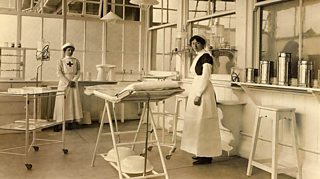
Blood, trauma and bullet holes! A role of a nurse during The Great War was not only exhausting but dangerous. Many stood firmly at their posts during enemy attacks, knowing their courageous actions would help save the lives of the injured servicemen that relied on them. They summoned the strength to rise above public stigma and prejudice, offering care to those most in need. Unknown to them, their actions would help redefine their profession.
Season 6 of Home Front is set in a hospital in the midst of The Great War 100 years ago, so we thought we’d take the opportunity to put together a list of astonishing facts that paint a picture of what medical life was like in the early 20th Century.
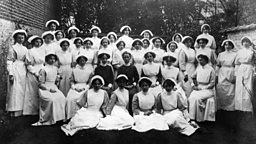
1. At the outbreak of war nursing wasn't considered a 'proper' profession.
After tireless campaigning, the Royal College of Nurses was founded in 1916 to establish a professionally recognised qualification.
2. Nurses did not have great expectations.
Their many instructions included: "Don’t expect your own particular feelings or likes to be considered. "You are but one of many."
3. Famous Voluntary Aid Detachment (VAD) nurses included writers Agatha Christie, Vera Brittain and E.M. Delafield.
It is believed that it was in Devon that Chrisitie met the Belgian refugee who would inspire Poirot whilst working in a Torquay hospital.
4. But, not all VADs were women.
Of the estimated 90,000 VADs by the end of the war, around a quarter were men, who often worked transporting the wounded returning to Britain.
5. Moreover, VADs are not the whole story.
The first female medical workers allowed near combat were the First Aid Nursing Yeomanry (FANY) and Queen Alexandra's Imperial Military Nursing Service (QAIMNS). Hector Munro also established a small, semi-official unit of women ambulance drivers early on, which included “Angel of Pervyse”, Elsie Knocker.
6. Venereal diseases were considered as dangerous as battle injuries.
It is estimated around 1 in 9 British soldiers had one at any given time. The rate was even higher for Canadian soldiers (around 1 in 5), who would also have their pay docked if incapacitated.
7. “Magic bullet” Salvarsan was the only effective cure for syphilis at the time.
However, it had a German patent, so British medics often had to resort to using mercury-based alternatives which sometimes also contained arsenic.
8. Plastic surgery was used for the first time in WW1.
Having trained in France, doctor Harold Gillies pioneered the method of skin transplantation on patient Walter Yeo in 1917. Less glamorous, but equally important, advances were also made in antiseptic treatment and prosthetics.
9. Nursing could be dangerous in unexpected ways.
In October 1915, Edith Cavell was shot as a spy after helping around 200 Allied soldiers escape from German-occupied Belgium during the First World War. Her fate was widely used for anti-German propaganda.
Listen to Home Front
![]()
Listen to Home Front
Season 6 of Home Front, which is set from 21 December 1915 to 12 February 1916, focuses on nursing and casualties.