5 Icelandic pieces for your choral playlist
As part of the BBC Symphony Orchestra's Total Immersion day on Sunday 22 February, the BBC Singers join forces with musicians from Guildhall School of Music & Drama for Icelandic Chill, a full day dedicated to celebrating the striking, atmospheric sound world of Icelandic music. Our joint concert, Chamber and Choral Icelandic Treasures, will delve into a landscape of wild beauty, shimmering textures, and quiet, luminous power. Click here to learn more.
In this article, we'll explore five choral works from Iceland that have shaped the country’s musical landscape over the past 50 years, some of whose composers are included in the concert. Long before internationally celebrated Icelandic musicians Björk, Sigur Rós, Laufey and Víkingur Ólafsson put Iceland on the musical map, the nation’s musical beginnings took root in a profound, centuries-old singing tradition dating back to the earliest Norse settlers of the 9th century. In recent decades, Iceland's leading classical composers have drawn deeply from this heritage, blending ancient and folk influences into their new musical language.
Þorkell Sigurbjörnsson (1938 - 2013) – Heyr, himna smiður
Þorkell Sigurbjörnsson’s Heyr, himna smiður (Hear, smith of the heavens) is one of the most celebrated choral works to emerge from Iceland in recent years.

This beautiful Icelandic piece is set to a medieval text written by Kolbeinn Tumason, a 13th-century Icelandic chieftain and poet. It is said that Tumason composed the words on the eve of the Battle of Víðines in September 1208, a conflict in which he was mortally wounded by the forces of the legendary bishop Guðmundur the Good. In the hymn, Tumason pleads for strength and mercy in the face of his imminent death, acknowledging God’s power and righteousness.
Tumason’s hymn has the remarkable distinction of being the oldest surviving religious poem written by a Scandinavian in a native language. Sigurbjörnsson composed a musical setting of the text in 1973, at the request of Róbert Abraham Ottósson, Music Director of the Icelandic Lutheran Church, who lamented the absence of a worthy choral setting of the hymn.
Heyr, himna smiður, in keeping with the medieval and mournful spirit of the hymn, has echoes of Gregorian chant in its melodic lines and a strong presence of tvísöngur, an ancient Icelandic two-part singing tradition. The composer later recalled that the music came to him during a snowy drive home from his meeting with Ottósson in Reykjavík on a January afternoon in 1973.
Sigurbjörnsson would go on to become one of Iceland’s most prolific and respected composers, and Heyr, himna smiður one of his most beloved works, performed frequently in Iceland, especially at funerals.
Listen to this magnificent piece from the BBC Singers on Sunday 22 February at the Chamber and Choral Icelandic Treasures concert.
Anna Thorvaldsdottir (b.1977) - Ad Genua
From one of Iceland’s leading contemporary composers, Anna Thorvaldsdottir’s Ad Genua is a remarkable piece for solo soprano, choir and string quintet. It was commissioned by the Philadelphia-based chamber choir The Crossing and premiered in 2016.
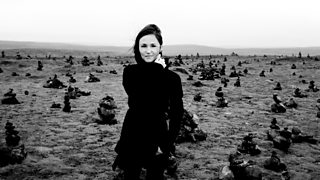
The piece forms part of a series of contemporary musical responses to Dietrich Buxtehude’s sacred Baroque oratorio Membra Jesu Nostri. Each of Buxtehude’s seven cantatas contemplates a different limb of Christ on the cross; Thorvaldsdottir’s piece reflects on the second cantata, Ad Genua (To the Knees).
Thorsvaldsdottir sets fellow Icelander Guðrún Eva Minervudottir’s poem, beginning ‘I fall to my knees’. The penitent text expresses a longing for beauty amid pain and adversity, surrendering to the eternal music of life.
Ad Genua has an arresting intensity, conveyed from the beginning with violent bow snappings of the strings. From this raw soundscape, a solo soprano voice emerges and is echoed by the choir, creating the impression of a lone voice singing into a vast, cavernous space. The choral textures shift dramatically, oscillating between angelic purity and unsettling dissonance. Hymn-like passages dissolve into eerie sonorities as the voices sink together in pitch, creating a dense, almost cacophonous tapestry of sound.
The result is a work of unnerving beauty, a wholly-enveloping sonic world of pain that is shrouded in mystery.
Listen to more of Anna Thorvaldsdottir’s music at the Chamber and Choral Icelandic Treasures concert on Sunday 22 February.
Snorri Sigfús Birgisson (b.1954) - Afmorsvísa
Afmorsvísa (Love Song) is an a cappella choral work composed in 1994 by Snorri Sigfús Birgisson, an Icelandic composer who has lived and worked in the country since 1980.
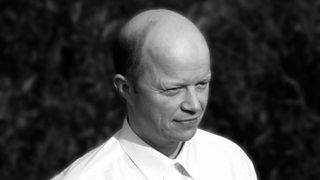
The piece is set to a poem by the writer Páll Vídalín, written around three centuries ago, and Birgisson captures its spirit with a bright, buoyant musical language. Cheerful and playful the work’s focus is a lively syncopated melody that conveys the exhilaration and spontaneity of romantic love. Its free-flowing structure, unconstrained by a strict metre, enhances the giddiness and charm of the score.
The short, two-minute piece opens with a drone-like bass built from consecutive fifths, over which the upper melody dances with a lightness and whispered excitement. When the lower voices take up the tune, the sopranos lift the texture with a graceful descant line. A brief middle section introduces a moment of uncertainty before the music returns to its main theme, embracing once again the quiet joy of love.
Hildur Guðnadóttir (b.1982) – Fólk fær andlit
Fólk fær andlit (People Get Faces) is a work by Hildur Guðnadóttir, the Academy Award-winning Icelandic composer best known for her scores for Joker and Chernobyl (both 2019).
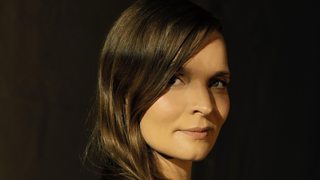
The piece was originally composed in 2015 as a response to the mistreatment of refugees in Iceland, specifically inspired by the deportation of an Albanian family who were denied asylum despite their child suffering from a terminal illness. Fellow Icelandic artist Ingibjörg Birgisdóttir provided a moving animation for the piece.
Revised a decade later in 2025, Fólk fær andlit is a deeply affecting work. Built over a single sustained drone, overlapping vocal lines emerge one by one, anchored by a recurring melancholic melody. This persistent motif, paired with Guðnadóttir’s plaintive vocal textures, evokes the chilling sense of indifference and the erasure of human identity. As the piece unfolds, additional voices enter, creating a sound world that is poetic, shadowy, and haunting.
The piece was originally conceived for voices divided into two groups: the cantus ensemble repeating the Icelandic word miskun (‘mercy’), while the second group circles through variations of Fyrirgefið okkur fyrir (‘forgive us for’). In Guðnadóttir’s original recording, she layers multiple samples of her own voice over a cello drone, creating a dense, immersive atmosphere. The piece has since been arranged for choir and strings.
Jóhann Jóhannsson (1969 - 2018) – Drone Mass
Drone Mass stands as one of Jóhann Jóhannsson’s most significant musical achievements. Scored for eight voices, string quartet, and electronics, it premiered at the Metropolitan Museum of Art in New York in 2015.
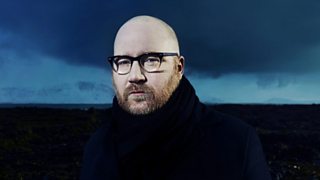
Although the work lasts around 50-60 minutes, it unfolds across many short movements. The voices sing the wordless texts based on the Coptic Gospel of the Egyptians, giving the piece an ancient, ritualistic ambience.
Strictly speaking, Drone Mass is neither a conventional mass nor a simple drone. While sustained drones recur throughout the work as a unifying motif, the title also plays on the dual meaning of ‘drone, with a nod to it as something both musical and the aerial vehicles who buzz. The ‘mass’ element, meanwhile, is less a liturgical structure but rather a guide to the quality of sound and texture.
Beginning with ‘One is True’, the voices chant a Byzantine-inflected melody over a grounded drone, evoking the atmosphere of an ancient ceremony. It then moves into the tender ‘Two is Apocryphal’, where a glowing wash of voices surround a lilting five-note phrase pattern. Electronics are slowly woven into the texture, creating a haunting undercurrent and intensifying the darker, more unsettling moments such as in ‘To Fold & Remain Dormant’ and ‘The Last Foul Wind I Ever Knew’.
Jóhannsson described the Drone Mass as a ‘contemporary oratorio’, and ‘a distillation of a lot of influences and obsessions.’ The chant-like melodies, drones, open harmonies give the impression of music centuries old, yet it remains unmistakably a 21st-century work – ambitious, assertive and entirely in its own world.