Royal revenge: Why the 'real' Versailles outraged the Sun King
3 June 2018
The TV series Versailles isn’t filmed at its famous namesake but at the chateau of Vaux-le-Vicomte. The creation of an ambitious courtier, it was a source of envy for King Louis XIV. Feeling that his glory was being outshone, the Sun King took cruel revenge on its creator. By WILLIAM COOK.
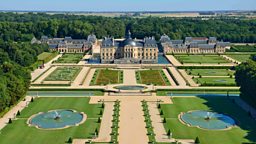
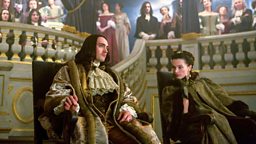
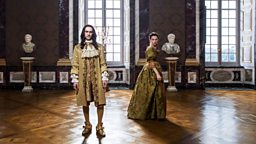
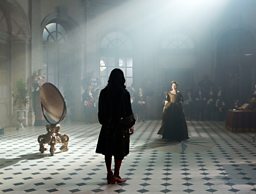
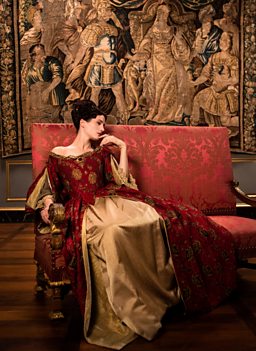
For many, the TV drama Versailles is a guilty pleasure - a swashbuckling romp through the private life of the French Sun King, Louis XIV. Ahead of the series returning to our screens, I travelled to Vaux-le-Vicomte – the chateau that doubles as Louis' palace. As I discovered, the true story of this historic chateau would make a great drama in its own right.
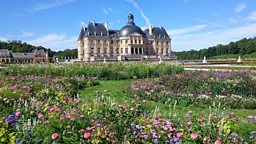
Like the palace of Versailles, Vaux-le-Vicomte is only about an hour’s drive from Paris. Unlike Versailles, the surrounding scenery has hardly changed. You can see why the producers chose to film here. It’s surrounded by woods and meadows - there’s not a modern house in sight.
Even by the standards of that opulent epoque, it was incredibly extravagant
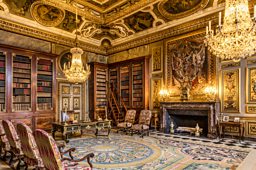
Louis’ palace at Versailles has staged many of the key events in European history. Consequently, it’s been knocked about a bit. Conversely, Vaux-le-Vicomte has remained a rural backwater and so, unlike Versailles, it’s remained virtually untouched, inside and out. Everything is just as it was when the Sun King came here, in 1661.
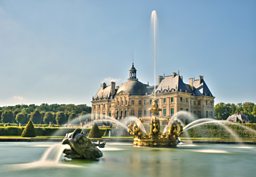
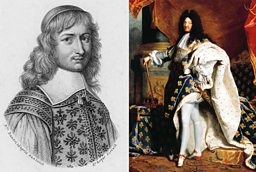
Vaux-le-Vicomte was built by Nicolas Fouquet, Louis XIV’s finance minister. Even by the standards of that opulent epoque, it was incredibly extravagant. Fouquet destroyed three villages to create these ornamental gardens. He diverted a river to create its canals, moats and lakes. He hired France’s greatest architect, Louis Le Vau, its greatest interior designer, Charles Le Brun, and its greatest gardener, Andre Le Notre, to work together on this project.
It took them 20 years and when they’d finished he threw a spectacular party, featuring a huge firework show and the premier of a new play by Moliere. The guest of honour was the young Louis XIV. Fouquet wanted to become Louis’ Prime Minister. He hoped Vaux-le-Vicomte would bolster his credentials (he even built a bedroom here for Louis, a home from home for the French king).
Unfortunately for Fouquet, his PR campaign backfired. Louis took one look at Vaux-le-Vicomte, and decided Fouquet had become too big for his boots. He threw Fouquet into jail, where he died, 20 years later.
Alexandre de Vogue meets me at the chateau where he’s lived since he was a child. His family’s restoration of this baroque landmark is a remarkable achievement.
"Fouquet didn’t understand the personality of the king," says Alexandre. "He was drunk on his own ambition."
Once you’ve been to Vaux, Versailles seems brutal... the Trump Tower of its age
Louis stripped Vaux-le-Vicomte of its statues and tapestries, but otherwise he left the house alone. The chateau passed through several private owners and several centuries of neglect, until Alexandre’s great grandfather bought it and set about restoring it. Ironically, the indifference of its previous owners had preserved its original decor. One hundred and forty years later, its restoration is almost complete.
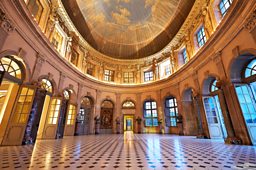
The thing that makes this chateau so impressive is that it’s all of a piece. Architecture and horticulture are in perfect harmony. From the entrance you can see straight through the house, into the vast gardens beyond. "Science should make us the masters and possessors of nature," declared Descartes. Vaux-le-Vicomte bears him out. It’s a brilliant demonstration of enlightened despotism.
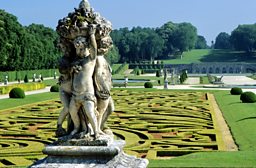
Every aspect of the place is perfectly symmetrical, a masterpiece of perspective on a monumental scale. The geometric gardens are the chateau’s crowning glory. Original engravings confirm the veracity of their design. Wandering around these ornate grounds, you feel as if you’re back in the 17th Century. Only the golf buggies break the spell.
The interior will be familiar to anyone who’s seen the TV series. The central atrium is an enormous dome, adorned with busts of Roman emperors. The ceilings are festooned with intricate frescoes. The walls are covered with painted panelling. The most impressive room of all is the regal bedchamber, designed for a king who never slept here. "It’s more than a museum," says Alexandre. He’s right - it’s a window on a vanquished world.
Louis XIV knew that, politically, such a grand project spelt trouble - but artistically, it was right up his street. Once he’d imprisoned Fouquet, he hired Louis Le Vau, Charles Le Brun and Andre Le Notre to work on an even grander project – his brand new palace at Versailles.
Yet once you’ve been to Vaux, Versailles seems brutal and bombastic, the crude creation of a megalomaniac, the Trump Tower of its age.
"What Louis VIX could not take from Fouquet was the sense of taste, the feeling for art, and the delicate, profound instinct for beauty," wrote the great French writer Anatole France.
It’s this aesthetic instinct which makes Vaux-le-Vicomte more than just another stately home, and which makes Nicolas Fouquet the unsung hero of Versailles.
The third series of Versailles begins on Monday 4 June at 21:30 on BBC Two.
A version of this article was originally published in April 2017.
Filming at Vaux-le-Vicomte
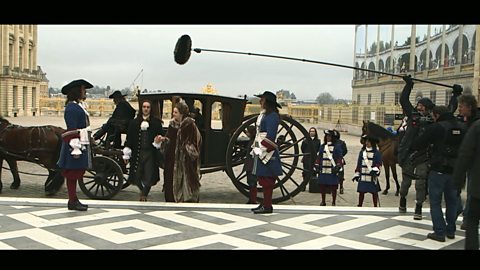
Behind the scenes: Set design
The actors and crew show how they created the lavish costumes and luxuriant settings.
Life at court
More from BBC Arts
![]()
Picasso’s ex-factor
Who are the six women who shaped his life and work?
![]()
Quiz: Picasso or pixel?
Can you separate the AI fakes from genuine paintings by Pablo Picasso?
![]()
Frida: Fiery, fierce and passionate
The extraordinary life of Mexican artist Frida Kahlo, in her own words
![]()
Proms 2023: The best bits
From Yuja Wang to Northern Soul, handpicked stand-out moments from this year's Proms