Damascus Diaries
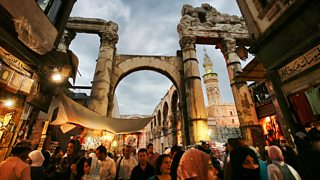
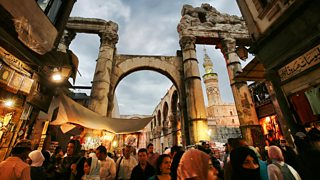
Stories from Hay El Matar is a radio drama set in a suburb of Damascus, celebrating stories of civilian live from within Syria's war-torn capital. It was made by a team of Syrian writers and actors who have first hand experience of the events depicted in the drama.
When researching the series, the writers undertook a diary project with people living in and around Damascus. Their diverse, real-life accounts shed light on contemporary life within a Syrian hot zone.
Here are some excerpts from the diary entries.
The diary of a former detainee living in Damascus
I woke up from my sleep in panic as my mother was calling me saying, “wake up, wake up, hide your things – the security men are in the neighbourhood.” It was because of the raids they do to look into the rent contracts in the area for people who are displaced from the hot zones. As usual they do these raids very early in the morning and without any warning.
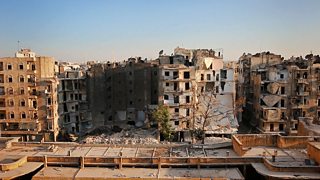
I hide everything that might attract attention and some of the papers I was working on last night. I make sure to put the TV on the Al-Dounia channel (a pro-regime TV channel) just in case they decided to see what we were watching last night. I prepare the paperwork they usually ask for: the rent contract and the army deferral card. We sit there waiting for them to come.
My mind is still living inside the detention centre; every square of Damascus reminds me of the years I was inside and the friends I left there. I’m trying to stay in the country but the constant danger of getting arrested again, the hard living conditions and my sister’s frozen dreams to pursue a higher education are driving me to leave.
But transportation is a nightmare and going through the security check points is a living hell. And I can’t bear to leave while my friends are still inside the detention centres.
The diary of a woman working in film production in Damascus
Living in Damascus is like a type of hypnosis.
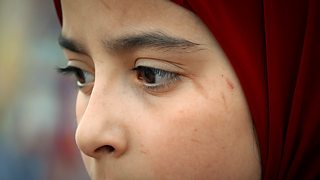
We are the sleep-walking nation, oblivious.
It has always been like that, but now it is different. Now, it targets fewer people so you can feel the hypnosis more. It becomes a part of the way you think and the way you analyse the world. It is a part of your daily routine.
We are the sleep-walking nation, oblivious. We don’t know our basic rights.
I’ve been fighting with the idea of leaving for two years now. As I write these words, I don’t really have an answer as to why I’m still here.
The diary of a student from Damascus
I love him. But he has left me and left the country. He was afraid he was going to be taken and drafted to the army to fight like many others.
Now, I live mostly in darkness; when the electricity is cut off the only source of light I have comes from the screen of my mobile phone. I activate my phone every now and then to glance at the photo of him. I wait for him to be online so we can chat.
I feel like a stranger in my own city and live on my memories of the revolution demonstrations in 2011 and 2012.
The diary of a civil defence volunteer in northern Syria
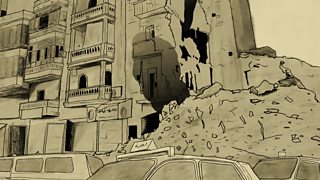
Everything in this city screams. I spend my days running through the dust of destroyed houses and digging people out of the rubble. Our walkie-talkies don’t stop because the planes are flying heavily over the area. When an explosion goes off nearby, we have no time to recover from the shock before they call us to the scene.
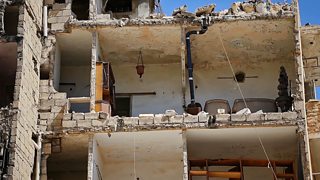
Everything in this city screams.
There are civilians underneath the rubble. I’m standing on the top of what used to be a house. A sound comes from underneath my feet. It’s the sound of someone in pain, the sound of somebody stuck there. I cry for people to come and help. I say: someone here is still alive. We start digging, my hand reaches inside the rubble and I touch something warm. It is him. He makes another sound. He is alive. I watch as they start shoveling the dust and rubble from on top of him.
The diary of a medical volunteer from Daraya in the Damascus countryside
I was woken today as usual by the sound of a barrel bomb. My body was stiff from cold; I can’t fix the broken door or windows because the barrel bombs don’t stop.
I wanted to make coffee to wake myself up but I found no wood to start a fire. Our share of electricity is an hour and half. We share it with five families and the staff of the field hospital. When the electricity comes on I have to charge all the batteries and fill all the water tanks for us and for the neighbours.
I browsed the internet to catch up on the news. The news is horrible: the regime army is gaining ground on the eastern front. But I’m used to this. Every day, we lose some and we gain some and ISIS takes some. Photos of the martyrs are all over my Facebook feed.
During my shifts in the field hospital we are in a state of constant emergency. We receive the injured and dead all the time. I want to take a shower to clean all the blood that is stuck to me from my last shift. But the scouting plane is in the air so we can’t heat the water to take a bath because if the pilot sees the smoke they will bomb the area.
The diary of a doctor in northern Syria
I’m changing my clothes in a very messy room. Food is scattered around between very chaotic beds. I manage to pick a white medical coat with a relatively good number of buttons to wear.
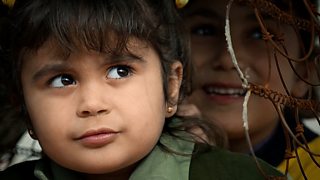
My calmness is cut by the call from a young man urging me to come to see an injured girl. I answer him quickly: let them prepare the operations room for me. I’m going to perform a surgery right away. I quickly rush to the emergency room to find out that it was filled with patients. People in agony were everywhere; in all the rooms, all the beds, on the floor, on the stairs and even on the pavement in front of the field hospital.
The diary of a woman studying journalism in Damascus
My friends live in a small pickup truck. It’s next to a mosque that I know very well. I looked for the pickup truck in darkness; with the lack of electricity everything is swallowed by the night. I finally found the small three-wheeled truck. It was shielded by a thick plastic cover to protect the mother and the children from the freezing cold. They were inside. The father was standing outside, trying not to make any eye contact with people around him. He was in shame because of his situation.
This family are no different from thousands of other displaced families in this war. They used to live in a small town in the suburbs of Damascus. One night the bombing became very dangerous and Abou Muhamad, the father, decided they must flee. He put his family in his small pickup truck and drove non-stop to reach Damascus. The family spent many days in the open before settling down near the mosque. Now, they spend their days in the plastic-wrapped pickup truck and at night the mother and children sleep in the mosque while the father sleeps in the truck.
The diary of a mother after leaving Syria
Now that I am in a different country, I still can’t get used to seeing streets without the sight of arms and soldiers.
I find it very hard to register my child in a school because the father of my child is detained and has now been listed as a missing person. I have no idea of his fate. I don’t have any official documents that state what has happened to him.
He has vanished.
I still remember winter back home. How people cheered with joy when the electricity came back or the smell of burned wood that people used for heating.
My longing for my home in Damascus feels exactly like longing for heaven. I long for a place that I know is true, but it’s completely out of my reach.
Listen to the radio drama inspired by these accounts: Stories from Hay El Matar.
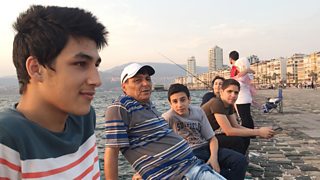
All location photography courtesy of BBC Media Action. All diary entries written in 2016.
Listen to more stories from Syria...
![]()
Stories from Hay el Matar
A rare glimpse of how normal life is lived inside Damascus during these extraordinary times.
![]()
Life Inside ‘Islamic State’: Diaries
An activist based in Raqqa, Syria, describes the horror of everyday life in the city.
![]()
A New Life in Europe: The Dhnie Family
The story of one Syrian family heading for Europe in search of a better life.
![]()
Our Man in the Middle East
Jeremy reflects on the present and the past of the Middle East, after reporting from the region for over 25 years.