Remembering 1986 - The Year of Madonna, Maradona, Mexico, Memorable Movie Music, 'Maverick' Mitchell and much more
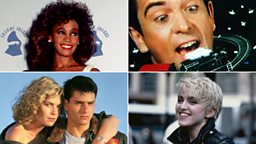
To mark the start of 2026, we take a fond look back at what we were watching and listening to 40 years ago!
In 1986, we were gripped by the TV soaps, with millions tuning in to the latest goings-on in Albert Square and Ramsay Street, while the likes of Blackadder II, Bread and Yes, Prime Minister provided some comic relief.
Diego Maradona broke English hearts in the Mexico 86 World Cup, Madonna continued her ascension to Queen of Pop status, George Michael said goodbye to Wham! and hello to a hugely successful solo career, while Top Gun was the must-see movie of the year, elevating its lead Tom Cruise to superstar status.
Join us as we explore the cultural moments that turn 40 this year...
LISTEN: More 1986 on BBC Sounds
1. Den and Angie broke TV records
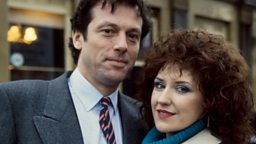
"Merry Christmas, Ange"
On Christmas Day 1986, an estimated 30 million+ viewers - over half the UK population at the time - sat down to watch EastEnders. They were treated to one of the most memorable TV moments of all-time, as 'Dirty' Den Watts (Leslie Grantham) served his wife, Angie Watts (Anita Dobson), divorce papers, after discovering that she'd been lying about having a terminal illness.
A huge part of EastEnders' early success was down to the tumultuous relationship of Queen Vic landlords Den and Angie. Den, who uttered the show's opening line, quickly established himself as a classic soap villain, with his larger-than-life anti-hero ways proving a hit with audiences and making him a figure everyone loved to hate. In 1989, the character was apparently killed off by a gun hidden in a bunch of flowers.
However, Den returned to Walford 14 years after being presumed dead to wreak more havoc in the lives of his family and friends. While the comeback was a huge TV event, Den's return proved temporary as he met an untimely end for a second, and presumably final, time two years later, coinciding with the show's 20th anniversary in 2005.
Actor Leslie Grantham passed away in June 2018, forever remaining best known for his time in Albert Square.
![]()
WATCH: EastEnders: Christmas 1986 Part 1
See the classic episode that broke the record for British soap viewing.
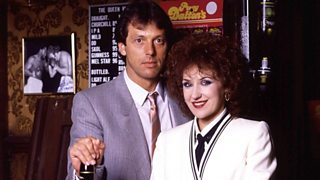
Meanwhile, Anita Dobson, who more recently found a new audience as the mysterious Mrs Flood in Doctor Who, made a special reappearance as Angie for EastEnders' 40th anniversary. Her brief ghostly return brought closure to fans who had not seen the character in over 37 years.
Beyond 1986, EastEnders firmly established itself as one of TV's most loved programmes, with more weekly episodes being added over the years to satisfy demand. The show even had an online spin-off, E20, in the 2010s, which followed the younger residents' lives around Walford.
With TV audiences in 2026 split across streaming services and hundreds of channels, it's unlikely any soap moment will ever achieve such a huge audience figure or the cultural impact to make it so widely remembered 40 years on.
2. Neighbours made its UK debut
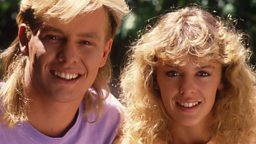
"That's when good neighbours become good friends."
A memorable tagline from the theme tune to a much-loved addition to Britain’s daytime TV schedule. 18 months after debuting down under, Neighbours arrived in the UK in October 1986, as the BBC looked to fill gaps in its schedule previously occupied by 'Pages from Ceefax'.
If you found EastEnders a bit dark and depressing, this sunny soap was the perfect antidote, providing a real dose of Aussie vitamin-D. The longest-running drama series in Australian television history, it quickly became popular with British audiences. Episodes were shown twice daily, Monday to Friday, to ensure it reached every demographic - whether you were a student, stay-at-home parent, in employment or in school, you could always get a dose of Erinsborough sunshine.
Initial storylines centred around two ordinary families, the Ramsays and the Robinsons, with a particular emphasis on younger characters and the challenges they faced growing up.
Over in Australia, Ramsay Street welcomed Jason Donovan and Kylie Minogue, aka Scott Robinson and Charlene Mitchell, to the neighbourhood in 1986, although UK viewers would have to wait until 1987 to see their debut. The duo were soon established as the soap's leading stars, and at the peak of their popularity, the characters tied the knot in one of Neighbours' best-loved storylines. Kylie and Jason eventually left to pursue successful pop careers, with their duet, Especially For You, reaching No.1 in the UK in 1989.
Other memorable storylines over the years include Harold Bishop's apparent death, where he was supposedly swept out to sea - only to return five years later suffering from amnesia (perhaps inspiring EastEnders to pull the same trick several years later with 'Dirty' Den?). Over time Harold's had many emotional goodbyes - and returns - to the programme. Meanwhile, Bouncer the dog's dream scene is another unforgettable moment, albeit one that left many questioning 'what were the writers thinking?!'
40 years on Neighbours has been cancelled - and revived - on several occasions. Its immediate future is currently uncertain, but don't be surprised if this enduring drama, like the great Harold Bishop himself, surprises us all with another comeback.
3. There were plenty of laughs to be had on TV
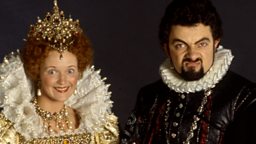
While the debate over which decade was the best for sit-coms is likely to rage for many more years to come, if it was laughs you were after, then 1986 certainly had them in abundance.
After mixed reviews for 1983's The Black Adder, Rowan Atkinson returned in the title role of Blackadder II, which debuted in early 1986. While the historical comedy was originally set in the middle ages, and featured extensive location filming, the new series had its budget drastically cut. Moving to the Elizabethan age, and with Ben Elton joining Richard Curtis on the writing team, it proved to be the making of the show, with many hailing this as the best of its four seasons.
Edmund Blackadder became a much more assured character, scheming and plotting, with a strong line in sarcasm and put-downs, often aimed at Tony Robinson's Baldrick and his cunning plans. The ensemble cast also featured Miranda Richardson as Queenie, a memorable take on Queen Elizabeth I, Patsy Byrne as her former nanny 'Nursie', and Stephen Fry as close confidant Lord Melchett, with Hugh Laurie and Rik Mayall also making appearances.
Elsewhere, Paul Eddington returned as Jim Hacker, in Yes, Prime Minister, the sequel to Yes, Minister that had run to great acclaim earlier in the decade. With Nigel Hawthorne also back as permanent secretary Sir Humphrey Appleby, the show poked fun at the world of politics and civil servants, and remains remarkably prescient to this day.
Other sit-coms debuting in 1986 saw Karl Howman star as loveable rogue Jacko in Brush Strokes, the Boswells of Carla Lane's Bread gather round their famous kitchen table for the first time with Jean Boht's Nellie at its head, and Ralph Bates take on the title role in Dear John, playing a divorcee who joins a self-help group for those who've been unlucky in love.
Fans of comedy were also treated to the very first Comic Relief this year, with BBC One screening a pre-recorded show from London's Shaftesbury Theatre - the more recognisable live Red Nose Day format would follow in 1988.
If you liked your laughs mixed with drama, Ian McShane's Lovejoy, and Michael Elphick's Boon launched within days of each other in January 1986. Both ran for several series, although viewers would have to wait until 1991 to see more of Lovejoy, with its leading man landing a part in Dallas in the intervening years.
4. Maradona broke English hearts with his 'Hand of God' goal at Mexico 86
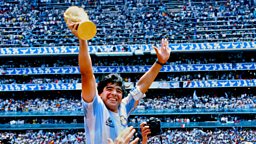
If you were following the home nations at the Mexico World Cup in 1986, it was more a case of tears than laughter.
I looked behind me to see whether the referee took the bait, and he had. So that was it. It was a goal!Maradona on his controversial hand-ball
For England, a stuttering campaign came to a climax on Sunday 22 June in a quarter-final against Argentina, in the famous Azteca stadium.
The match, charged with emotion due to the recent conflict in the Falklands, showcased Diego Armando Maradona’s brilliance and controversy with two goals that would be remembered forever, scored only minutes apart.
The first was the controversial 'Hand of God', where the Argentina captain used his hand to punch the ball into the back of the net, unseen by the referee, giving his team a 1-0 lead. Four minutes later, Maradona scored a breathtaking solo goal, as he took on and dribbled past most of the England team before extending Argentina's lead. For many, one of the greatest ever World Cup goals, England made it 2-1 in the 81st minute, but an equaliser eluded them.
Argentina went on to win the World Cup against West Germany, their second title following triumph on home soil in 1978. Gary Lineker was awarded the Golden Boot after finishing as the tournament's top scorer with six goals. The Everton man's performance in Mexico landed him a big money move to Spanish giants Barcelona, and he finished his England career just one goal short of Bobby Charlton's then record haul for the national team
Scotland and Northern Ireland also qualified for Mexico 86, but both failed to make it past the group stage. The Scots drew with Uruguay and lost to Denmark and West Germany, while Northern Ireland's World Cup drew with Algeria, before falling to defeats against Spain and Brazil.
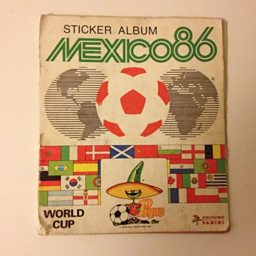
Off the pitch, the 1986 World Cup sticker book was a huge hit with younger fans following the events in Mexico from afar.
'Got, Got, Need, Need, Got Got, Need' became a familiar cry in playgrounds across the country as kids tried to swap stickers to complete their collections.
The Panini album captured the faces of legends such as Maradona, Lineker, Lothar Matthäus, Michel Platini and many of the other stars of that memorable summer. But did anyone out there ever complete their album?
Elsewhere, Liverpool won the English league and cup double under 34-year-old player-manager Kenny Dalglish, while Celtic reigned supreme in Scotland, winning the league on goal difference from nearest challengers Heart of Midlothian. In the 40 years since, no other team but Celtic or Rangers have won the Scottish league title. The last non-Old Firm team to win the Scottish league was Aberdeen in 1985, under Alex Ferguson, who in November 1986 moved south to begin a trophy-laden 26-year spell as Manchester United boss.
In other sports, Edinburgh hosted the Commonwealth Games, where a 24-year-old Steve Redgrave took home three gold medals, the most of any English athlete. Steve Cram and Roger Black won two golds on the track, while Caroline Cooper won two golds and a silver in swimming. In Golf, Jack Nicklaus became the oldest Masters winner at the age of 46, in tennis Boris Becker and Martina Navratilova retained their Wimbledon singles titles, a feat also achieved by Alain Prost in the Formula One Drivers Championship, while 150-1 outsider Joe Johnson was the surprise winner of the Snooker World Championship, with then world number one Steve Davis suffering defeat in the final for a second consecutive year.
5. It was a golden year for iconic music videos
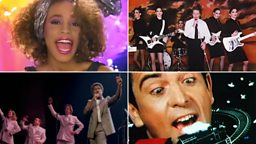
While MTV was still a year away from launching in the UK, it was already celebrating its fifth anniversary in the USA, where it had already proved hugely influential in the success of many songs. What with Channel 4 launching The Chart Show, featuring back-to-back videos and no presentation, and Top of the Pops also providing a weekly visual music showcase, a memorable music video was becoming essential to make your song stand out from the crowd.
If anyone wants to try and copy this video - good luck to them!Peter Gabriel on replicating the stop-motion masterpiece, Sledgehammer
Cheap and cheerful videos were being replaced with slick mini-movies, often featuring amazing backdrops, special effects, and familiar faces making cameo appearances. From a time where a music video could make or break a song's popularity, here are some of the videos that had us all paying attention 40 years ago.
Robert Palmer - Addicted to Love
This video saw five female models in identical make-up and outfits mime instruments in a stiff, mannequin-like pose, creating an unforgettable visual. Undeniably eye-catching, the video influenced future artists, from Shania Twain's Man! I Feel Like a Woman! where Shania sings alongside an all-male band, to Bill Nighy’s Christmas single in Love, Actually. Palmer, himself, returned to the Addicted to Love blueprint for several later music videos such as I Didn't Mean To Turn You On (also 1986) and Simply Irresistible (1988). The video was not without its critics though, with some branding it sexist in its portrayal of women.
Paul Simon - You Can Call Me Al
One shot of a pink room, two chairs and an assortment of instruments - simple, but exceptionally effective. After ditching the original video, recorded on the Saturday Night Live set, Paul Simon teamed up with friend and comedian Chevy Chase in somewhat of a competition for the limelight. Both sing along to the lyrics and compete for centre stage, miming instruments featured in the oh-so catchy song. The video was nominated for MTV's Best Male Video the following year, losing to...
Peter Gabriel - Sledgehammer
A collaboration with Aardman Animations - the powerhouse animation studio that would later bring us Wallace & Gromit. It featured a winning blend of claymation, pixilation and stop-motion that led to it becoming one of the most celebrated and influential music videos of all time. It remains the video with most wins at the MTV Video Music Awards - sweeping up nine awards in total.
Billy Ocean - When The Going Gets Tough (The Tough Get Going)
Shot at Brixton Academy, Billy Ocean later admitted this video was ‘one of his favourites’ from throughout his career. It features famous cameos from the Jewel of the Nile cast - Michael Douglas, Danny DeVito and Kathleen Turner - clad in white tuxedos miming as backing singers. The video faced a temporary ban on Top of the Pops due to the trio not being union musicians, technically breaking rules by miming.
Whitney Houston - How Will I Know
How Will I Know, a Top 5 UK hit, and No.1 in the US, helped cement Whitney Houston’s status as a global pop star. The video showcases the singer's fun side, dancing around bright and colourful sets, wearing an iconic hair bow, capturing the excitement of young love. The dance moves were choreographed by the former Strictly judge Arlene Phillips, and this winning combination of upbeat song and video helped Whitney reach a new audience, and break away from her balladeer image.
Madonna - Papa Don’t Preach
Blending pop with baroque sounds, disco and classical music, Papa Don't Preach tells the story of a teenage girl who becomes pregnant and chooses to keep her baby, despite her parents' objection. The accompanying music video featured a more mature and masculine looking Madonna, as she portrayed a conflicted young woman confronting her father. The song and video was met with controversy after sparking debate over its pro-life or pro-choice message, but solidified itself as an iconic 80s anthem with a powerful narrative.
Spitting Image - The Chicken Song and Genesis - Land of Confusion
Penned by comedy duo Rob Grant and Doug Naylor, the head writers behind Spitting Image (and later Red Dwarf), The Chicken Song was an attempt at creating a ‘mindless summer hit’ in response to Black Lace’s Agadoo from 1984. Despite being written in a total of four minutes, the song spent three weeks at No.1 in the UK - and came complete with a video featuring the show's puppets.
Although The Chicken Song was intended to be an irritating earworm - musician Phil Collins enjoyed the music video so much he had the whole of Genesis turned into puppets for their Land of Confusion music video later in the year.
Jackie Wilson - Reet Petite
The year's Christmas No.1 was helped along the way with a landmark claymation video, originally featuring in a BBC documentary, bringing this classic track to a brand new audience. Its 1986 peak came 29 years after the original reached No.6 in the UK, but sadly came nearly three years after Jackie's untimely death at the age of 49. A re-issue of I Get The Sweetest Feeling followed in early 1987, earning the late singer a second posthumous hit.
6. Madonna topped the UK singles and album charts
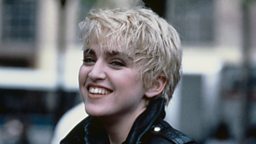
Widely considered the album that established Madonna firmly in the top tier of pop stars, True Blue provided the perfect mix of eye-catching music videos and memorable songs, not to mention a little bit of controversy (see Papa Don't Preach in the videos section above).
The Queen of Pop's third long player, following her 1983 self-titled record and 1984's breakthrough Like a Virgin, True Blue blended her recognisable dance-pop sound with more mature themes alongside a new sophisticated image. It was the UK's best-selling album of 1986, topping the charts for six weeks in total, and enjoyed similar success around the world.
Meanwhile, singles True Blue and Papa Don't Preach also reached No.1 in the UK, with a further track, La Isla Bonita, topping the charts in early 1987. Away from music, Madonna continued her parallel film career with a starring role alongside then husband Sean Penn in the film Shanghai Surprise.
In 1986, Madonna successfully bridged the gap of appealing to a more adult demographic whilst retaining her younger fanbase, continuing to lay the foundations for a decades-long career. 40 years on, a new Madonna album is expected to land during 2026.
7. It was the end for Wham! as George Michael went solo
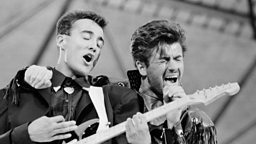
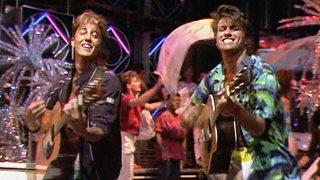
Spring 1986 saw pop duo Wham! go their separate ways after announcing an 'amicable' split at the height of their success, with final single The Edge of Heaven topping the UK singles chart for two weeks.
It has a particular magic that will never be replicated.Andrew Ridgeley on Last Christmas
The tight, stylish duo were one of the 1980s' most successful bands, selling over 30 million records worldwide in their four year career. Their infectious pop sounds and heart-throb image were the building blocks to a triumphant career with hit songs like Wake Me Up Before You Go-Go, Club Tropicana and the enduring Last Christmas. The true secret to their success? The genuine bond of friendship between George Michael and Andrew Ridgeley - which remained strong until George's death in 2016.
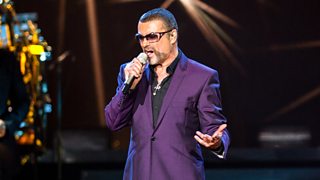
Wham!’s split came from George Michael's desire to create music for more mature audiences, something he achieved with his 1986 solo No.1, the heartfelt ballad A Different Corner, and later hits such as Father Figure, Freedom 90 and Jesus to a Child.
Wham!'s final performance took place at Wembley in June 86, and saw 72,000 fans in attendance to support George and Andrew. Demand was so high for the gig, they could have sold out the venue three times over. The emotional show ended with a warm embrace between the pair.
Wham!’s success continues to this day, with Last Christmas finally reaching No.1 in the UK on New Year’s Day 2021, 36 years after being released in 1984. It later became Christmas No.1 in 2023 and 2024, and most recently topped the charts at the end of 2025.
More Wham! and George Michael on the BBC
![]()
WATCH: Wham! at the BBC
Andrew Ridgeley, Pepsi DeMacque and Shirlie Kemp reflect on Wham!'s greatest hits, including hits like Last Christmas and Young Guns Go for It.
![]()
WATCH: George Michael at the BBC
George Michael's appearances on a selection of BBC programmes that demonstrate why he remains so fondly remembered.
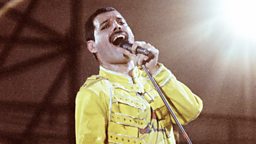
Elsewhere, though not known at the time, 1986 also saw proved to be the final time master showman, Freddie Mercury would perform live with Queen.
A year on from the band's triumphant Live Aid set, Freddie donned his yellow military jacket at Knebworth Park, for a set including huge hits such as Another One Bites the Dust, Crazy Little Thing Called Love, and of course Bohemian Rhapsody, to a crowd of approximately 120,000 fans, the largest show of their Magic tour. Accompanying album A Kind of Magic topped the UK album chart in the week of its release in October 1986, with its title track a No.3 hit earlier in the year.
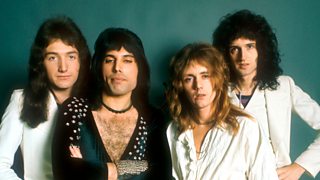
Queen would go on to make two further studio albums, The Miracle and Innuendo, before Freddie passed away in November 1991, with a final posthumous album Made In Heaven following in 1995.
More Queen on the BBC
![]()
LISTEN: Queen: Eras
Bill Bailey tells the story of Queen, rock's most flamboyant and iconic band.
8. The first disposable camera was released
Taking your phone out of your pocket to take a quick snap is something a lot of us take for granted in the 2020s, but capturing memorable moments wasn't always so easy.
In the early 1980s, if you were hoping to freeze a moment in time, you would need to be prepared to carry around what was often a large clunky camera, and put up with the fuss of loading and unloading film in a dark room.
The release of the disposable camera in 1986 was a game-changer for amateur photography. It not only made photography more accessible, but also affordable.
Users embraced the convenience of the disposable camera - their simplicity meant that all the photographer had to do was point, shoot, send the camera away and await their treasured memories.
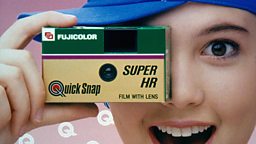
Fuji's QuickSnap, a disposable 35mm film camera, was an immediate success after launch, lauded for its aesthetic, simplicity and price. Kodak's Fling followed in 1987, answering the growing consumer demand for easy-to-use photography tools.
Though the appetite for film cameras depleted in the 2000s, QuickSnap successfully survived the crash. This nostalgic, creative and screen-free camera remains popular to this day, with younger generations adopting them for gigs, parties and holidays.
9. Top Gun was the year's must-see movie
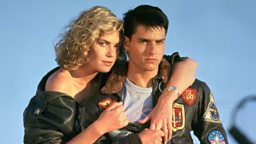
The year’s biggest film in terms of box office and impact was undoubtedly Top Gun.
Following his breakthrough role in 1983’s Risky Business, Top Gun saw Tom Cruise reach megastar status, playing hotshot pilot Maverick. Attending the elite Top Gun Naval Fighter Weapons School, where only the best of the best train to refine their flying skills, Maverick's arrogant demeanour and reckless attitude sees him clashing with other pilots in the school. After the heart-breaking loss of his friend, Goose (Nick Bradshaw), will Maverick get a second chance to redeem himself?
The movie also featured Kelly McGillis as Charlotte "Charlie" Blackwood, an instructor and Maverick's love interest, and Val Kilmer as 'Iceman' Kazansky, a rival of Maverick.
Not only was the blend of romance, adrenaline, choreographed stunts and explosions key to the film's success, but its music also proved integral. American new-wave band Berlin's smooth, synth-heavy classic Take My Breath Away soundtracked Maverick and Charlie’s love story. The song topped the UK singles chart for four weeks in November 1986, and went on to win an Oscar and Golden Globe for Best Original Song. Meanwhile, Kenny Loggins’ Danger Zone, a classic 80s air-punching anthem proved so timeless it was reprised for the 2022 sequel, Top Gun: Maverick.
Memorable songs in film didn’t stop at Top Gun. The Psychedelic Furs delivered a pop classic with Pretty in Pink, which featured in the coming-of-age film of the same name. Ferris Bueller’s Day Off, another enduring movie from acclaimed Brat Pack director John Hughes, featured a stellar set of songs, including Yello’s Oh Yeah, Sigue Sigue Sputnik's Love Missile F1-11, The Beatles' Twist and Shout, and the Dream Academy's cover of the Smiths' Please, Please, Please Let Me Get What I Want.
David Bowie put his stamp on the music in both Labyrinth - with futuristic and fantastical hits like Magic Dance and As The World Falls Down - and Absolute Beginners, the title track providing Bowie with a No.2 UK hit in March 1986. It would prove to be his final Top 5 hit to date in the UK. And Ben E. King's 1960s hit Stand By Me found a new audience when used in the closing credits of Rob Reiner's film of the same name. The track would go on to top the UK Singles Chart in early 1987.
10. Casualty debuted on Saturday nights
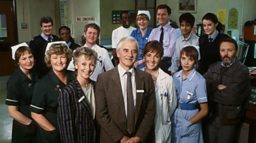
The medical drama Casualty debuted on BBC One on Saturday 6 September 1986. Hot on the heels of EastEnders and Howard's Way, which had both launched in 1985, the BBC soon found they had another big hit on their hands. Initially running for a series of 15 episodes, and after a switch to Friday night for several series, the show has gone on to become a staple of Saturday night television, which will celebrate its 40th anniversary later this year.
Original cast members included Brenda Fricker (Megan Roach), Bernard Gallagher (Ewart Plimmer), Cathy Shipton (Lisa 'Duffy' Duffin) and Derek Thompson (Charlie Fairhead, who remained a series regular until 2024). Over the years 'doing a Casualty' has become a right of passage for many an up-and-coming actor, with the likes of Kate Winslet, Robson Green, Orlando Bloom, Jodie Comer, Minnie Driver, Alfred Molina, Christopher Eccleston, Tom Hiddleston, Parminder Nagra, Sadie Frost, Jonny Lee Miller and many more earning an early credit on the wards of Holby City General.
The programme also inspired the spin-offs Holby City, HolbyBlue, Casualty 1900s, and the crossover Casualty@Holby City. The Casualty theme tune even topped the UK singles chart in 2000, when sampled in Oxide and Neutrino's Bound 4 da Reload. Meanwhile the cast of Casualty performed their cover of Everlasting Love on Top of the Pops in 1998, with the track, released in aid of Children in Need, reaching No.5 in the UK Singles Chart that year.
Elsewhere on TV in 1986...
- Long-running ITV soap Coronation Street set fire to its landmark Rovers Return pub in a dramatic storyline, as it attempted to keep pace with new rival EastEnders
- Dynasty spin-off The Colbys debuted on BBC One. The series would climax the following year with a bizarre plot twist that saw the character Fallon apparently abducted by aliens... Others US imports, Moonlighting, starring Bruce Willis, and The Golden Girls began airing on BBC Two and Channel 4 respectively.
- Colin Baker starred as the sixth Doctor in his final Doctor Who season, 'The Trial of a Time Lord', a title which for many reflected the show's uncertain future at the time. With Baker axed before filming a regeneration scene, his successor Sylvester McCoy was forced to don a Colin Baker wig in order to film the transformation the following year.
- Game shows Catchphrase, Every Second Counts and Strike It Lucky made their debuts.
- Among the year's acclaimed dramas are The Singing Detective, The Life and Loves of a She-Devil, A Very Peculiar Practice, The Monocled Mutineer and the original pilot of London's Burning, which would lead to a first full series in 1988.
- Paul Hardcastle's The Wizard became the new Top of the Pops theme tune from April 1986, remaining in place until October 1991.
11. TV stars became pop stars
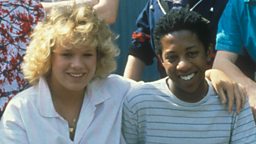
For some actors, being recognised for their TV work was clearly not enough. 1986 saw a range of familiar faces from the small screen head to the recording studio for a shot at music stardom.
Anita Dobson, aka EastEnders' Angie Watts, teamed up with composer Simon May to add lyrics to the show's famous theme tune. The resulting track Anyone Can Fall In Lpve - produced by another May, her now husband, Queen guitarist Brian - reached No.4 in the UK. Alas, follow-up Talking of Love was not so well received, peaking at No.43, while I Dream of Christmas, from December 1987, has, to date, not entered the pantheon of Christmas classics.
Anita wasn't the only EastEnders star enjoying chart success in 1986. Following a storyline in the soap that involved several characters forming a group called The Banned, Nick Berry (Simon ‘Wicksy’ Wicks) reached No.1 with the ballad Every Loser Wins in October 86, the track going on to become the year's second best-selling single, despite mixed reviews. Six years later, Nick was back in the charts, peaking at No.2 with the theme tune to ITV drama Heartbeat, in which he played PC Nick Rowan from 1992 to 1998.
Meanwhile, Letitia Dean (Sharon Watts) and Paul Medford (Kelvin Carpenter) reached No.2 with their infectious upbeat duet Something Outa Nothing, coinciding with their characters' short-lived on-screen romance. It would prove to be their only hit (to date!).
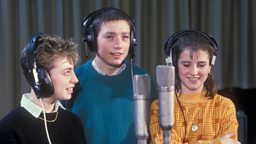
It wasn't just the stars of EastEnders launching pop careers from the BBC's Elstree studios in 1986.
Following a memorable, and at the time controversial, storyline about Sammy 'Zammo' McGuire's heroin addiction in the school drama Grange Hill, the show's stars teamed up to record Just Say No. A No.5 hit in the UK, it featured an anti-drugs message, based on Nancy Reagan's campaign of the same name. The song earned the cast a visit to the White House where they met the then First Lady in person.
Other TV stars enjoying chart success in 1986, included:
- The Young Ones, who joined forces with Cliff Richard for a humorous take on his 1959 No.1 Living Doll, in aid of Comic Relief.
- Max Headroom, TV's first computer generated star, who provided vocals for Art of Noise's No.12 hit Paranoimia.
- Don Johnson, aka Crockett in Miami Vice, enjoyed a US Top 5 hit with his debut single Heartbeat, although it could only peak at No.46 in the UK. Don would eventually crack the UK Top 40 with Till I Loved You, a 1988 duet with his then girlfriend Barbra Streisand.
- The puppets of satiricial TV comedy Spitting Image followed up their summer No.1, The Chicken Song, with the festive ode, Santa Claus Is On The Dole, which reached No.22.
- Claire and Friends' It's 'Orrible Being in Love (When You're 8½) enjoyed chart success after winning the Search for a Superstar competition on BBC One's Saturday Superstore.
Finally, no celebration of 1986's TV stars turned pop stars would be complete without a mention for Su Pollard, aka wannabe Yellowcoat Peggy in the popular holiday camp based sit-com Hi-De Hi. Su's track Starting Together initially featured in the closing titles to BBC One's The Marriage, an early reality show following a couple's wedding day and its aftermath. The popularity of both the programme and the song saw Starting Together peak at No.2 in the UK Singles Chart in January 1986, to date Su's only UK Top 40 hit, a quintessential one hit wonder.
The trend of actors launching pop careers was only just getting underway, with Kylie and Jason to follow the trend in 1988, opening the floodgates for a slew of fellow stars to enjoy chart success in subsequent years.
12. Chris De Burgh, Boris Gardiner and Falco all had unlikely No.1 hits
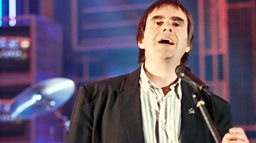
While Su Pollard had to settle for No.2, there were plenty of surprise victors over the course of the year in the battle for UK No.1 singles.
If you wanted to appeal to the record-buying public in 1986, a sentimental ballad to tug at the heart-strings proved a successful format for a number of artists.
Chris De Burgh, whose previous singles had teetered on the edges of the UK Top 40, was one such advocate. His track, The Lady In Red, topped the charts for three weeks in the summer of 1986, becoming a huge hit across the globe. Still dividing opinion to this day, for many it's one of the ultimate love songs, and a popular first dance choice for weddings; for others, it's overly emotional and represents the worst excesses of the power ballad.
There was definitely something in the air in the summer of 1986, with The Lady In Red being knocked off the chart summit by another slow-tempo love song, Boris Gardiner's I Want To Wake Up With You. Originally conceived as a country track, Boris gave it a reggae makeover and topped the charts for three weeks, giving the Jamaican singer his second UK Top 40 hit, an incredible 16 years after his first, and to that point, only other chart success.
Meanwhile, back in May, only the popularity of Spitting Image's The Chicken Song stopped one of the ultimate 80s duets, On My Own, by Patti La Belle and Michael McDonald from securing a No.1 hit.
If schmaltz wasn't your thing, there were a variety of artists and genres topping the chart elsewhere in 1986, including:
- Pet Shop Boys, who led the charge of the synth-duos, earning the first new No.1 of the year with West End Girls, and following it up with three further top 40 hits (Love Comes Quickly, Opportunities and Suburbia). 1986 also saw the first of many chart entries for Erasure, with Sometimes peaking at No.2 in December.
- A-ha topped the UK Singles Chart for the first - and so far only - time with The Sun Always Shines on TV (the follow-up to 1985's Take On Me) in January. The Norwegian trio had four further Top 40 hits (Train of Thought, Hunting High and Low, I've Been Losing You, Cry Wolf) and two No.2 albums (Hunting High and Low and Scoundrel Days) in what proved to be a hugely successful 1986 for the group.
- Diana Ross, with a little help from the Bee Gees, enjoyed her first No.1 in 15 years with Chain Reaction in March.
- Falco, aka German singer Johann "Hans" Hölzel, had a solitary week at No.1 with the Europop hit Rock Me Amadeus in May.
- Europe's two weeks at No.1 in December with The Final Countdown reflected the rise in popularity of 80s' 'hair-metal'. 1986 also saw the first two big hits for New Jersey rockers Bon Jovi (You Give Love a Bad Name and Livin' On A Prayer).
When it came to the UK Singles Chart, 1986 certainly had an eclectic mix!
13. Songs from the past inspired some of the year's biggest hits
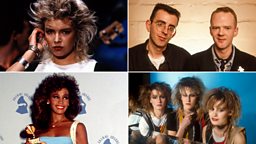
1986 saw a range of artists breathe new life into old songs. Many of the originals were unfamiliar to the younger music fans of the day - remember this was an era before music downloads and streaming services meant we could all carry record collections spanning the decades in our pockets - and many reached new heights in terms of chart performance. Here are some of the year's most iconic covers:
- Bananarama’s Venus was a synth-heavy adaptation of Dutch band Shocking Blue’s track from the 1960s. The music video, choreographed by future Strictly judge, Bruno Tonioli, depicted the trio of Sara Dallin, Siobhan Fahey and Keren Woodward as she-devils, French temptresses, vampires and Greek goddesses, helping the track peak at No.8 in July.
- Kim Wilde took on You Keep Me Hangin' On, 20 years after it was a hit for The Supremes, adapting the Motown classic into an 80s pop-rock anthem. The re-working for a modern audience proved a success, reaching No.2 in the UK charts in November.
- Whitney Houston covered George Benson’s 'self-love' track, The Greatest Love of All, her powerhouse vocals making the song her own, and giving the singer her second UK Top 10 hit of the year in May.
- Doctor and the Medics took fellow one hit wonder Norman Greenbaum's Spirit In The Sky back to No.1 in June, 16 years after the original. 17 years later Gareth Gates and the Kumars' cover saw the song top the charts for a third time with a third different iteration.
- In December, an a capella cover of Jasper Isley Jasper's 1985 track Caravan of Love, took The Housemartins (featuring Paul Heaton and Norman 'Fatboy Slim' Cook) to No.1 for one week. The Hull band narrowly missed out on the Christmas top spot to Jackie Wilson's Reet Petite.
- 1986's biggest selling single in America saw Dionne Warwick and Friends (Gladys Knight, Elton John and Stevie Wonder) cover That's What Friends Are For. A Burt Bacharach and Carole Bayer Sager composition, the song was originally recorded by Rod Stewart four years earlier.
- In a sign of what was to come, Isaac Hayes' 1975 track I Can't Turn Around was reinterpreted as a house track, first by Steve 'Silk' Hurley, then by Farley Jackmaster Funk. The latter version, with Darryl Pandy on vocals and re-named Love Can't Turn Around is widely credited as the first house track to make the UK charts.
- Finally, in a year packed full of covers it's apt that 1986's best-selling single in the UK also falls into this category. Pop duo The Communards (Jimmy Somerville and Richard Coles) topped the chart for four weeks in September with their rendition of Harold Melvin & The Blue Notes' Don’t Leave Me This Way. Somerville’s soulful falsetto voice was memorably complemented by the baritone vocals of Sarah Jane Morris, for one of the most memorable tracks of the decade.
LISTEN: More 1986 on BBC Sounds
![]()
LISTEN: Sounds of 1986 - 40 years on
Gary Davies tells the story of 1986 through its most memorable music.
![]()
LISTEN: The Best Selling Singles of 1986
Mark Goodier counts down the best-selling singles of the year.
![]()
LISTEN: One Hit Wonders
OJ Borg plays the best One Hit Wonders from 1986.
![]()
LISTEN: All the 6s
Start 2026 with a collection of specials celebrating music and memories from previous years ending in 6, from 1966 to 2016!
